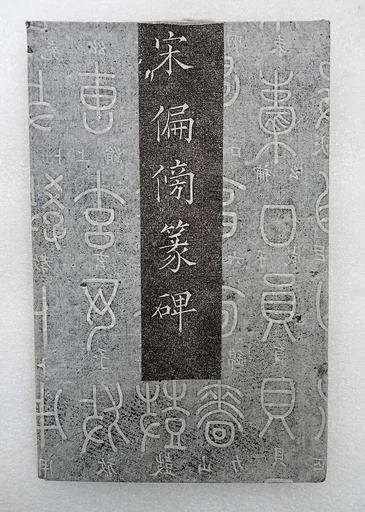
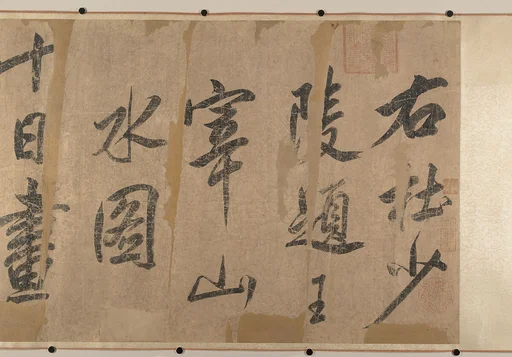
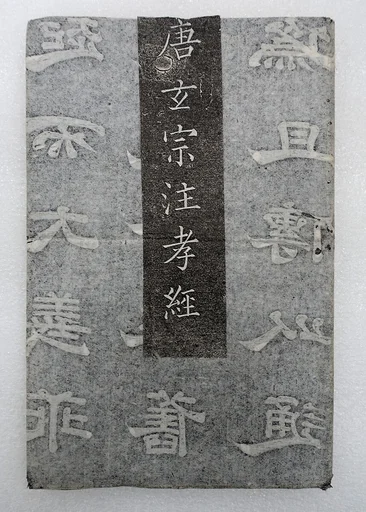
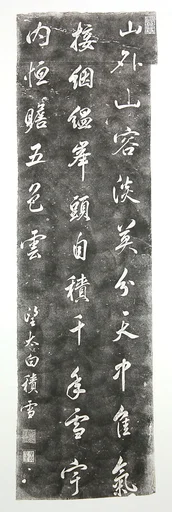
東周 篆書石鼓文 舊拓本|Inscriptions on the Stone Drums (Eastern Zhou dynasty, 5th century B.C.)
Unidentified artist
17th century · Set of rubbings in ten sections mounted as a pair of handscrolls; ink on paper · Asian Art
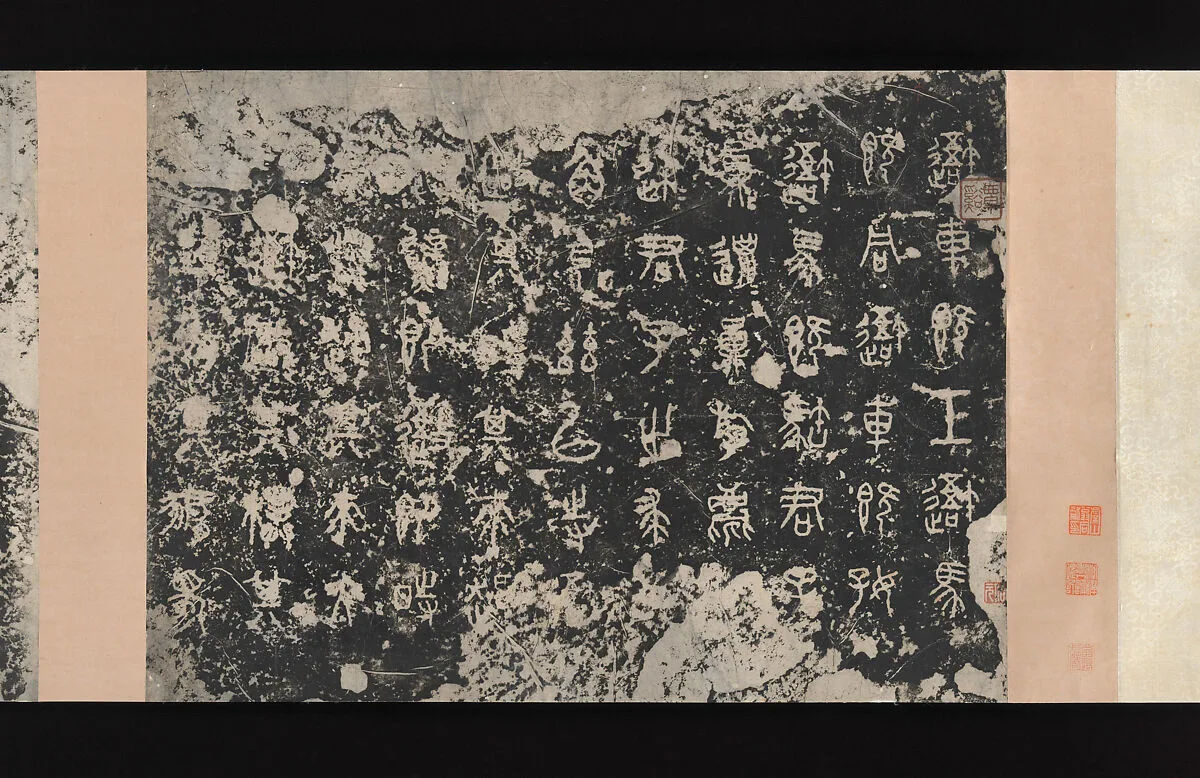
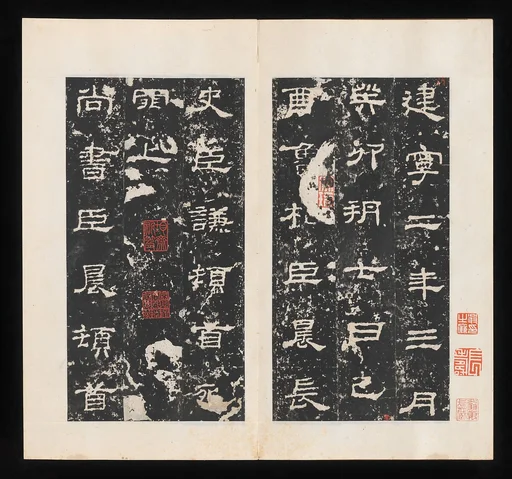
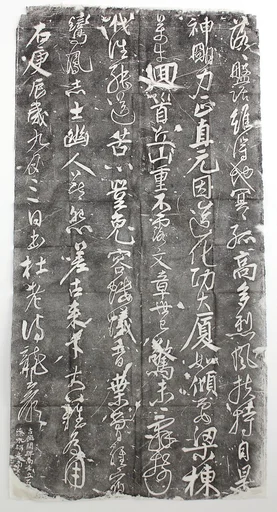
Written Chinese evolved slowly over more than two millennia before arriving at a modern, "regular" script (kai shu) in the third century A.D. The oldest script type, known as "seal" script (zhuan shu), developed gradually during the Shang, Zhou, and Qin periods (ca. 1500–206 B.C.) and is characterized by curvilinear picturelike forms executed in strokes of even thickness. Inscriptions on the Ten Stone Drums, which record royal hunting expeditions, were probably engraved by one of the early dukes of the Qin state and constitute the earliest monumental seal-script texts of any length to survive. The script represents a transitional style between the "large-seal" script found on Shang and Zhou bronze vessels and the standardized "small-seal" script employed in official documents of the Qin dynasty (221–206 B.C.). The drums, discovered near Baoji in Shaanxi Province in the seventh century A.D., were moved to the imperial palace in Kaifeng by Emperor Huizong (r. 1101–25). When Jurchen Jin troops captured the Song capital in 1127, the drums were moved again to Beijing, where they are now in the Palace Museum. The tradition of making ink rubbings of stone- and wood-carved inscriptions was a precursor to printing in China and made possible the wide dissemination of calligraphic models.
- Artist
- Unidentified artist
- Date
- 17th century
- Medium
- Set of rubbings in ten sections mounted as a pair of handscrolls; ink on paper
- Culture
- China
- Department
- Asian Art
- Credit line
- Gift of Mr. and Mrs. Wan-go H. C. Weng, 1992