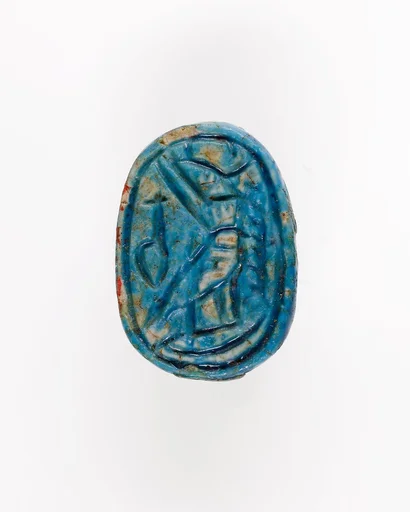
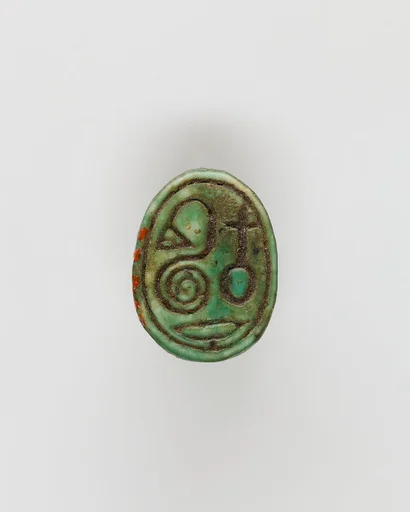
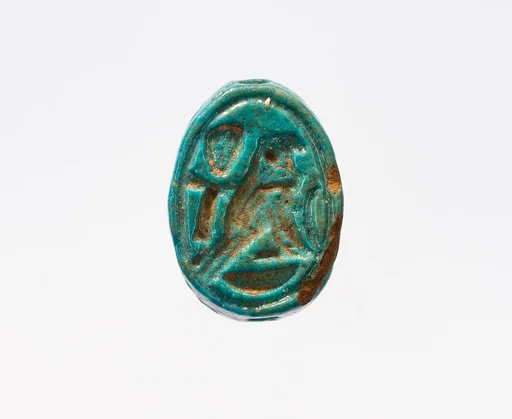
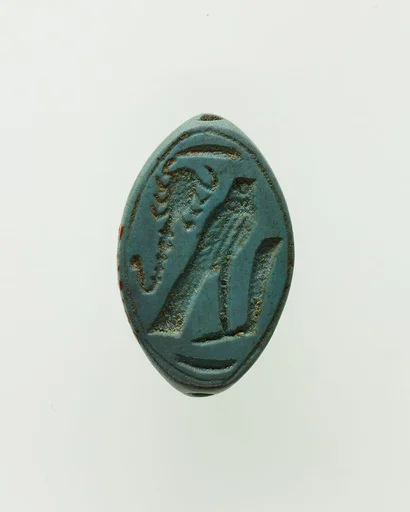
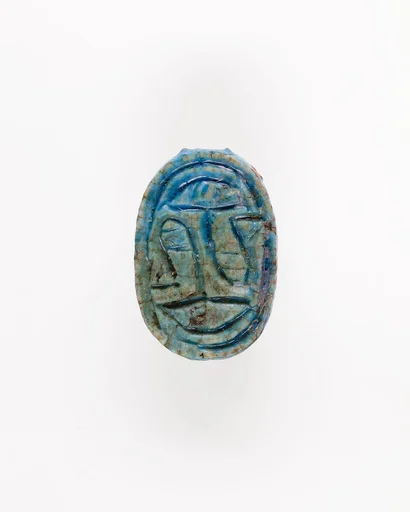
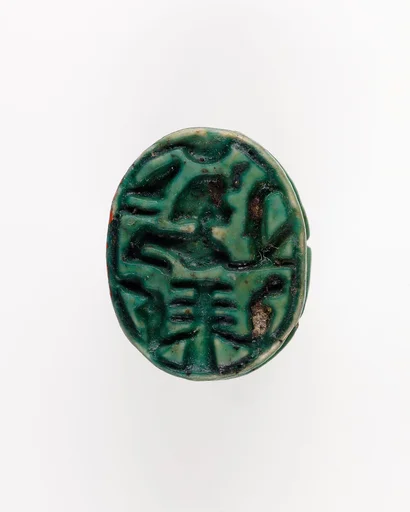
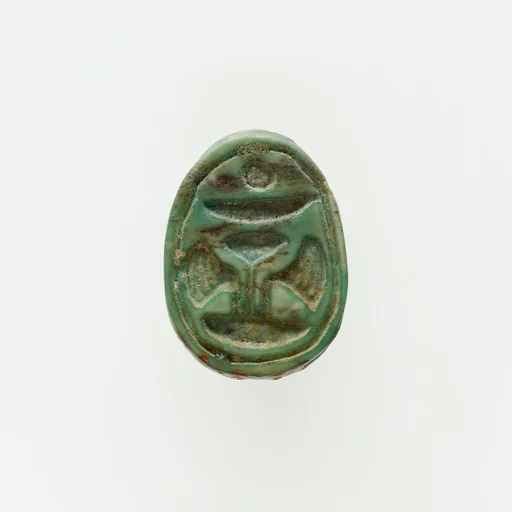
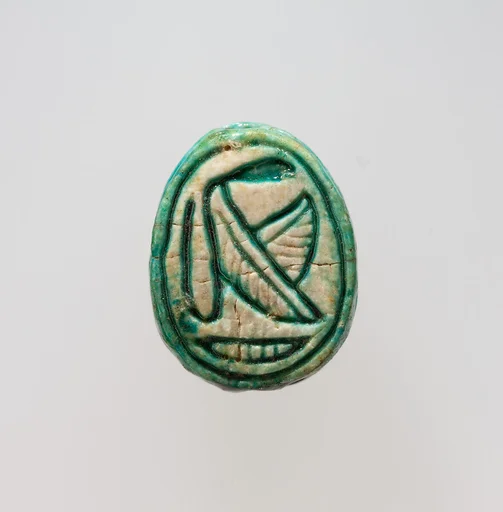
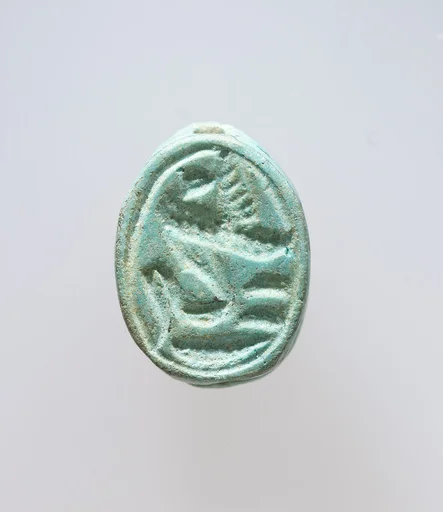
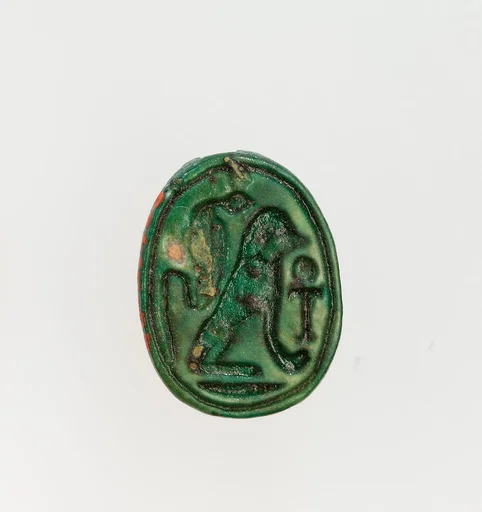
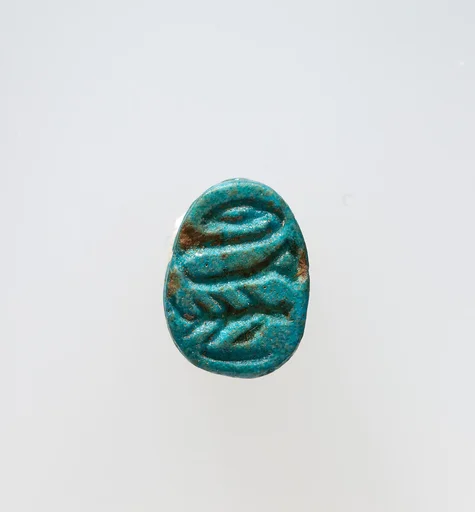
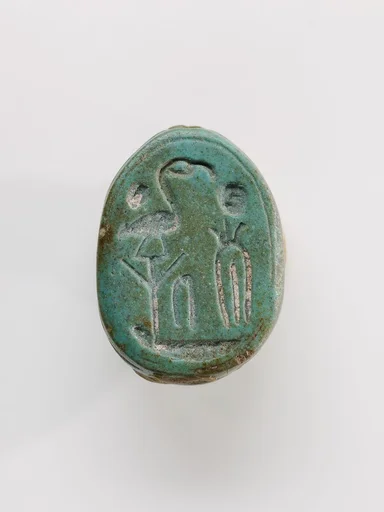
Scarab with Representation of a Falcon
Unknown
ca. 1479–1425 B.C. · Green glazed steatite · Egyptian Art
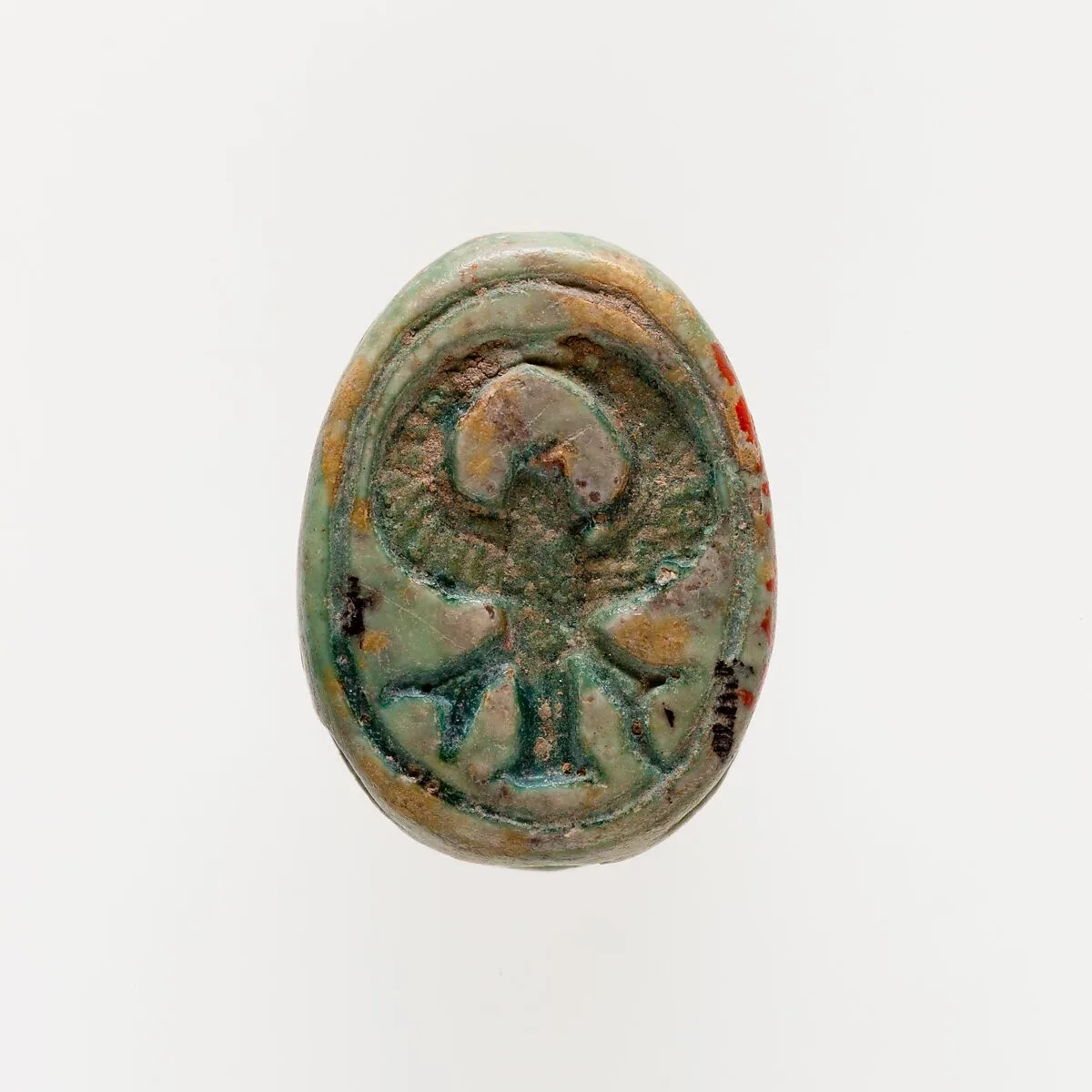
The shape of the scarab is characteristic for scarabs of early Dynasty 18. The falcon as we see it here, with its elevated wings spread wide open and the wingtips joined above its head, appears as primary motif on scarabs during the reign of Hatshepsut (ca. 1473–1458 B.C.) (MMA 23.3.245, MMA 27.3.391). It evolved from the motif of the royal cartouche to which falcon wings are attached, as seen on scarabs inscribed for pharaohs of early Dynasty 18 (for example MMA 27.3.231). This scarab most likely dates to the reign of Thutmose III (ca. 1479–1425 B.C.). The manner in which the details of this falcon is incised is also found on scarabs with similar decorations bearing the throne name of this king.
- Artist
- Unknown
- Date
- ca. 1479–1425 B.C.
- Medium
- Green glazed steatite
- Department
- Egyptian Art
- Credit line
- Rogers Fund and Edward S. Harkness Gift, 1922