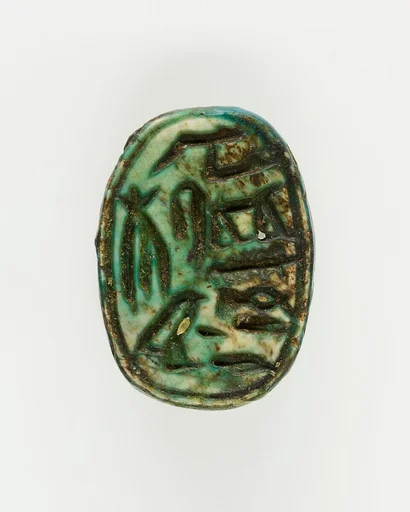
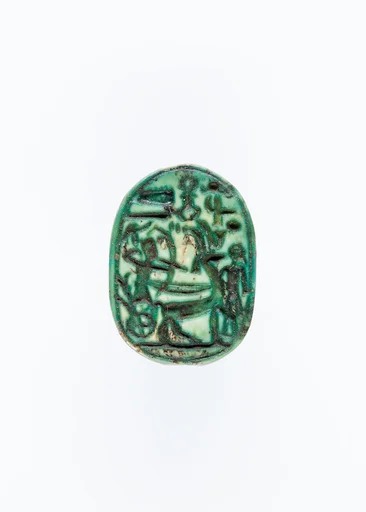
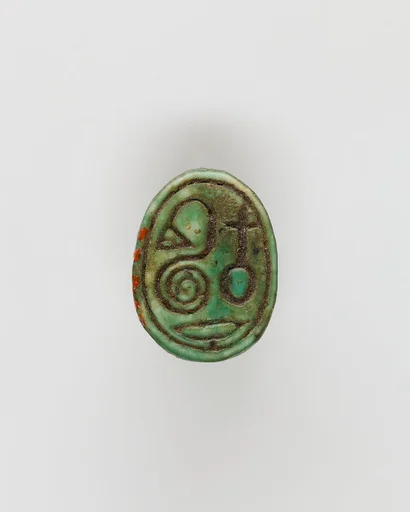
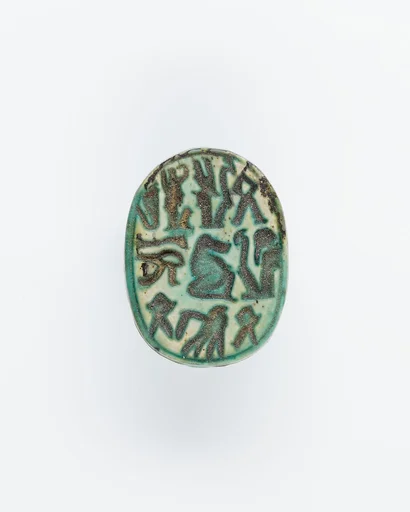
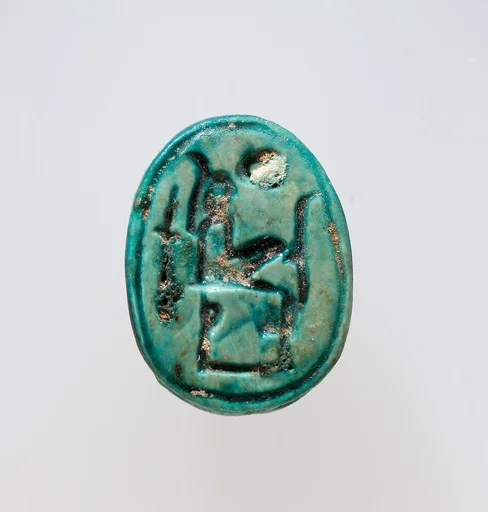
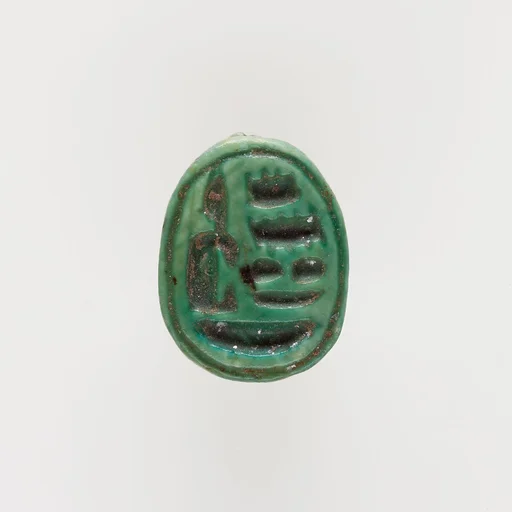
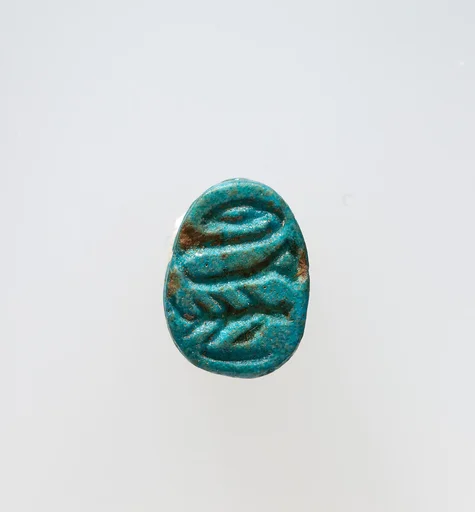
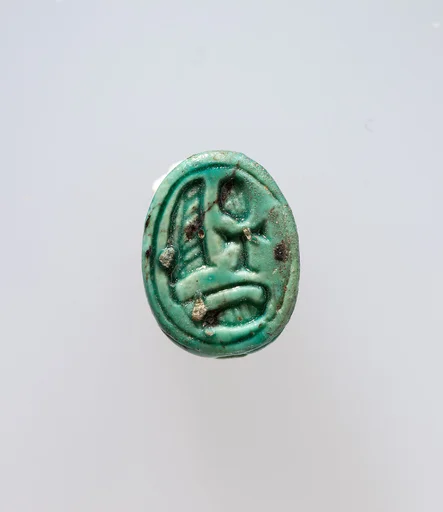
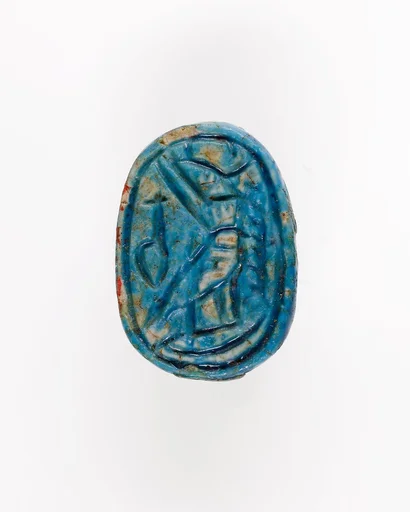
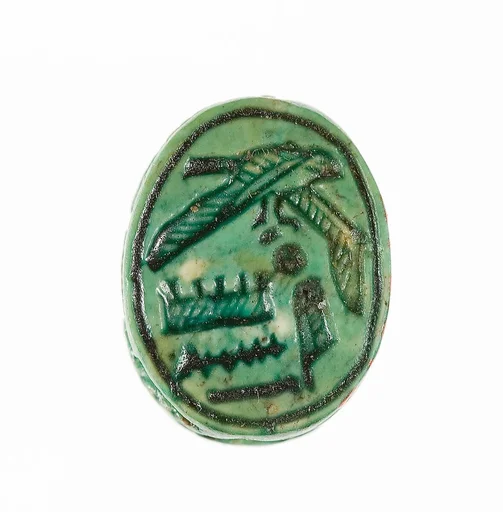
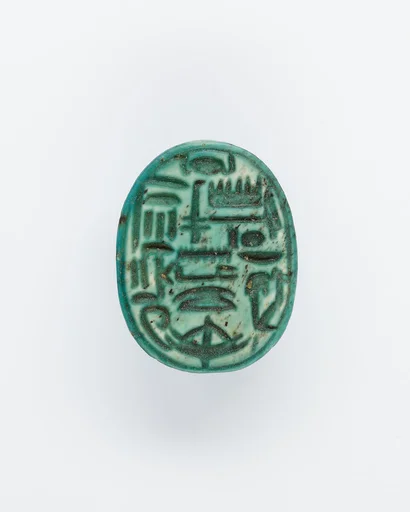
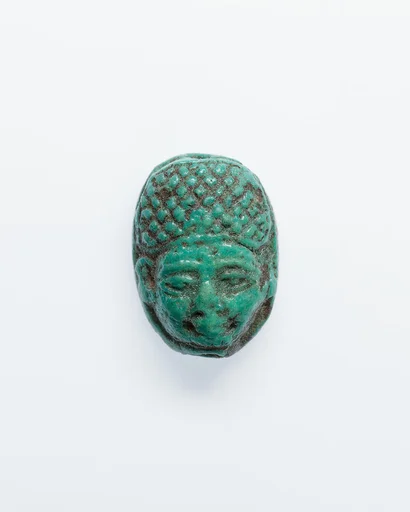
Human-face Scarab with Sphinx and Hieroglyphs
Unknown
ca. 1295–1070 B.C. · Dark green glazed steatite · Egyptian Art
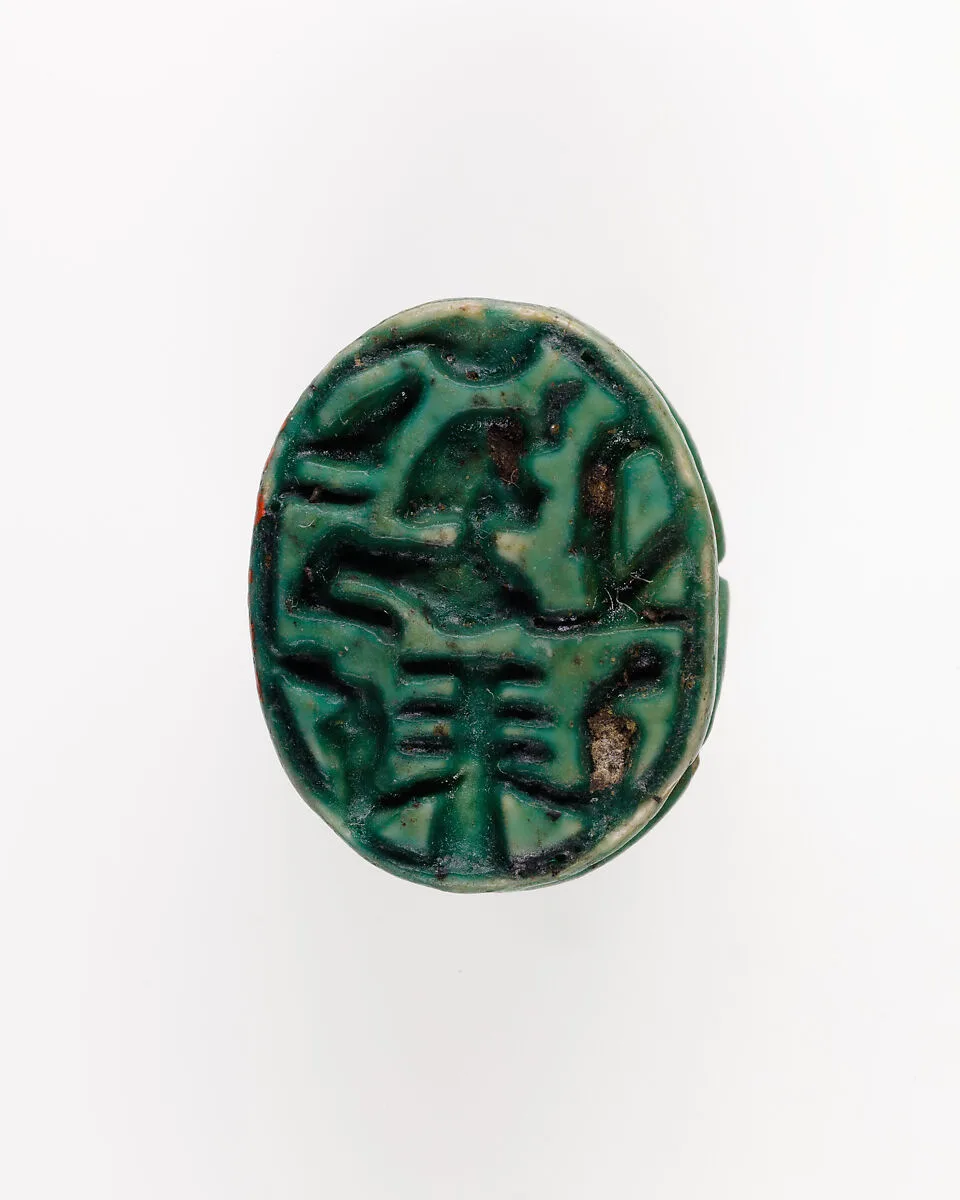
The underside of this scarab shows a recumbent human-headed sphinx, wearing a nemes-headcloth with a uraeus on the front. The sphinx is a popular motif on scarabs, especially during the New Kingdom and the Late Period, and embodies the pharaoh. Here it holds a seated figure of the goddess Maat in his front paws, while a sun disk is placed above, and below the sphinx the sign of endurance (djed) is flanked by two uraei. On the back, a single line divides the wing cases of the scarab, but a human face with ribbed head band replaces the head and shoulders of the beetle. The earliest examples of human-face scarabs date to the late Middle Kingdom and the Second Intermediate Period (ca. 1850-1550 B.C.) but they are also well attested during the late New Kingdom.
- Artist
- Unknown
- Date
- ca. 1295–1070 B.C.
- Medium
- Dark green glazed steatite
- Department
- Egyptian Art
- Credit line
- Rogers Fund and Edward S. Harkness Gift, 1922