Scarab
Unknown
ca. 1275–1070 B.C. · Glazed Steatite · Egyptian Art
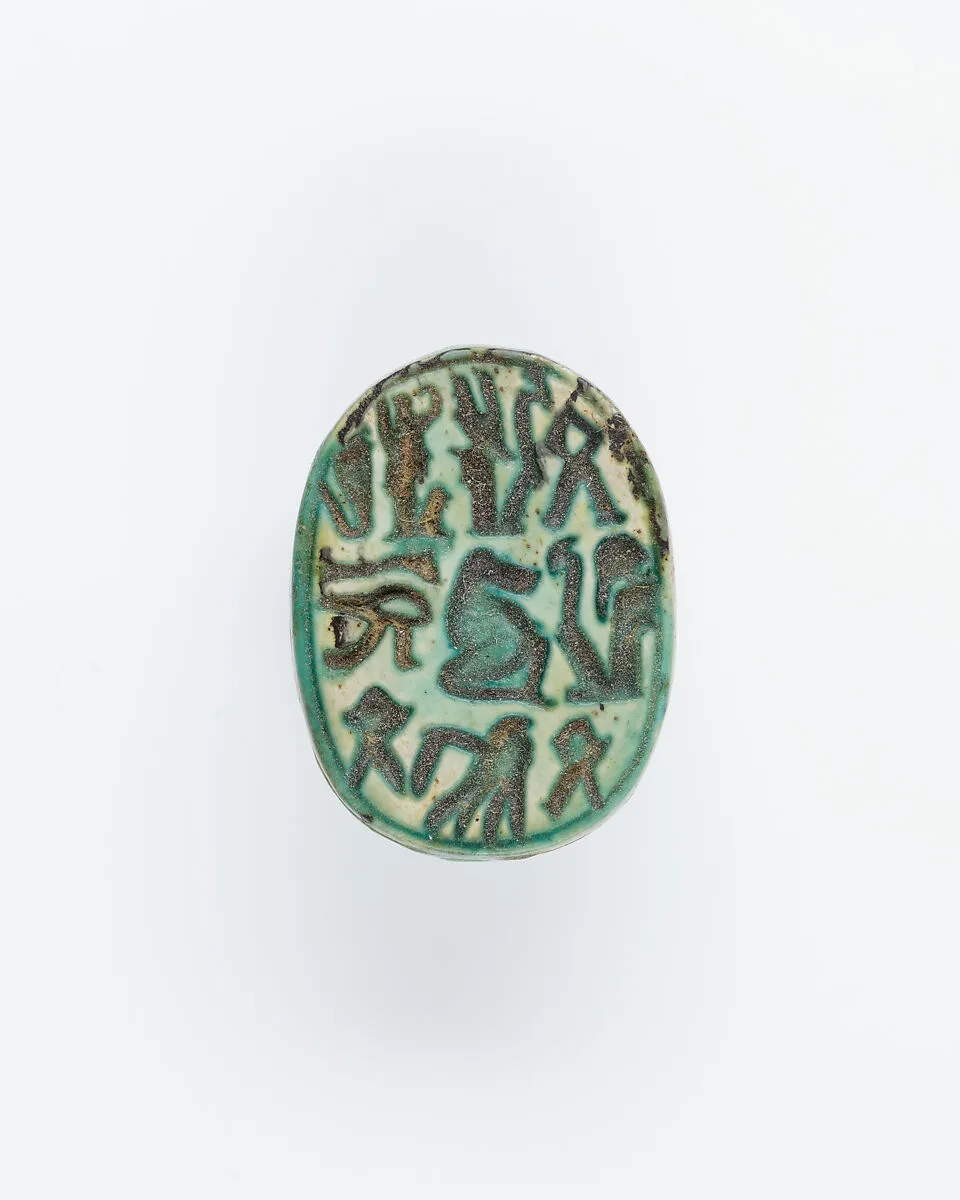
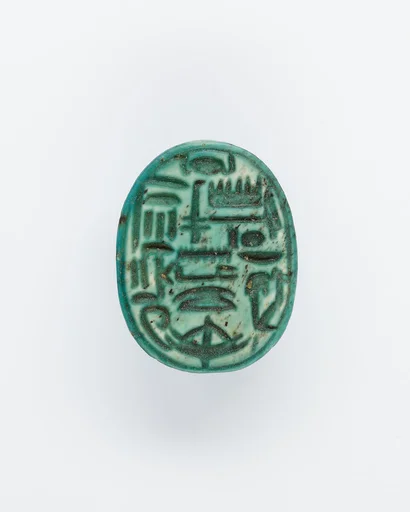
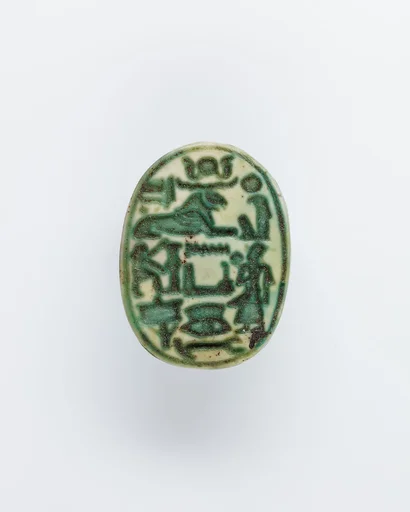
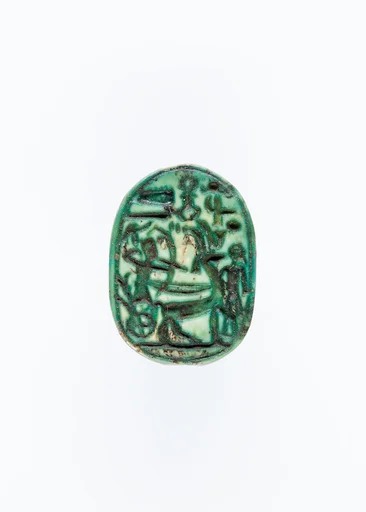
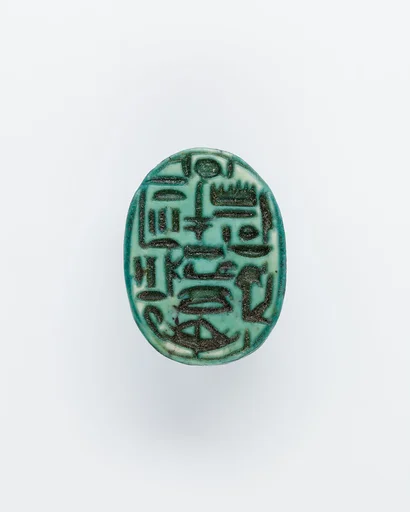
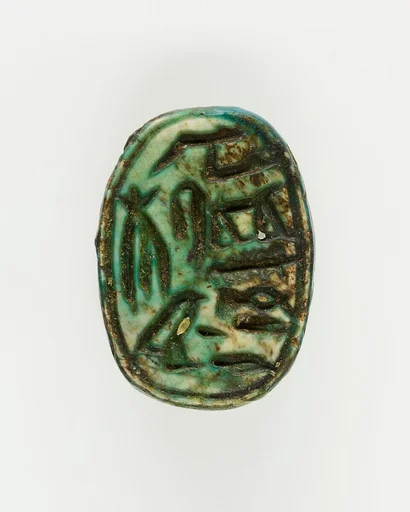
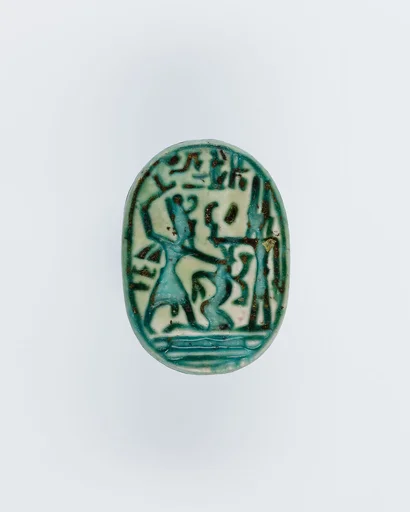
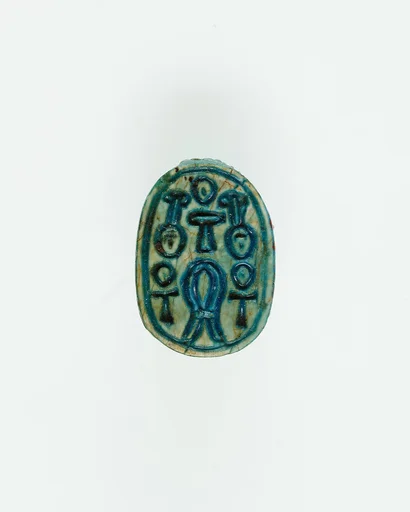
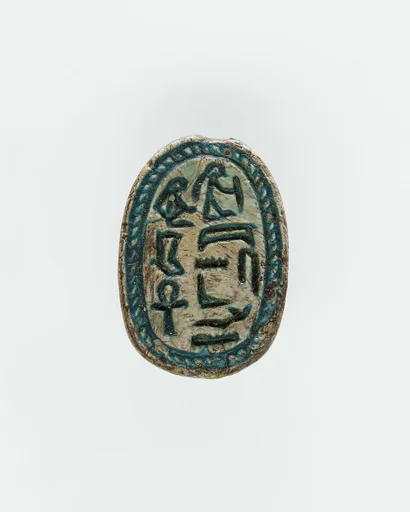
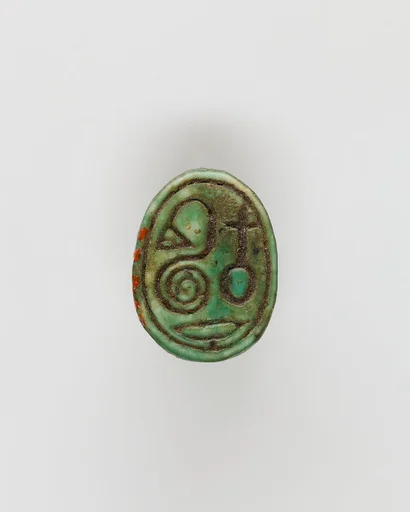
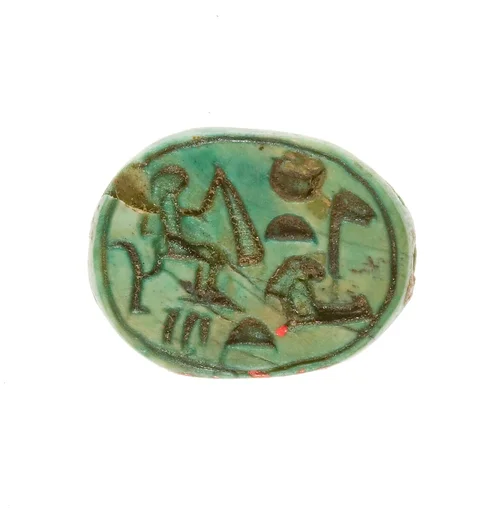
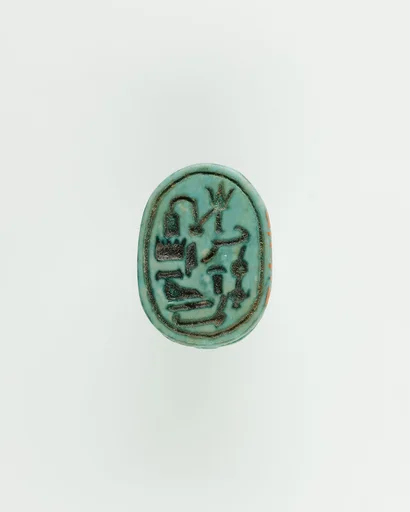
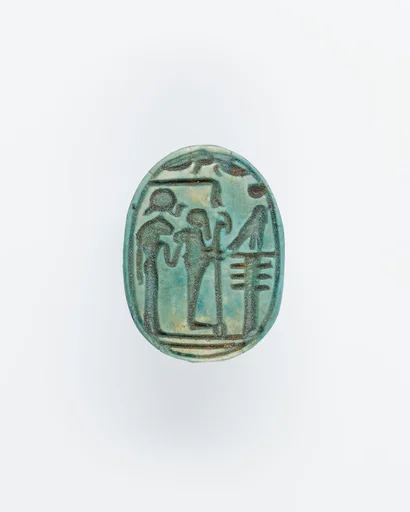
The scarab was shaped like a dung beetle, "scarabaeus sacer," which is also the source of its modern name. The dung beetle was "kheperer" in ancient Egyptian. Having watched the small creatures push huge balls of dung, the ancient Egyptians compared the sun being pushed into the sky at dawn to the beetle, and they referred to the rising sun as "Kheperi." The word for "to become" or "come into being" was "kheper," and the beetle hieroglyph was used to spell all of these words. As such, the scarab became a powerful amulet for rejuvenation in this life and reincarnation in the next. This scarab is schemtic in form, marking the prothorax and elytra of the beetle with deeply incised lines. The base is inscribed with protective signs and images of Amun, Mut, Ptah, Horus, and Thoth.
- Artist
- Unknown
- Date
- ca. 1275–1070 B.C.
- Medium
- Glazed Steatite
- Department
- Egyptian Art
- Credit line
- Gift of Helen Miller Gould, 1910