円筒形深鉢土器|Deep Vessel
Unknown
Date unknown · Earthenware with cord-marked decoration and sculptural rim · Asian Art
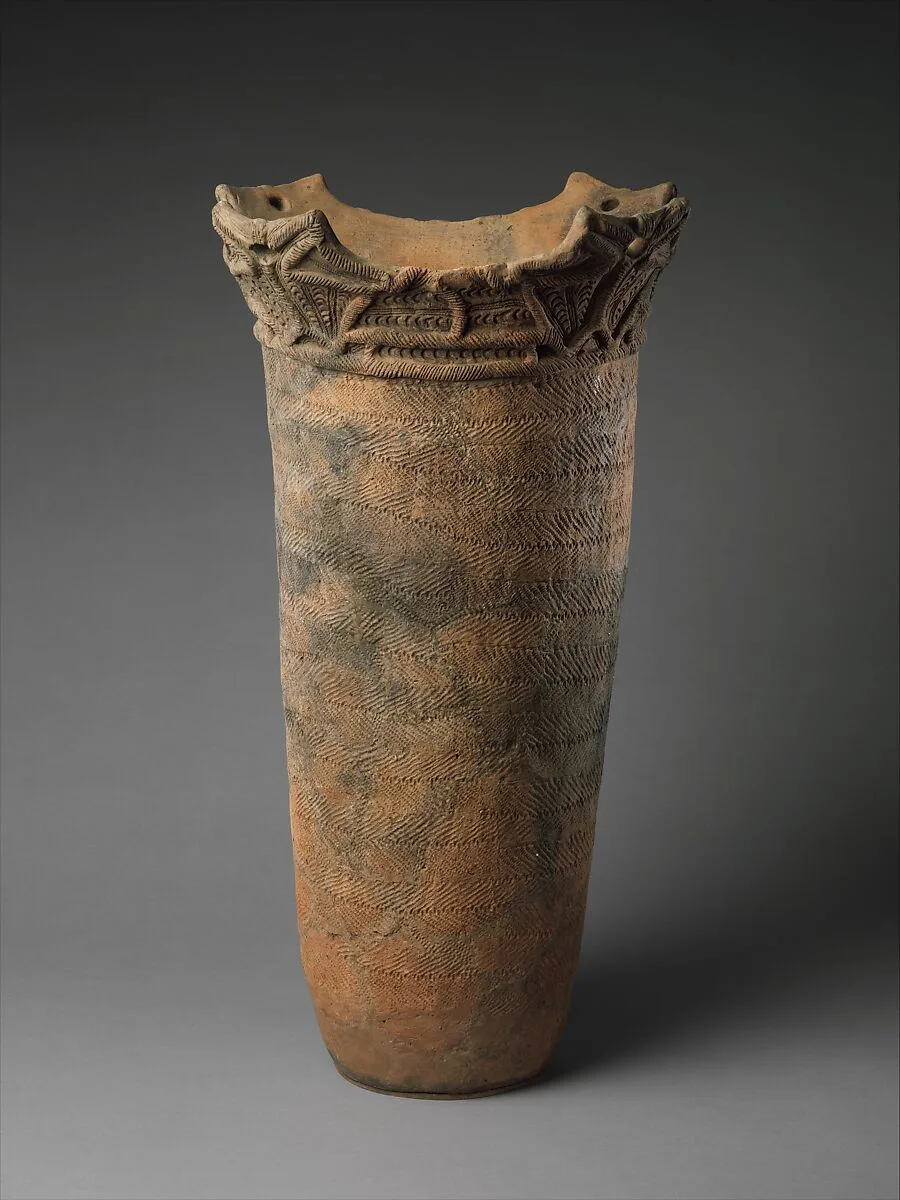
Cord-marked pottery is the characteristic ware of the earliest inhabitants of Japan. These Neolithic people, known as the Jōmon (cord-marking) culture, existed on the abundant fishing and hunting on the Japanese islands from at least the fifth millennium B.C., surviving in some areas until the third century A.D. During this period handmade utilitarian wares were treated with inventive, often extravagant artistry, and regional separations between groups resulted in a wide range of types and styles. This earthenware food vessel, which came from the Aomori Prefecture in northeastern Japan, is remarkable for the fine quality of its clay and its sophisticated decoration. The cord-marked herringbone pattern was reproduced by cords knotted together and twisted in opposite directions.
- Artist
- Unknown
- Date
- Date unknown
- Medium
- Earthenware with cord-marked decoration and sculptural rim
- Culture
- Japan
- Department
- Asian Art
- Credit line
- The Harry G. C. Packard Collection of Asian Art, Gift of Harry G. C. Packard, and Purchase, Fletcher, Rogers, Harris Brisbane Dick, and Louis V. Bell Funds, Joseph Pulitzer Bequest, and The Annenberg Fund Inc. Gift, 1975