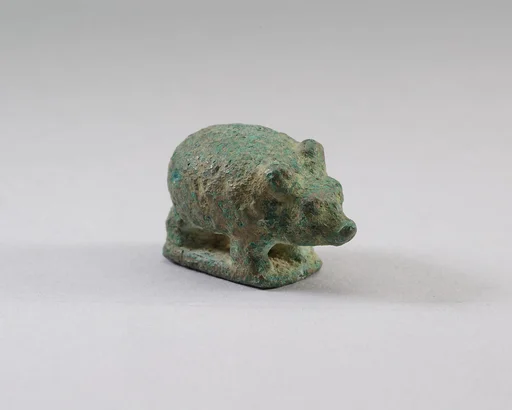
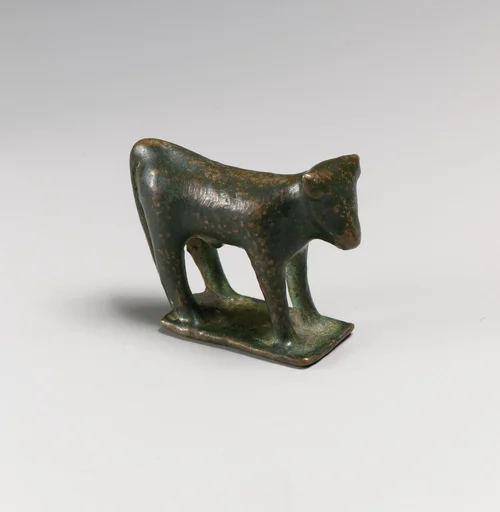
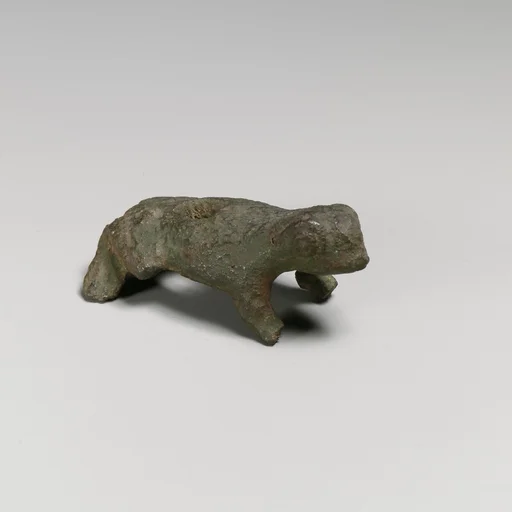
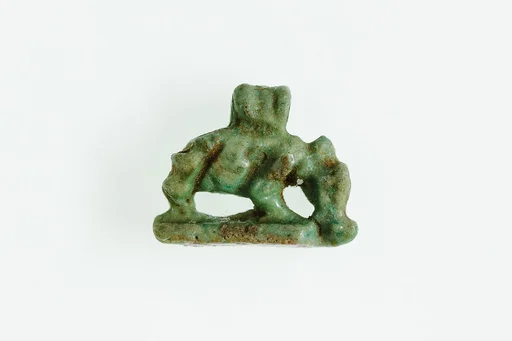
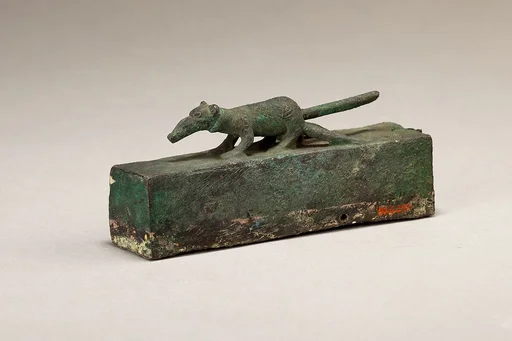
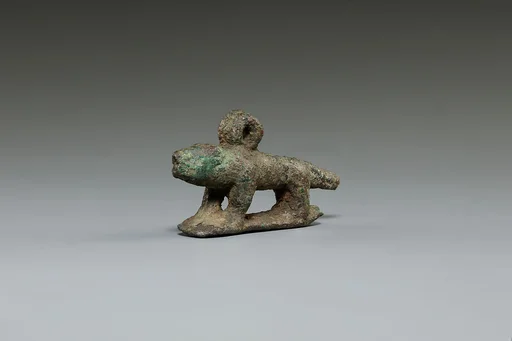
Figurine Pendant of an Ichneumon, inscribed
Unknown
332–30 B.C. · Cupreous metal · Egyptian Art
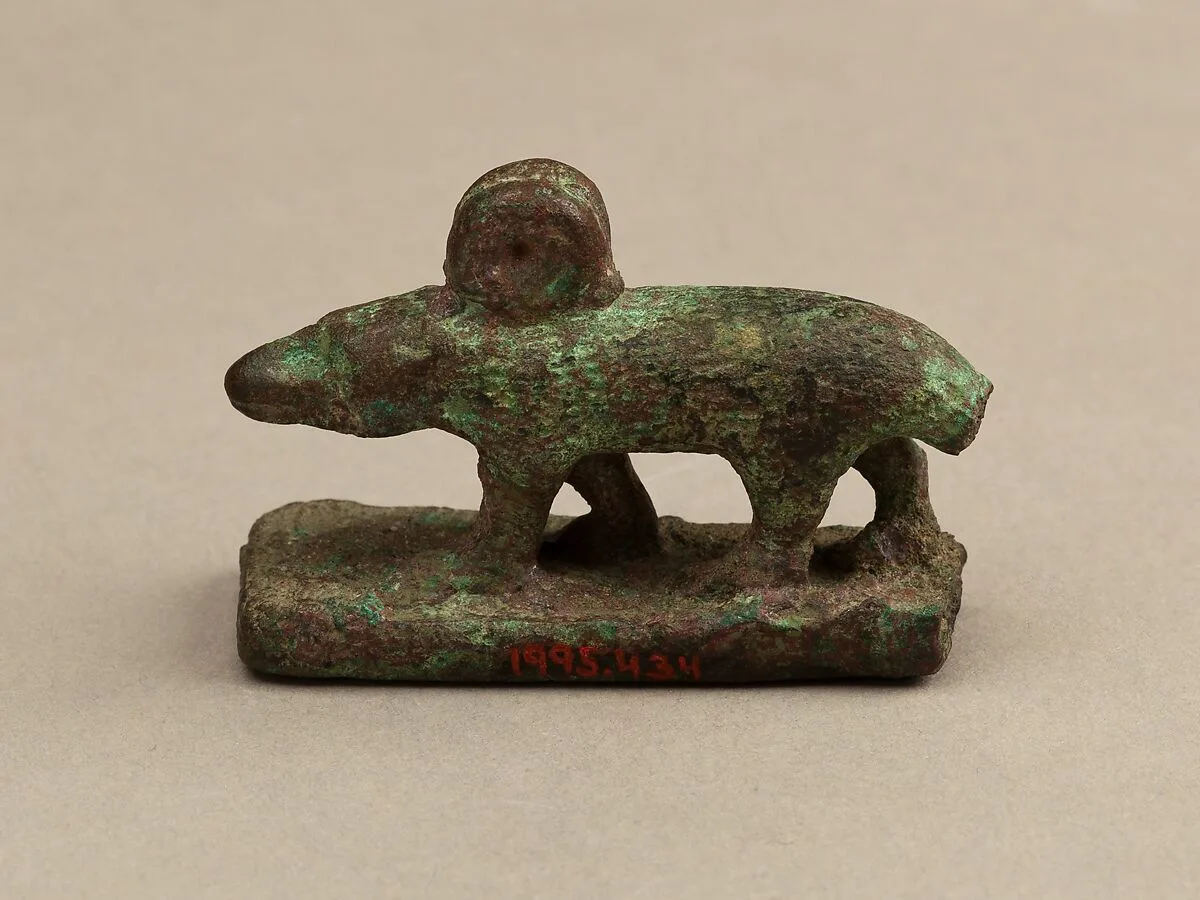
The ichneumon is a rodent, similar to a mongoose, that was associated with the gods Horus of Letopolis and Atum, and during the Late Period became associated with the goddess Wadjet through her cult at Buto being linked mythologically with those of Horus of Letopolis. Sometimes confused with the shrew mouse, which was also dedicated as a statuette, the ichneumon has a shorter snout, thick body, and smaller oval ears; its legs are straight and its tail usually droops down to touch the base below (broken here). On this example, small incised marks indicate the ichneumon’s fur and a double-strap pendant loop sits just behind its neck. The base has a fragmentary inscription, only partially preserved at the front "Wadjet gives life(?)...", and is inscribed on the underside: "Wadjet gives life to Taklouthis, son of Pedi[....]." This figure may have been worn or hung, but similar ichneumons frequently adorn boxes that would have held small animal mummies. While ichneumons could be dedicated to either Horus or Atum, they are also frequently found together with other animal statuettes related more broadly to solar cult, such as lizards, falcons, and shrew mice.
- Artist
- Unknown
- Date
- 332–30 B.C.
- Medium
- Cupreous metal
- Department
- Egyptian Art
- Credit line
- Gift of Lucie Taft Bard, in memory of her father, Walbridge S. Taft, 1995