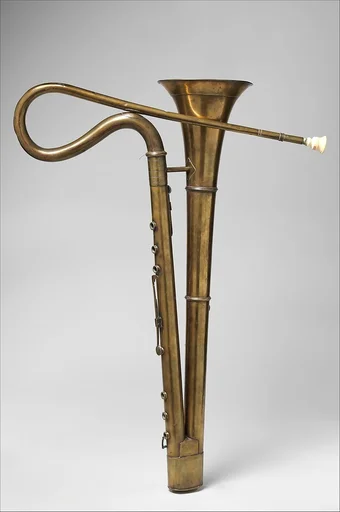
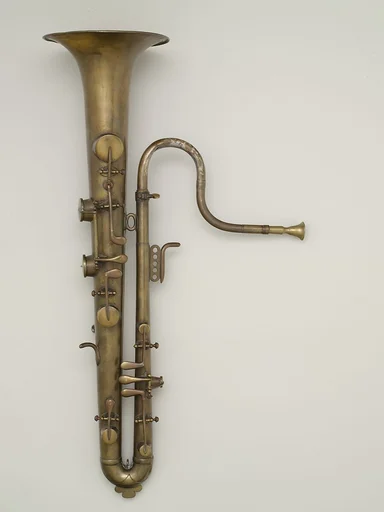
Bass Clarinet in C
Nicola Papalini
ca. 1810 · Olive wood, brass · Musical Instruments
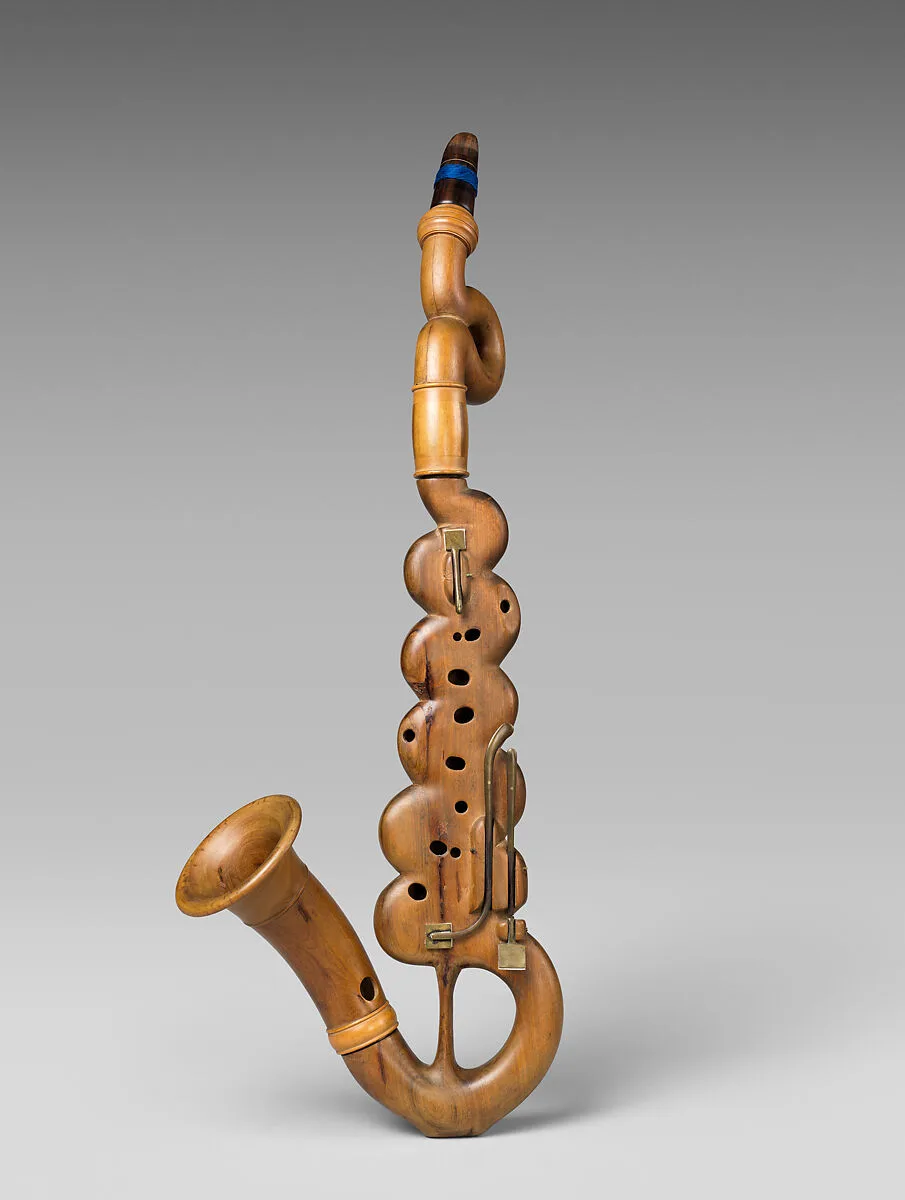
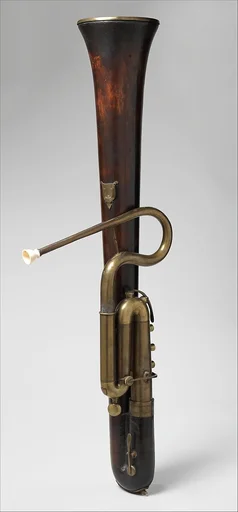
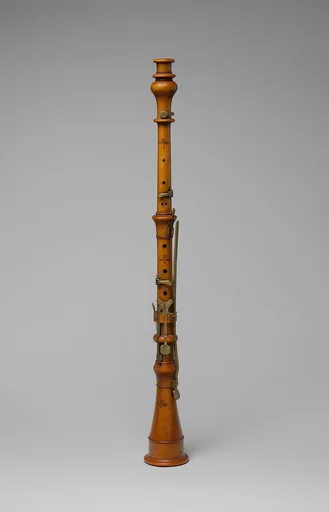
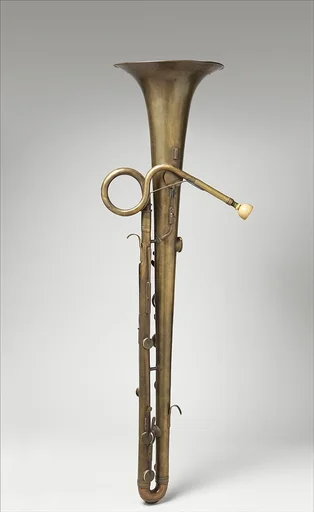
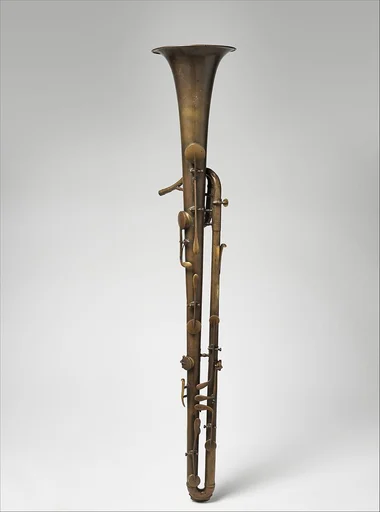
Not much is known about Nicola Papalini, the inventor and maker of this serpent shaped bass clarinet. He was reportedly trained as a wood carver rather than an instrument maker. Including the present instrument there are six surviving bass clarinets by Papalini with this unique shape in museum collections in Leipzig (1558), Brussels (940), MFA Boston (17.1879), Paris (E.760) and Rome (617). Overall size: 680 Technical description: Olive wood with brass keys and wooden ferrules. Four pieces: mouthpiece, crook with non-removable barrel, one-piece body, upturned wooden bell. Cocus wood mouthpiece marked for a ligature. To make the body, two halves had been pinned together, which is a method from Cornett construction. The method of closing tone holes with finger joints comes from racket fingering. This instrument is almost identical to the specimen that is kept in Brussels (940), with the only difference that the present instrument has enlarged finger holes which makes it more difficult to play. The tone hole for the lower joint of L1 will produce throat G♯ when opened. The double tone hole for L1 will probably give E4/B 5 and F4/C6. The tone hole for the lower joint of R1 will give C♯4/G♯5 when opened. The double tone hole for R3 will produce G♯3/E♭5. L0: T; speaker. L1: T; T; T (throat A♭ ); throat A♮. L2: T. L3: T. L4: E3/B♮4; F♯3/C♯5. R0: T (B♮3/F♯5); C3. R1: T (C♯4/G♯5); T. R2: T. \\\\R3: T; T(G♯3/E♭5). R4: T. Keyhead type: flat square. Keymount type: blocks No inscriptions Playing accessories: one reed and a cord. (Heike Fricke, 2014)
- Artist
- Nicola Papalini
- Date
- ca. 1810
- Medium
- Olive wood, brass
- Culture
- Italian
- Department
- Musical Instruments
- Credit line
- The Crosby Brown Collection of Musical Instruments, 1889