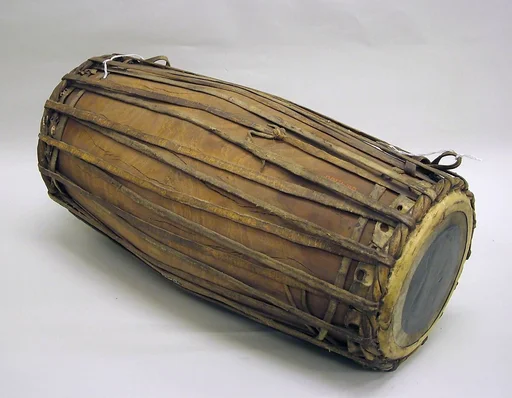
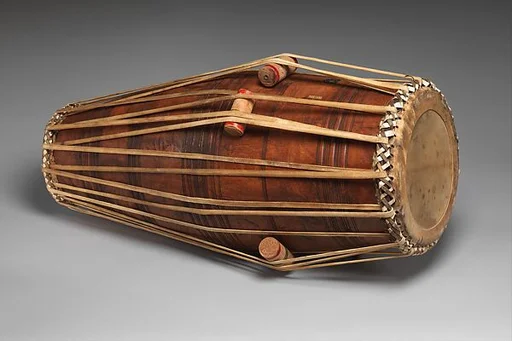
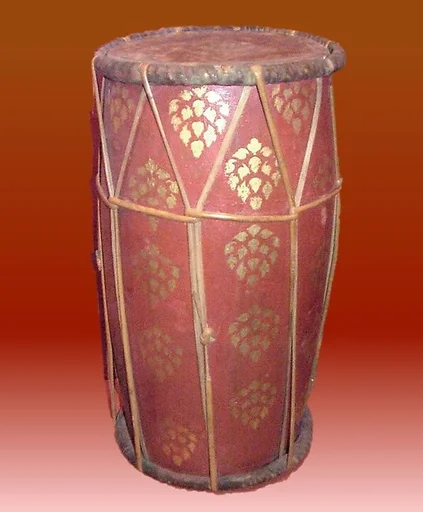
Pakhāvaj
Unknown
late 20th Century · Wood, goatskin, leather · Musical Instruments
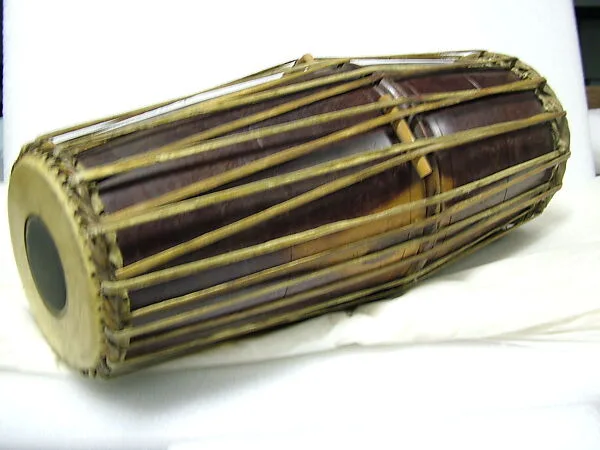
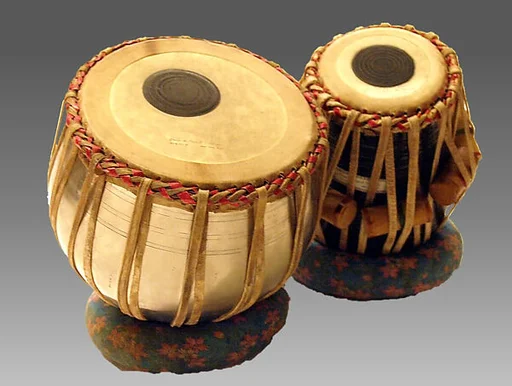
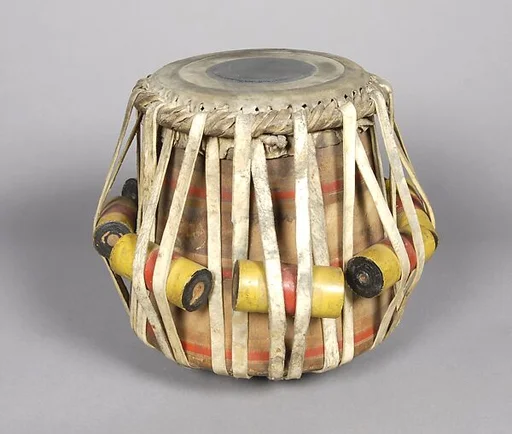
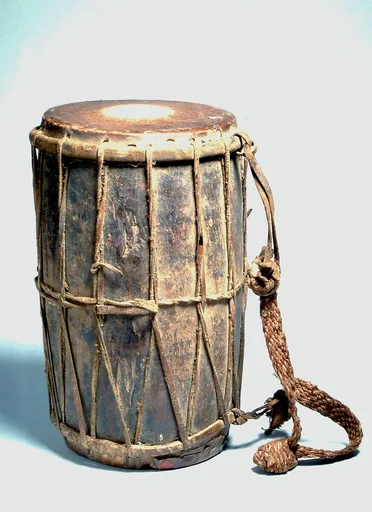
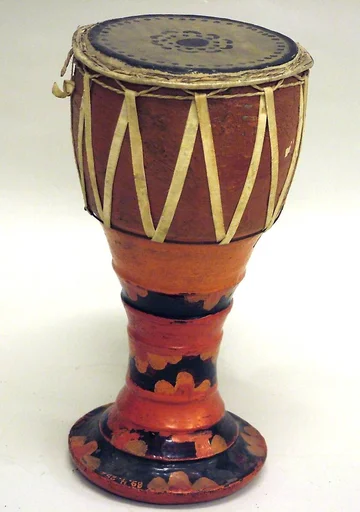
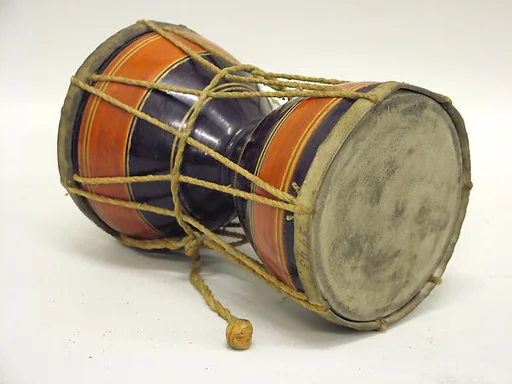
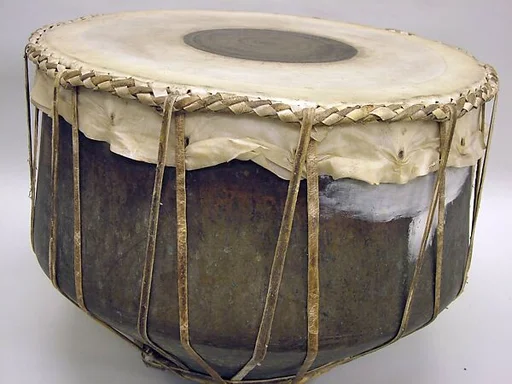
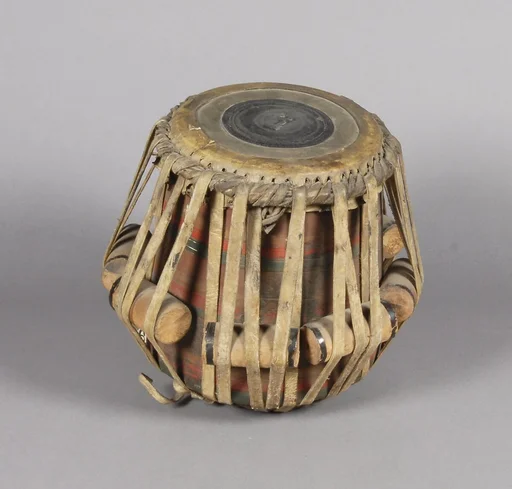
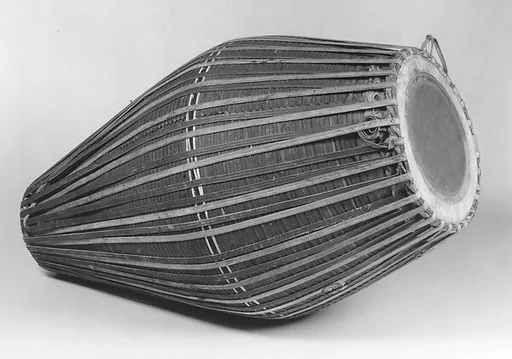
The pakhāvaj is commonly regarded as the ancestor of the tablā. Its two sides were separated into two separate drums to facilitate tuning and accommodate the performance technique. Before the tablā gained popularity in the late 18th century, the pakhāvaj was the most popular drum for the accompaniment of classical music in North India. It is closely associated with the genre of music called dhrupad and stringed instruments such as the dhrupad rabāb and rudra veena. Black tuning paste on both the pakhāvaj and tablā lowers the pitch of the instruments and gives them a ringing tone.
- Artist
- Unknown
- Date
- late 20th Century
- Medium
- Wood, goatskin, leather
- Culture
- Indian
- Department
- Musical Instruments
- Credit line
- Gift of Herbert J. Harris, 1986