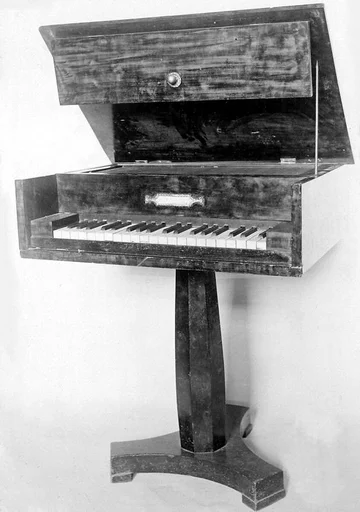
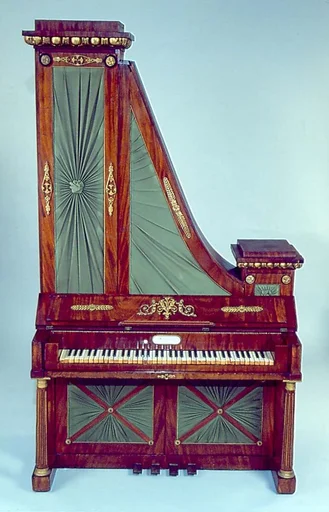
Upright (Giraffe) Piano
Johann Jacob Könnicke
1810 · Wood, various materials · Musical Instruments
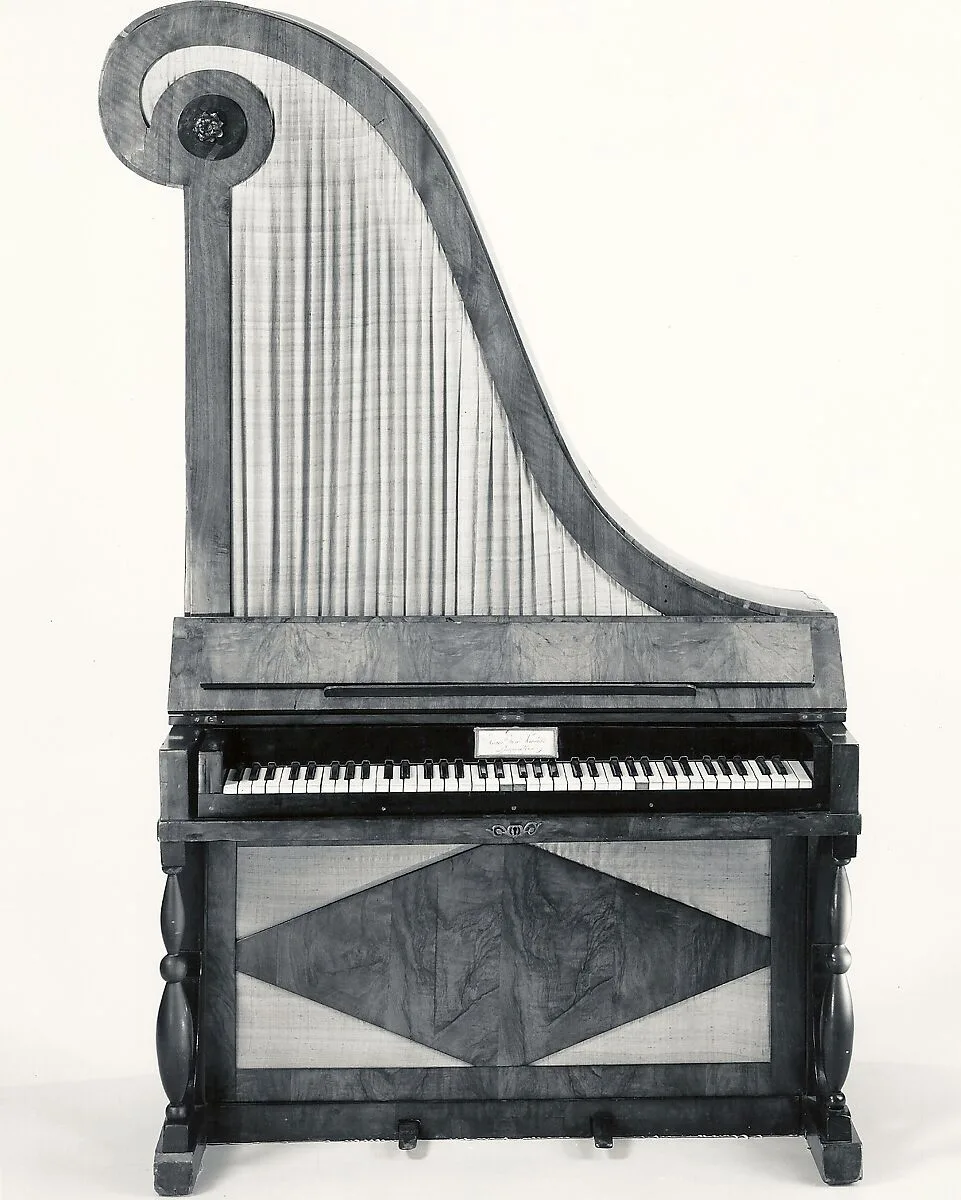
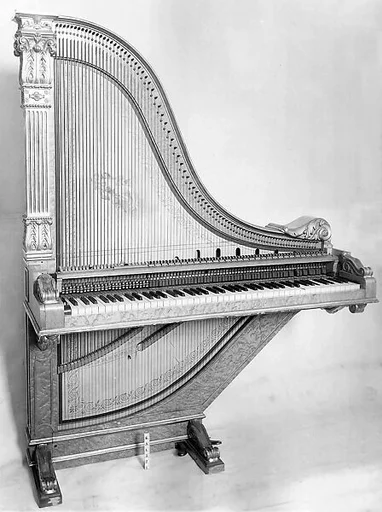
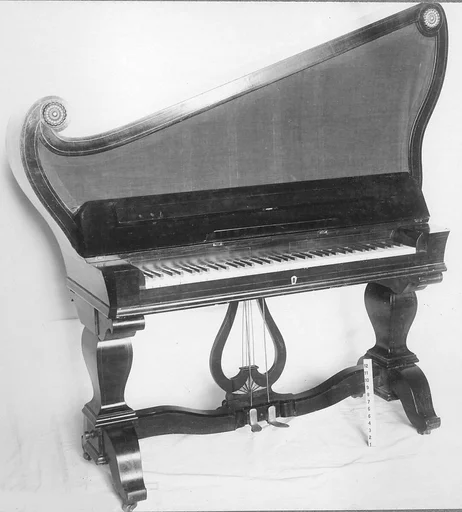
Johann Jacob Könnicke was trained at an early age as a keyboard maker and is known to have build organs, grand pianos, and upright instruments like this example at The Met. He moved to Vienna around the year 1790 and eventually became a burger of that city in 1796, a position that he advertised on the nameplate of this piano. This type of piano is known as a "giraffe piano," which has an assymetrical case that is shaped to the length of the strings of a piano from the longest bass strings to the shortest treble strings. It was but one type of case developed by piano makers in the early nineteenth century, during an innovative period of piano design. A wide variety of upright pianos were developed that included among others so-called pyramid pianos and lyre pianos. Technical description: Walnut veneer case curving upward left side and terminating in a scroll with carved wood ornament, the front panels above and below keyboard covered with light yellow silk; 3 piece hinged keyboard cover holding music rack; 2 turned column legs; compass FF-f4 (73 keys), ivory naturals with bone fronts, accidentals of blackened and varnished hardwood; German Hangende action with escapement, hammers mounted in brass kapsels with spring return, damper arms attached to battens and pivoted in metal kapsels, retained by springs; square pierced tuning pins; 29 top notes double-strung, 44 triple strung (currently highest 25 double, remaining 48 single), 6 strings wound (not original); bridge back-pinned; 2 wood pedals, the right raising dampers the left shifting action for una corda; brass lock with decorative front; rectangular nameplate with glass cover and stamped brass frame.
- Artist
- Johann Jacob Könnicke
- Date
- 1810
- Medium
- Wood, various materials
- Culture
- Austrian
- Department
- Musical Instruments
- Credit line
- Gift of Murtogh Guinness, 1979