Chamber Organ
Samuel Green
ca. 1790–96 · Mahogany, cloth, ivory, ebony, brass · Musical Instruments
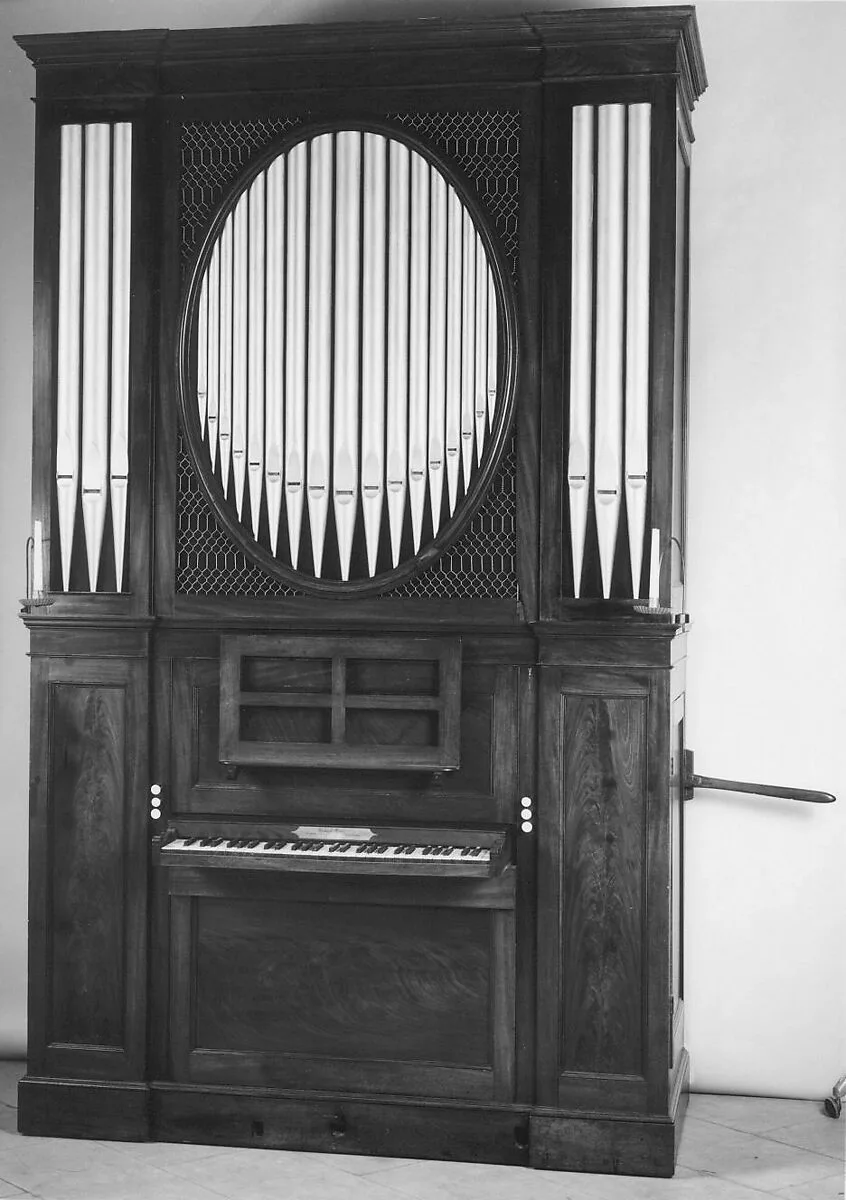
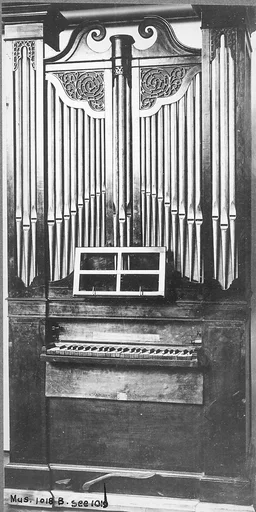
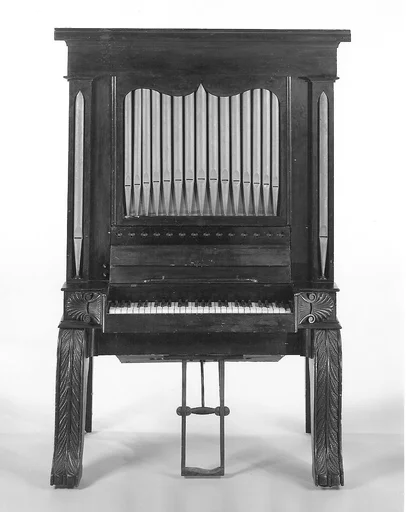
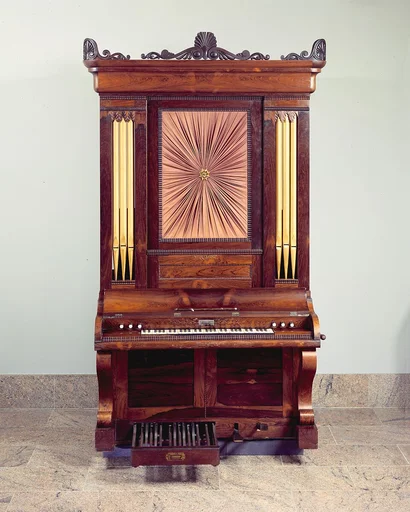
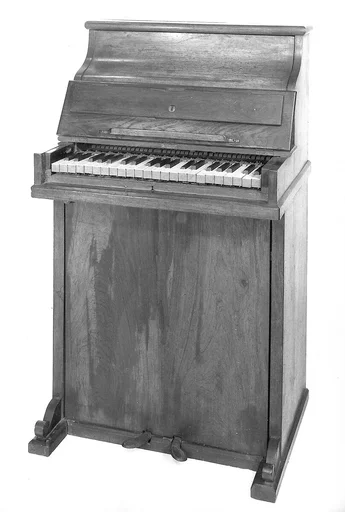
The chamber organ is a moderately-sized piped organ. It typically has a single manual, a limited number of stops, and a limited pedalboard or no pedals at all. It is generally intended for use in small chapels, in homes, or other intimate rooms. As it is capable of long sustained tones, it is sometimes preferable to harpsichord as a continuo instrument in chamber ensembles. Samuel Green apprenticed to George Pyke, an organ builder and clock maker. In addition to chamber organ like this example at The Met, Green built many large pipe organs for churches and cathedrals in Britain, many of which remain to this day. After his death, in 1796, his wife Sarah continued the business eventually forming a partnership with his foreman, Benjamin Blyth. Technical description: Rectangular mahogany case with gilt display pipes below cornice in 3 flats--2 rectangular flanking large oval--on cloth- and grille-backed facade over single retractable manual GG.AA-f3 (58 notes without GG#) having double-scored ivory naturals with plain flat fronts and ebony sharps, 4 ranks with 6 stops labeled on engraved ivory knobs: Open Diapason, Stopped Diapason, Principal Bass and Treble, Fifteenth Bass and Treble, the diapasons sharing a common bass, bellows pumped by side handle or front pedal, another pedal (missing) for 2' +4" combination, 2 candle holders on swing cranes in brackets at sides of case, hinged music rack hanging from 2 brass knobs.
- Artist
- Samuel Green
- Date
- ca. 1790–96
- Medium
- Mahogany, cloth, ivory, ebony, brass
- Culture
- British
- Department
- Musical Instruments
- Credit line
- Purchase, Margaret M. Hess Gift, in memory of her father, John D. McCarty, 1993