Hardanger Fiddle
Unknown
19th century · Wood, ivory, mother-of pearl · Musical Instruments
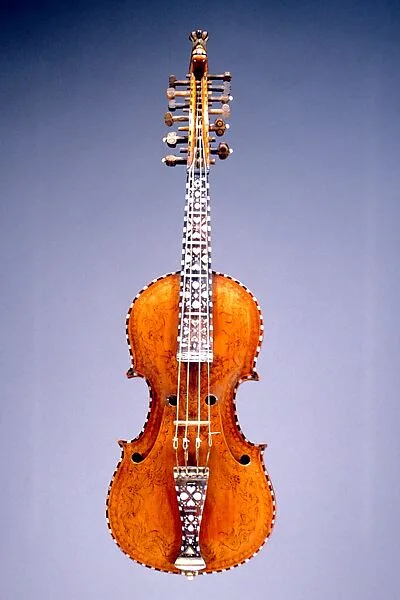
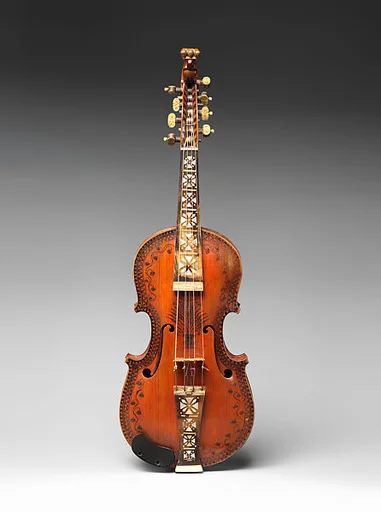
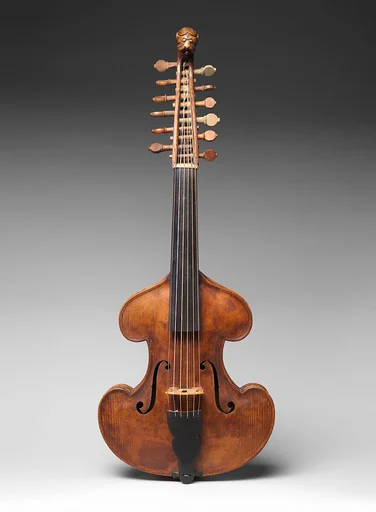
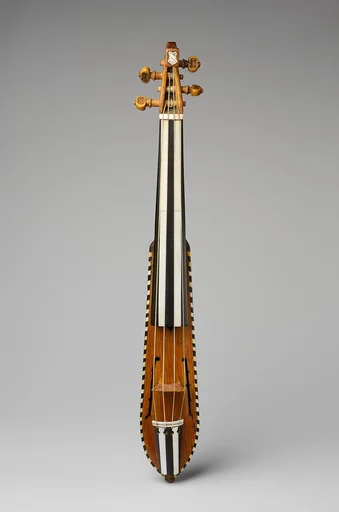
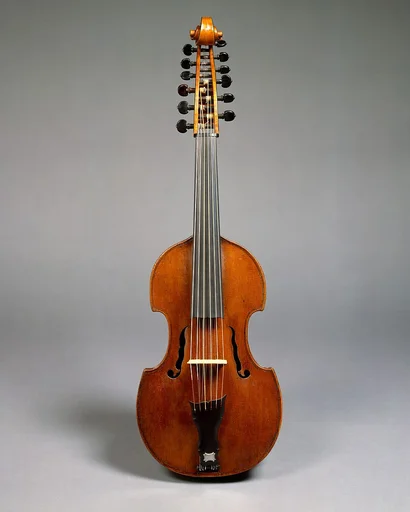
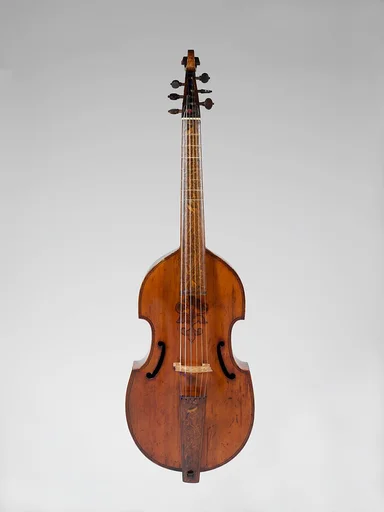
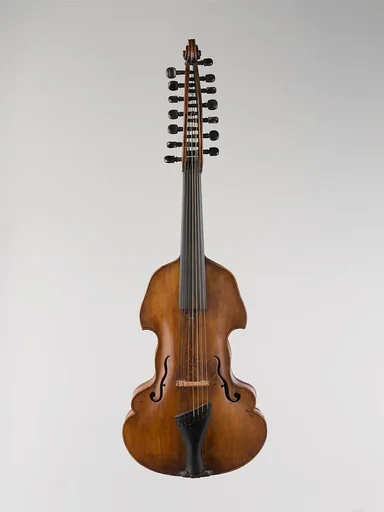
The hardanger fiddle (hardingfele) is the folk fiddle of Norway originally used in the farming and fishing communities of the Hardangerfjord in the western part of the country. Traditionally, the instrument was used to play songs, dances, and wedding music. It has also been embraced by nationalistic composers such as Edvard Grieg, who incorporated folk tunes played on the hardingfele into his works. Hardanger fiddles generally have four bowed strings and an additional four sympathetic strings beneath the bridge; the latter are not played directly but are excited into vibration by the bowed strings above, adding a subtle richness to the sound. These often ornately inlaid instruments first appeared in the 1650s, and their short, straight necks and fingerboards recall those of the violin during the Baroque period. The prolific eighteenth-century fiddle makers Isak Nielsen (Skaar) Botnen and his son, Trond Isaksen Flatebø, who made this example, popularized the instrument and are responsible for the tradition that continues today. Description: Nine pegs, four melody strings, eight sympathetic strings; front, walls, back and fingerboard decorated with floral designs in pen and ink; edges of corpus, fingerboard and tailpiece inlaid with mother-of-pearl; carved head of leonine animal with ivory tongue, teeth and eyes.
- Artist
- Unknown
- Date
- 19th century
- Medium
- Wood, ivory, mother-of pearl
- Culture
- Norwegian
- Department
- Musical Instruments
- Credit line
- Gift of The University Museum, University of Pennsylvania, 1953