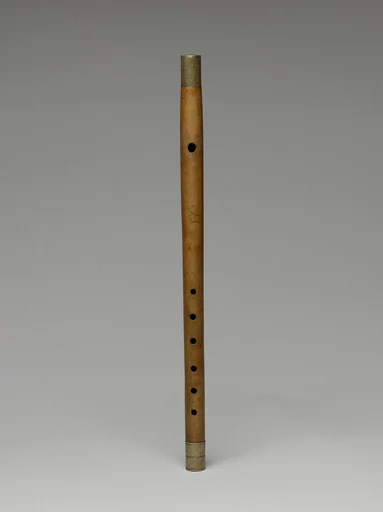
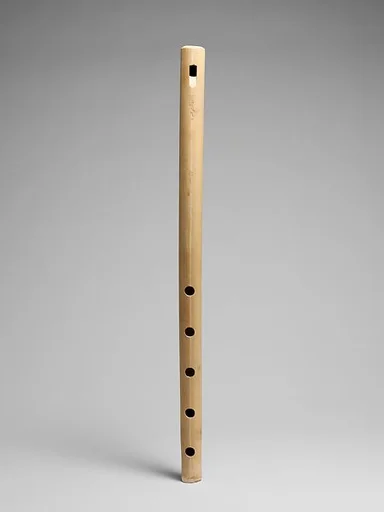
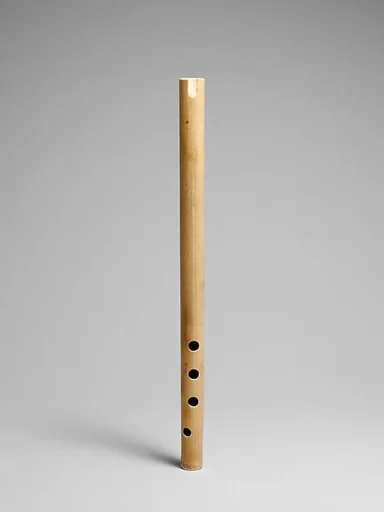
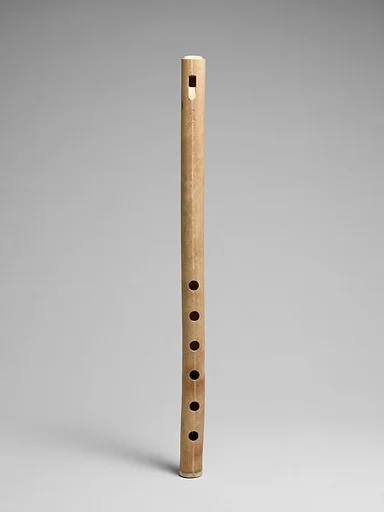
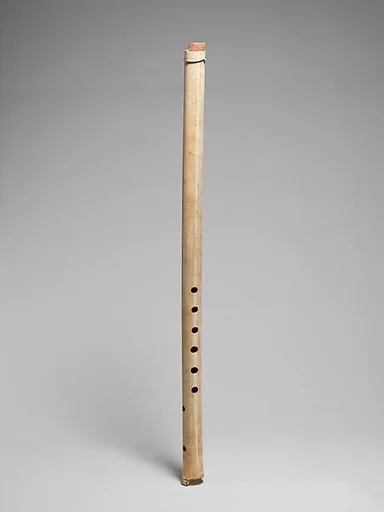
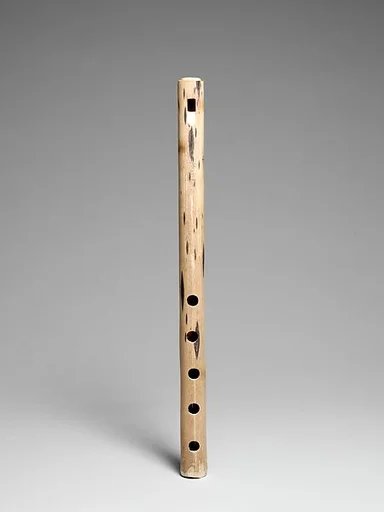
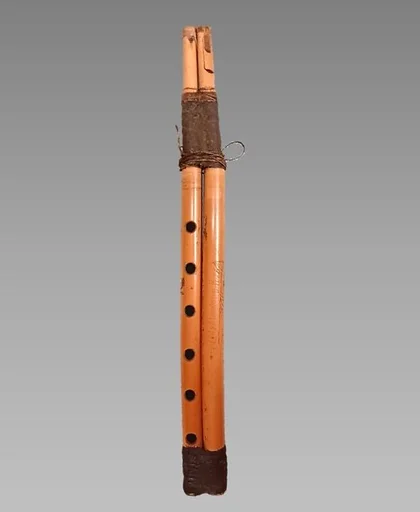
Courting flute (siyotanka)
Unknown
ca. 1850–1900 · Red pipestone (catlinite), lead, Native-tanned leather · Musical Instruments
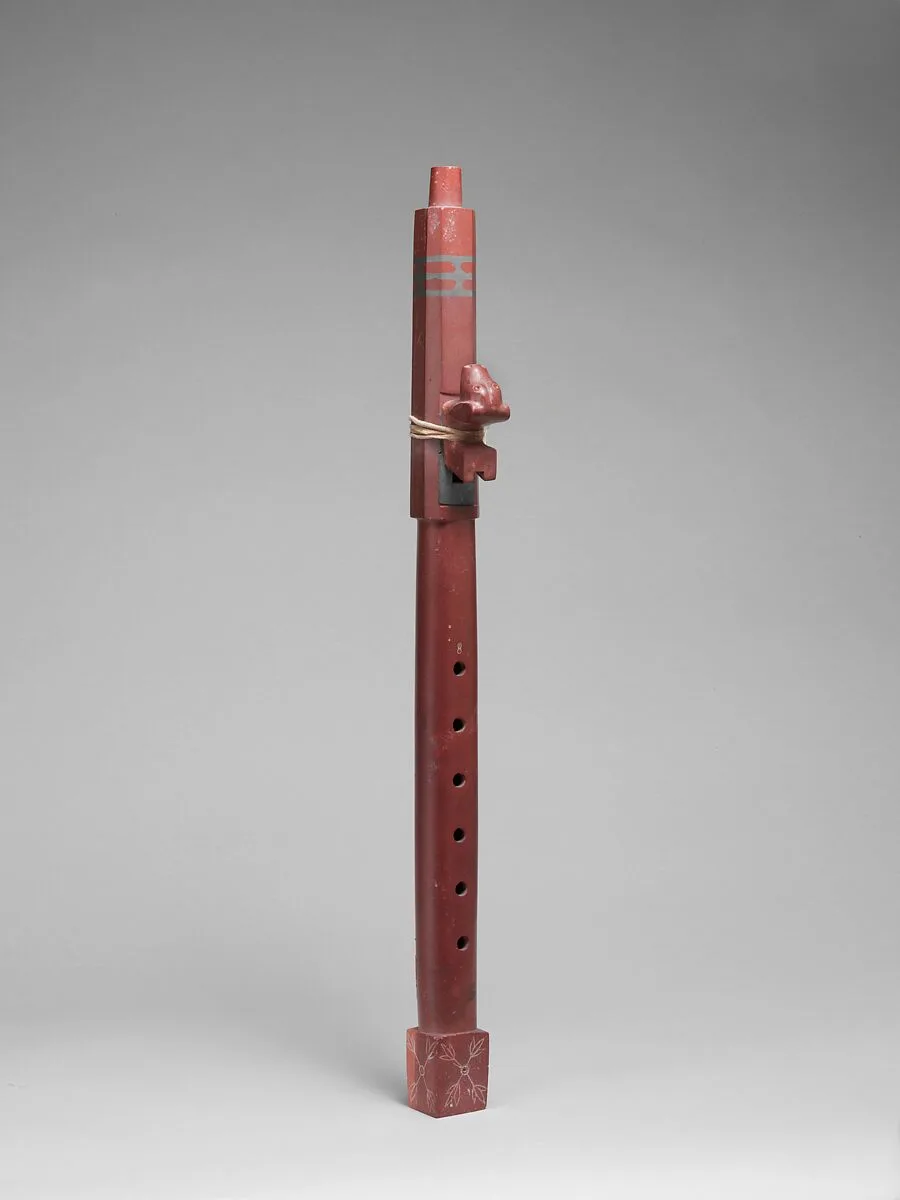
This endblown flute, commonly known as a courting flute, has a cylindrical, hollowed body of red pipestone or catlinite, so named for George Catlin, the American author and painter known for his work in the American West, who mentioned the pipestone quarries in his travelogue of 1835. This unusual example carved from pipestone has lead metal inlays around the circumference of the body near the embouchure hole, a decorative element often found in pipe stems during this time period. With six fingerholes oriented along the front of the flute and four-directional floral designs at the base, this flute represents a sounding mechanism unique to North American Indians, the external duct. The air stream exits the shaft of the flute above the stylized canine saddle, passes through a narrow channel, and splits on the voicing edge below the saddle. Saddles, or blocks as they are sometimes called, are unique to each flute, typically associated with animal companions particular to the maker or owner of an instrument.
- Artist
- Unknown
- Date
- ca. 1850–1900
- Medium
- Red pipestone (catlinite), lead, Native-tanned leather
- Culture
- Native American (Sioux)
- Department
- Musical Instruments
- Credit line
- The Crosby Brown Collection of Musical Instruments, 1889