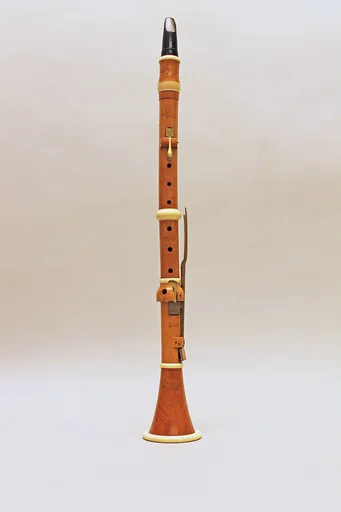
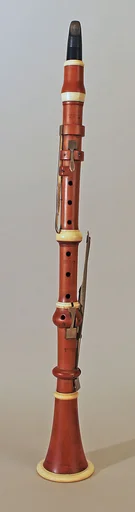
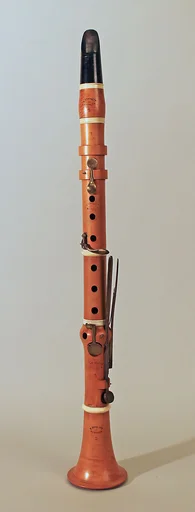
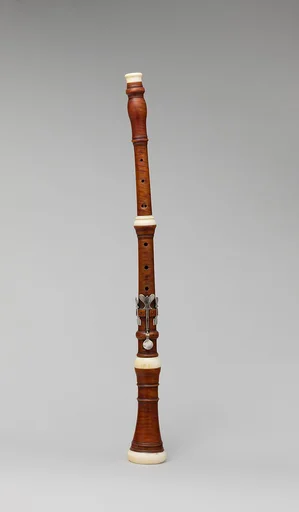
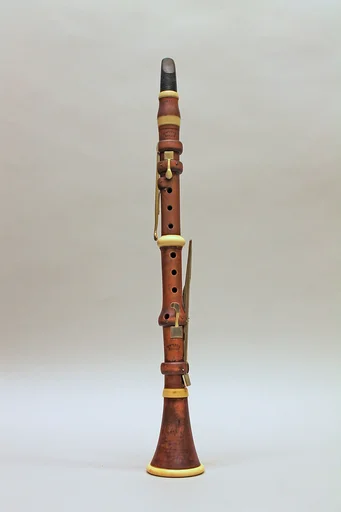
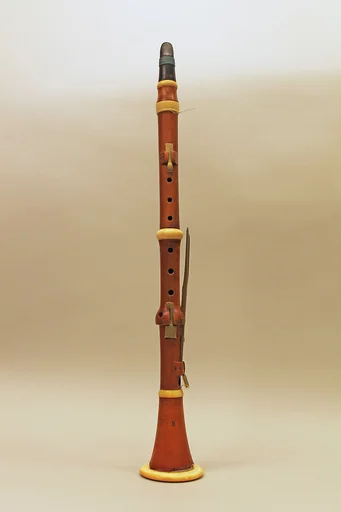
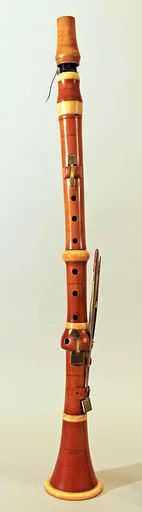
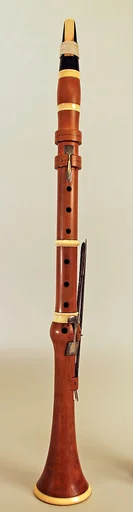
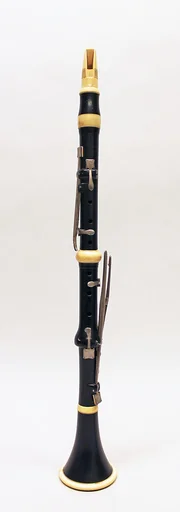
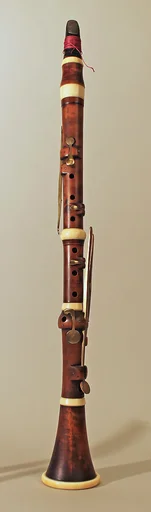
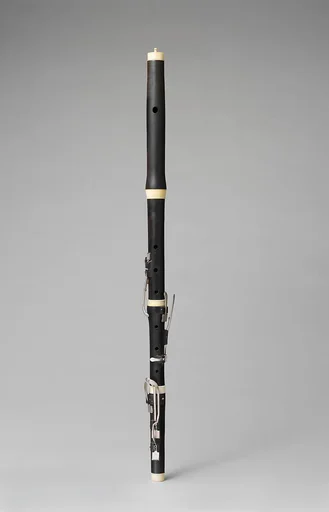
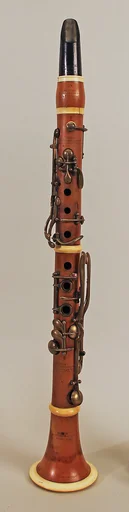
Sopranino Clarinet in High F
Boisselot aîné
ca. 1780 · Boxwood, ebony, brass, ivory · Musical Instruments
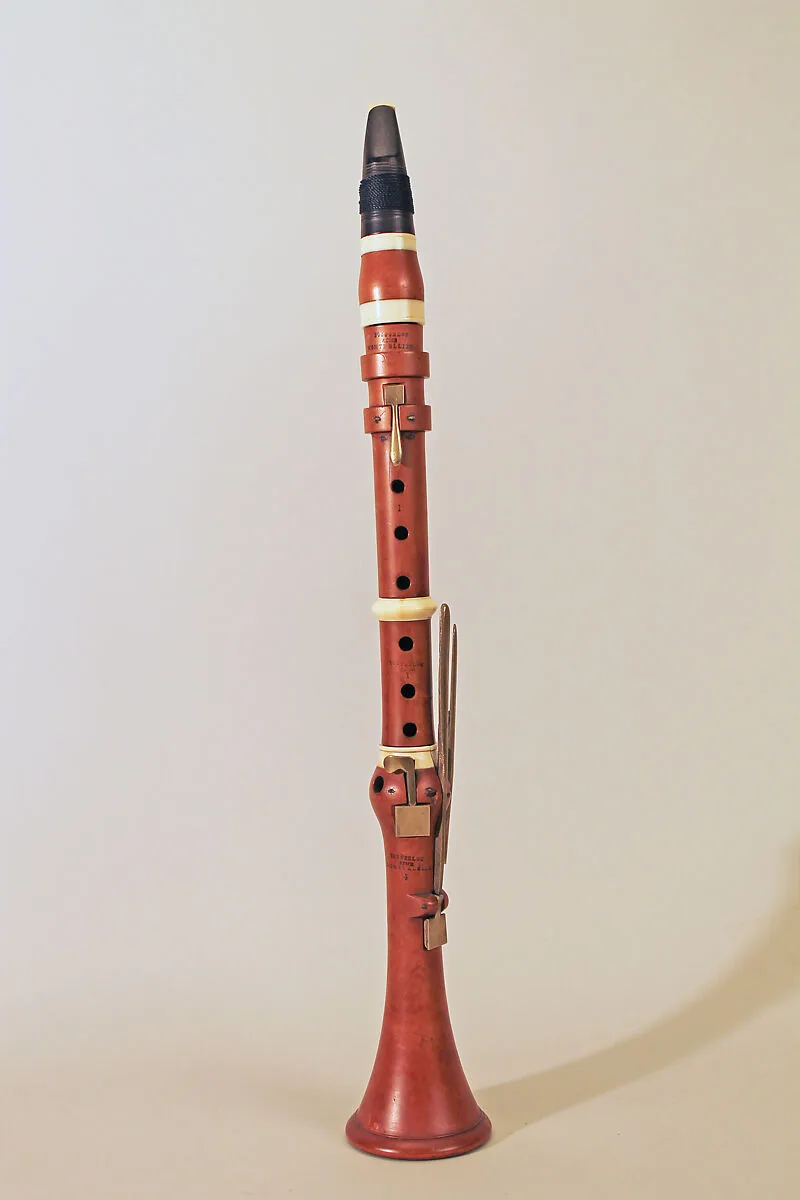
Clarinets in F replaced shawms in Janissary music and were widely used in military music until the mid-1800s. Pierre Boisselot, called "Boisselot aîné" (born circa 1738, died 1818) had his workshop in Montpellier flourishing 1772-1813. (Denis Watel, 2015, 28) Overall size: 460 Bore: c-hole 11.9; f-hole 11.9 Conical part: 135 Technical description: Boxwood with ivory ferrules and brass keywork. Five pieces: mouthpiece, barrel, upper section, middle section for the fingers of the right hand, lower section with keys and integral bell. Unstamped blackwood mouthpiece grooved for cord. Barrel unstamped. Speaker liner projects ca. 2 mm into the bore. Levers for L4, tone-hole and key for R4 mounted in a fusiform swelling. Integral wooden rim. Three short keys SATB, two long keys SATW, a combination that is often found on French instruments of this period. L0: T; speaker. L1: T; throat A♮. L2: T. L3: T. L4: E3/B♮4; F♯3/C♯5. R1: T. R2: T. R3: T. R4: T; G♯3/E♭5. Keyhead type: flat square Keymount type: square turned wooden rings, swelling. SATK and SATB. Inscribed on upper and lower secction "BOISSELOT / AINE / MONTPELLIER / I", and on middle section "BOISSELOT / AINE / I". Playing accessories: one reed (modern) and a black string. General usage of type: instrument for military use (Heike Fricke, 2014)
- Artist
- Boisselot aîné
- Date
- ca. 1780
- Medium
- Boxwood, ebony, brass, ivory
- Culture
- French
- Department
- Musical Instruments
- Credit line
- The Crosby Brown Collection of Musical Instruments, 1889