Mōsō Biwa (盲僧琵琶)
Unknown
19th century · Wood, silk · Musical Instruments
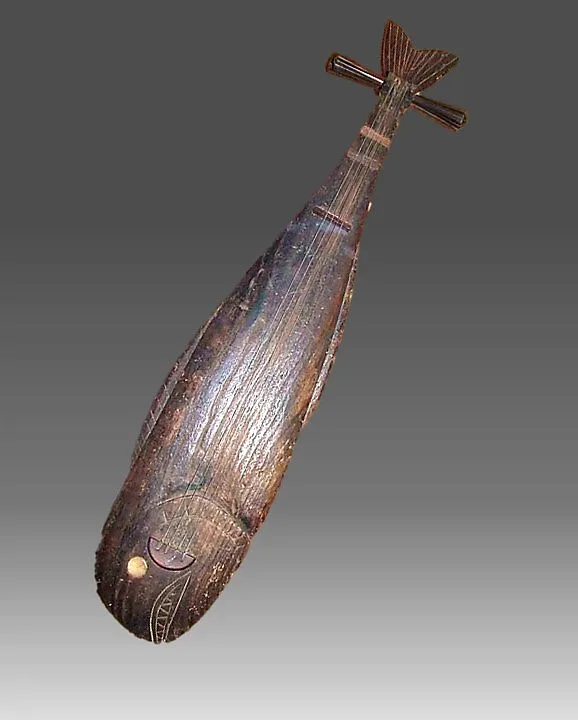
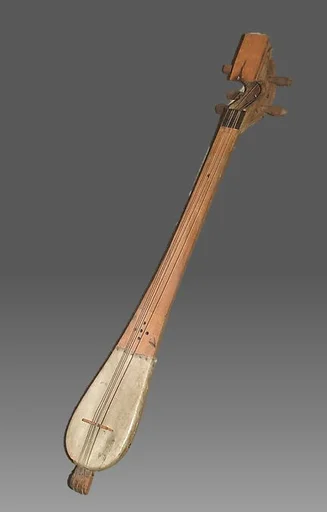
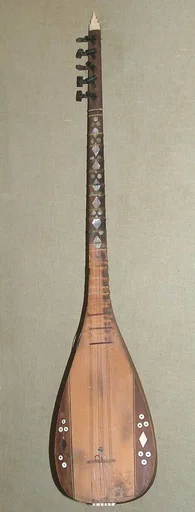
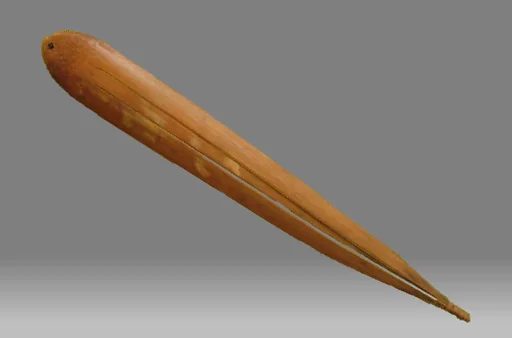
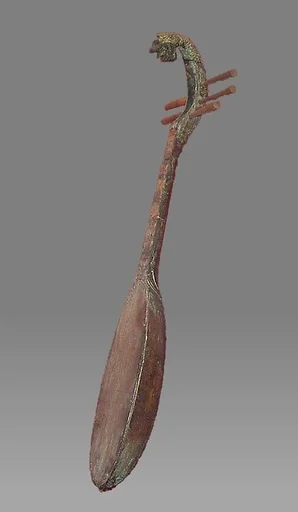
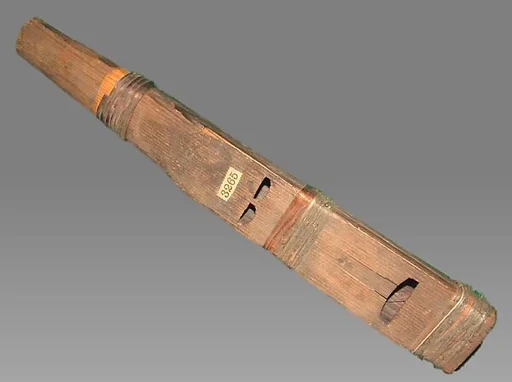
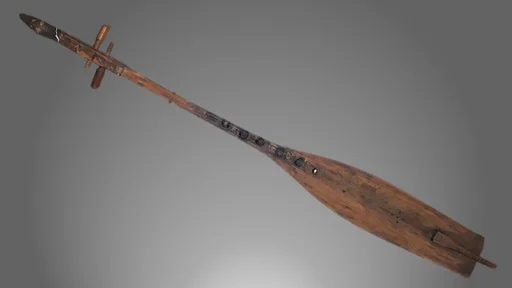
Most mōsō biwas have tear-shaped bodies, but this rustic fish-shaped example was probably used by a wandering Buddhist monk. Biwa traditions began with blind priests who traveled from village to village singing sutras. The fish is an auspicious symbol of Buddhism signifying wakeful attention since most fish lack eyelids and remain alert.
- Artist
- Unknown
- Date
- 19th century
- Medium
- Wood, silk
- Culture
- Japanese
- Department
- Musical Instruments
- Credit line
- The Crosby Brown Collection of Musical Instruments, 1889