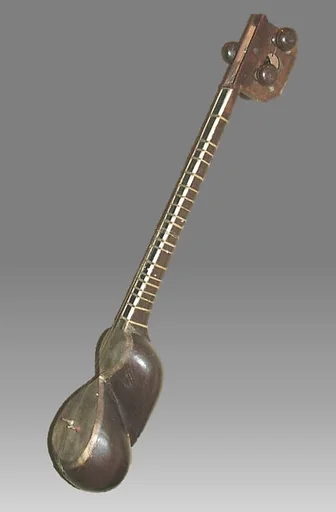
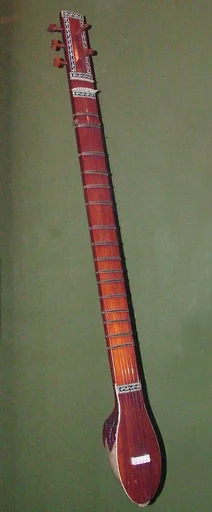
Saz
Unknown
late 19th century · Wood inlaid with ivory and pearl. · Musical Instruments
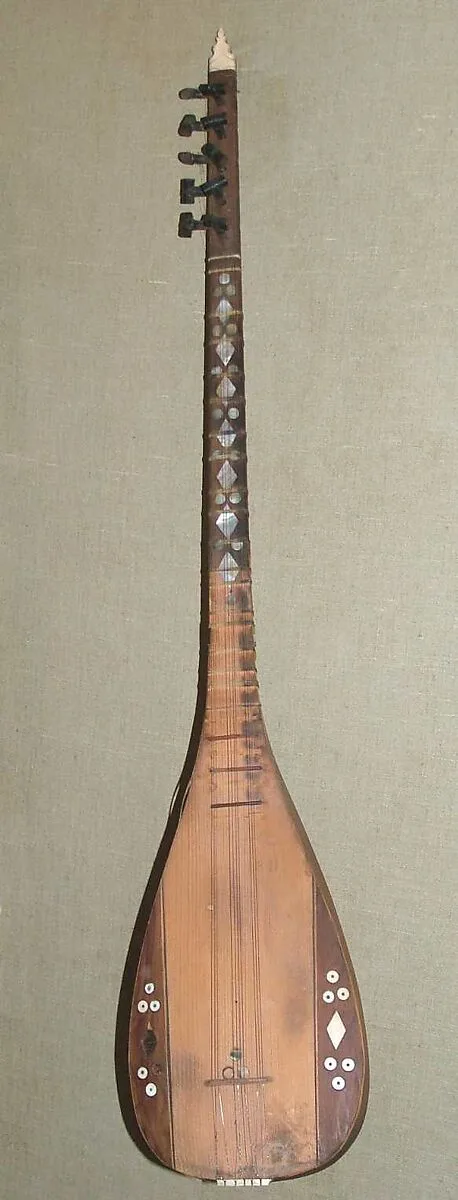
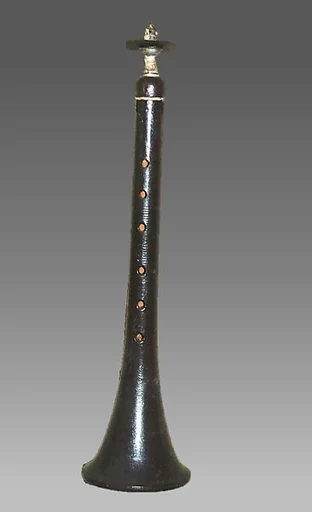
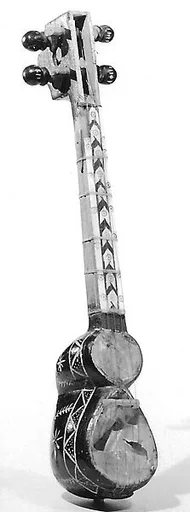
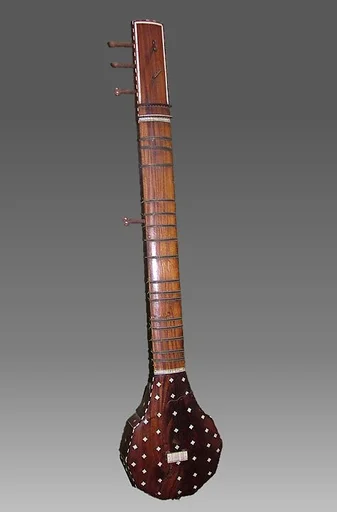
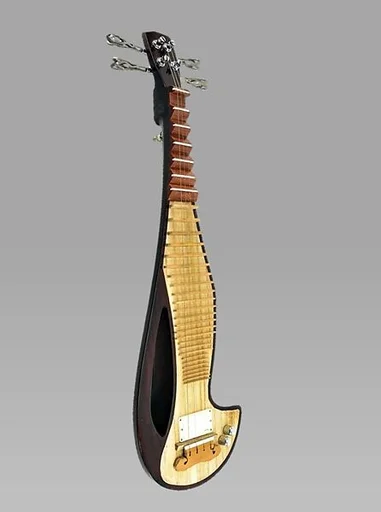
In addition to lutes like the ūd with large, vaulted backs, wood bellies, and relatively short, unfretted necks, the Middle East possesses a large number of long necked lutes. These may be identified by carved or carvel-built (strips of wood glued together) tear-shaped bodies, fretted necks, wooden bellies, and pegblocks which extend from the lute's neck (sāz, tanbūr types), or by bodies that incorporate a waist, bipartite, parchment-covered bellies and openwork pegboxes (tār type). Linguistic connections may be made between these instrument names and those from other cultures; for example, tanbūr and tambūrā (India); tār and sitar (India), among others. In Turkey the term, bağlama is fairly interchangable with saz which refers to long-necked lutes. It is used in many contexts in Turkey to accompany song, dance and ritual.
- Artist
- Unknown
- Date
- late 19th century
- Medium
- Wood inlaid with ivory and pearl.
- Culture
- Turkish
- Department
- Musical Instruments
- Credit line
- The Crosby Brown Collection of Musical Instruments, 1889