Piano Harmonica
J. B. Cramer & Co.
ca. 1870–96 · Wood, various materials · Musical Instruments
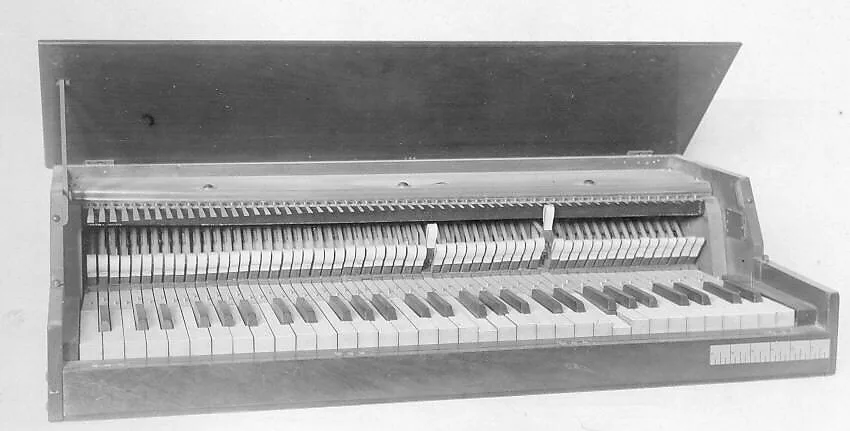
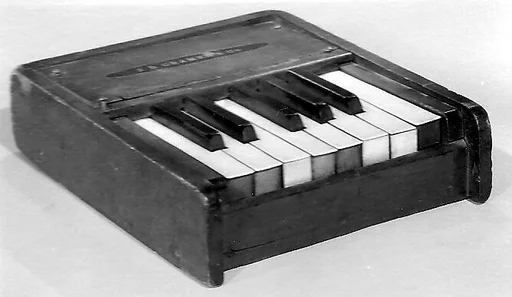
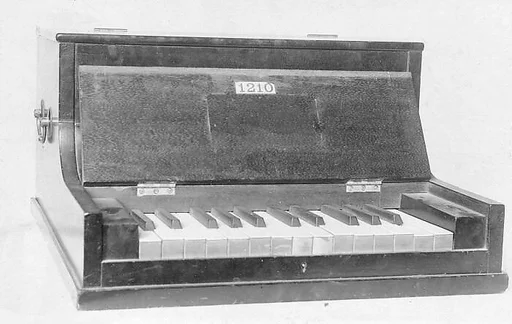
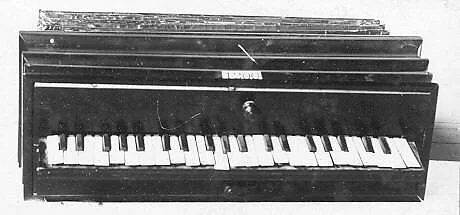
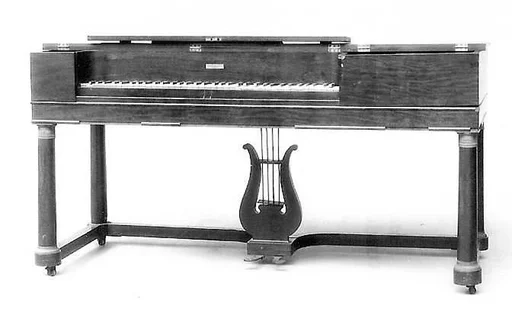
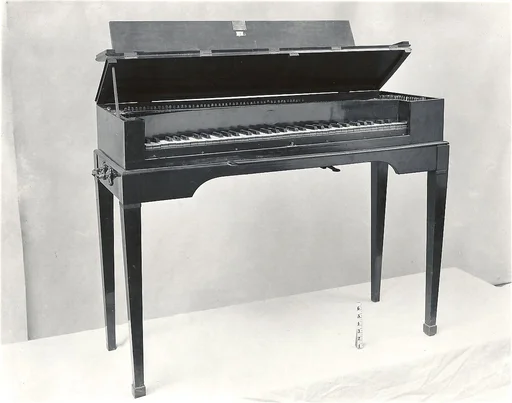
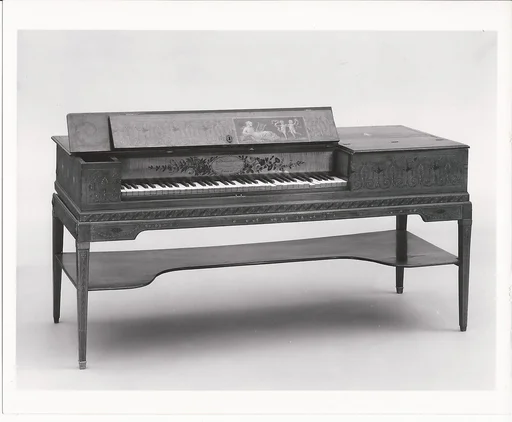
The J. B. Cramer & Co. firm was known for its reed organs and harmoniums. However, this innovative instrument uses a grand piano action to strike metal tongues to produce sound, instead of the strings found inside of a piano. Walnut case held together with large screws, rectangular when viewed from above, without legs or stand, enclosing a keyboard (compass 61 keys, ivory naturals, ebony accidentals) that controls a simple English grand piano action whose felted hammers, extending forward toward the player, strike thin steel tongues; these tongues are graduated in length and width and are screwed at the back end to a metal bar that extends beneath a removable wood panel; panel, bar, and tongues can be removed as one unit, and are mounted above the piano action in a raised portion of the case, covered by a hinged lid and fronted with a cloth-backed fret-work panel; the keyboard is covered by a fallborad holding a hinged music rack, below which is the nameboard; no damper mechanism or resonators. (Laurence Libin 4 Oct. 77)
- Artist
- J. B. Cramer & Co.
- Date
- ca. 1870–96
- Medium
- Wood, various materials
- Culture
- British
- Department
- Musical Instruments
- Credit line
- The Crosby Brown Collection of Musical Instruments, 1889