Aquamanile in the Form of a Unicorn
Unknown
ca. 1425–50 · Copper alloy · Medieval Art
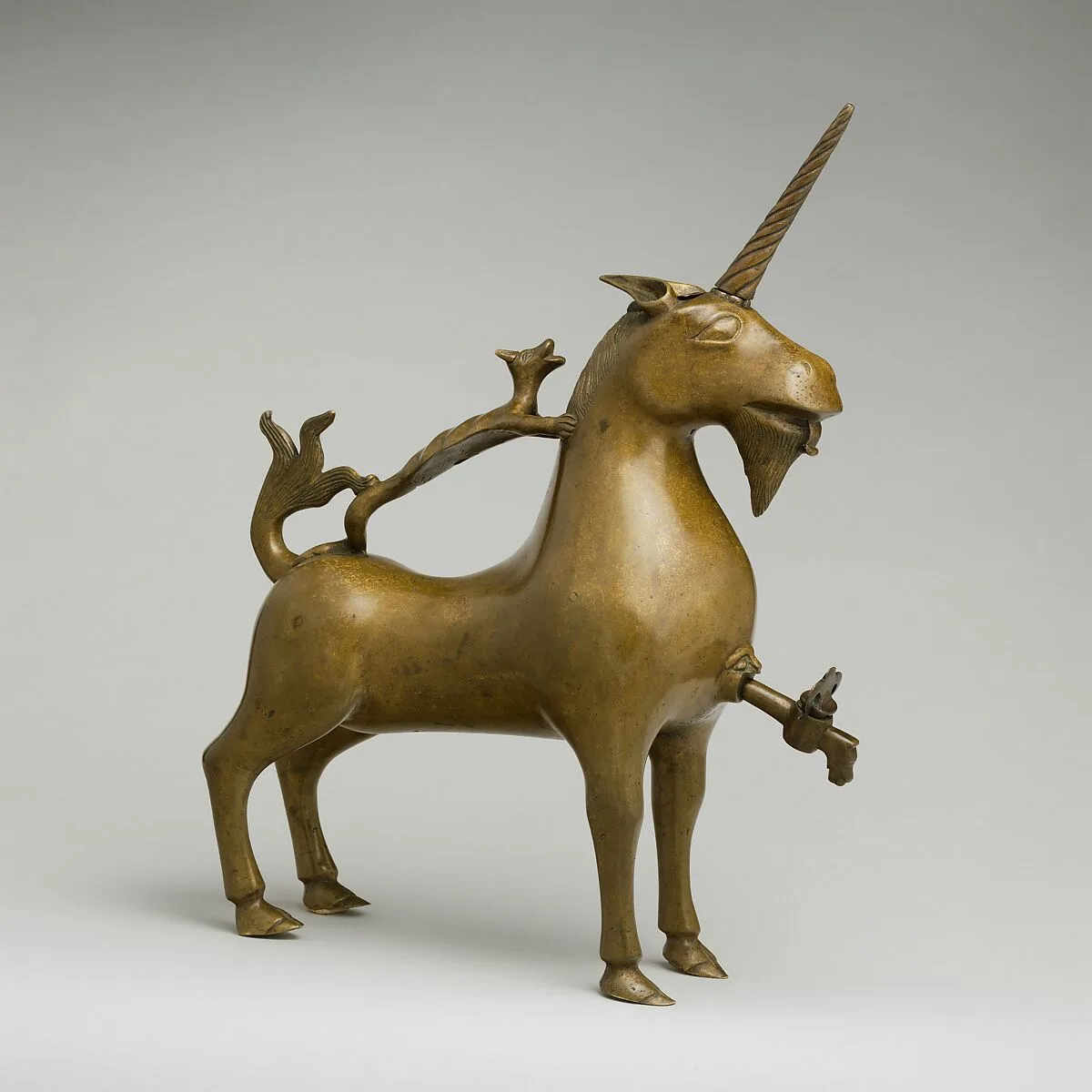
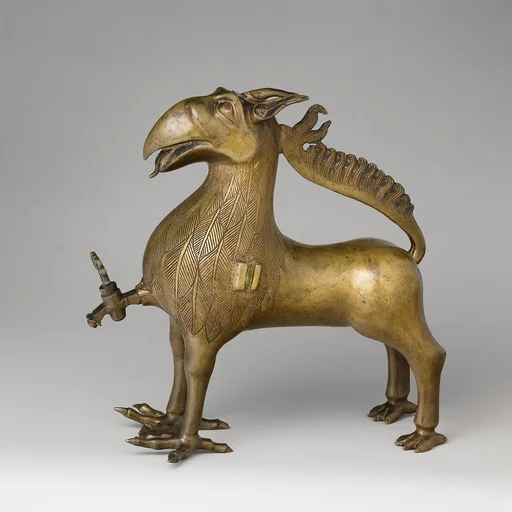
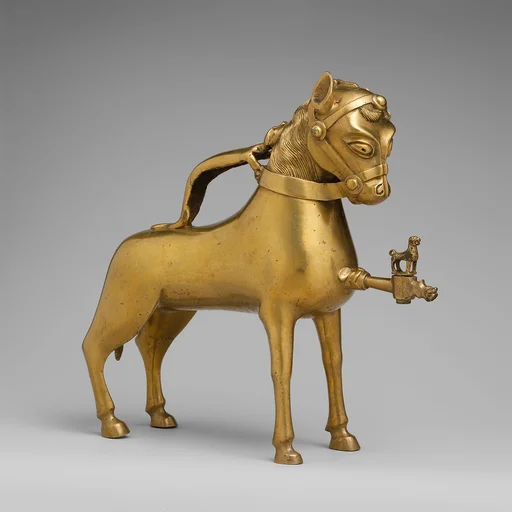
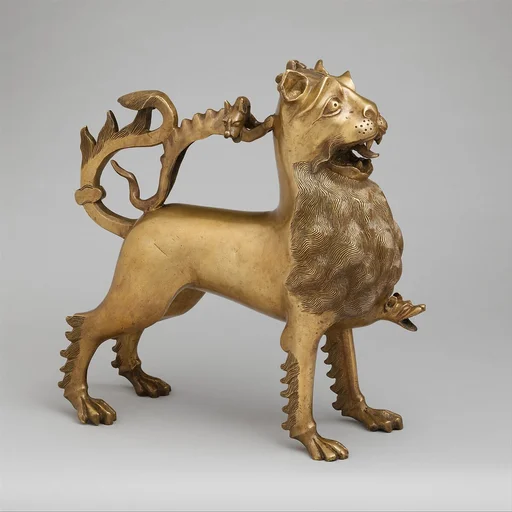
The aquamanile takes its name from the Latin words for water (aqua) and hand (manus), as it was intended for hand washing at table. Poured through a flap at the top, the water was later dispensed through the spigot in the unicorn’s chest. The flame-like tail is typical of aquamanilia cast in Nuremberg. Residents of the city were enthralled by unicorns, emblazoning their coats of arms with images of the beast. Nuremberg officials, however, sensibly decided against the purchase of a unicorn offered by the distinguished humanist scholar and physician Johannes Sambucus in the mid sixteenth century. The horn of the unicorn on this aquamanile has been replaced.
- Artist
- Unknown
- Date
- ca. 1425–50
- Medium
- Copper alloy
- Culture
- German
- Department
- Medieval Art
- Credit line
- Gift of Irwin Untermyer, 1964