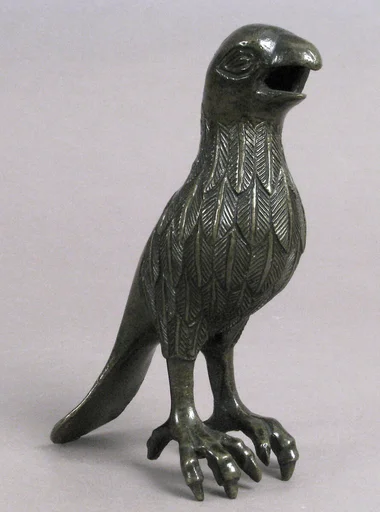
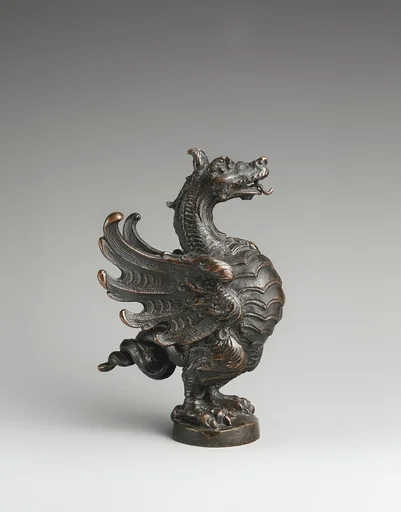
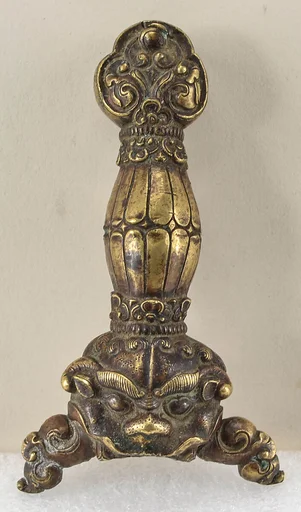
Throne Leg in the Shape of a Griffin
Unknown
late 7th–early 8th century · Bronze; cast around a ceramic core and chased · Islamic Art
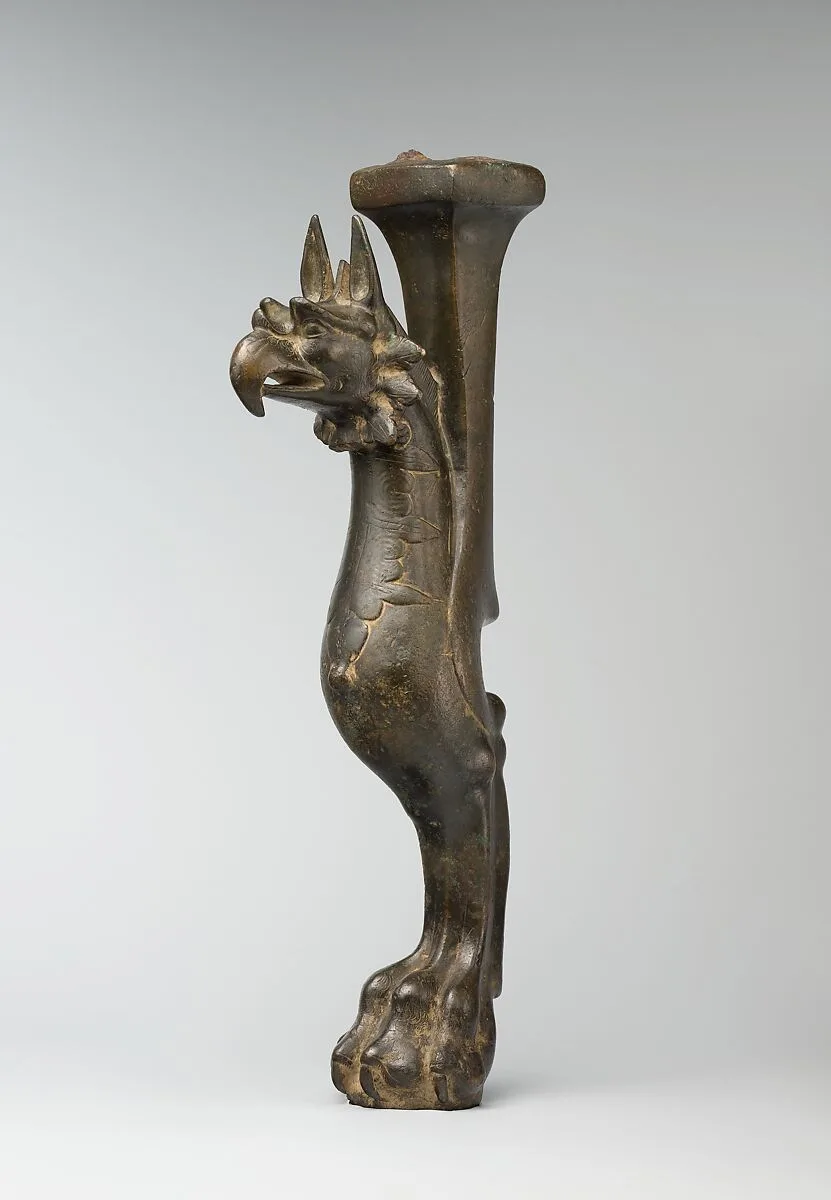
The griffin on this throne leg exemplifies the use of powerful winged animals (real and imaginary) as symbols of royalty. The mythical beast’s long history stretches back to about 3000 B.C., when it appeared in the art of Egypt and the Middle East, and it may have been introduced to western Iran through contacts with Sogdian Central Asia. Here, the creature has been adapted to a tradition of animal-legged thrones in Iranian art. In pre-Islamic Iran the griffin—a combination of lion and eagle, two animals associated with the sun—was seen as a vehicle of ascension, implying the ruler’s elevation to the status of a god. In the early years of the Islamic period, new rulers appropriated the symbol to convey power and legitimacy.
- Artist
- Unknown
- Date
- late 7th–early 8th century
- Medium
- Bronze; cast around a ceramic core and chased
- Department
- Islamic Art
- Credit line
- Purchase, Joseph Pulitzer Bequest, 1971