Sarcophagus with Scenes from the Lives of Saint Peter and Christ
Unknown
early 300s, with modern restoration · Marble · Medieval Art
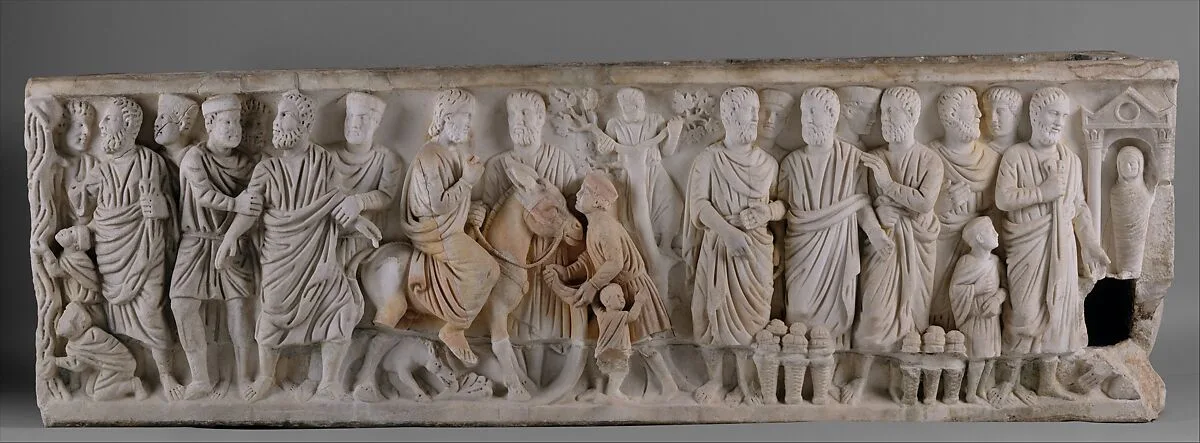
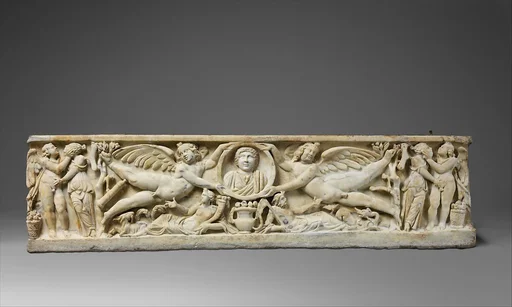
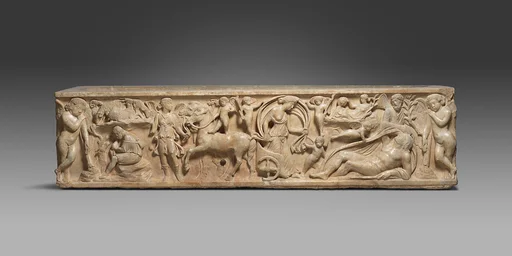
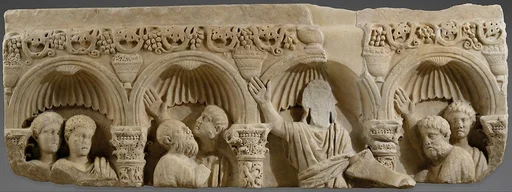
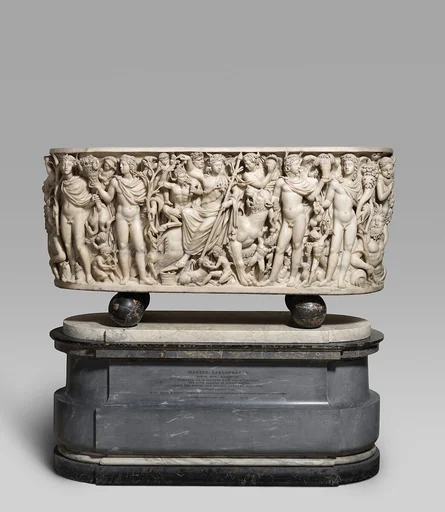
The sarcophagus was carved about the time when Christianity was first recognized as a legal faith within the Roman Empire. The two legendary scenes of the Miracle of Saint Peter Drawing Water from a Rock in His Jail Cell and Saint Peter’s Arrest in Rome, crisply carved in powerful, deep relief at the left, are among the earliest surviving images depicting Peter’s special relationship with Rome. When the sarcophagus was identified in 1879, only the lower legs, with scenes from the life of Christ on the right, survived (see image). Incorrect identification of the figures led to inaccurate restoration of the upper portion of the scenes carved in low relief. Originally, four scenes from Christ’s life decorated the sarcophagus: the Entry into Jerusalem, the Cure of the Man Born Blind, the Multiplication of the Loaves, and the Raising of Lazarus. In the modern restoration, the Cure of the Man Born Blind was omitted, with the man’s feet used instead for the small, frightened child in the Entry into Jerusalem. Roughly carved in low relief on the ends are two Old Testament scenes foretelling mankind’s salvation by Christ: Three Hebrews in the Fiery Furnace and Adam and Eve after the Fall by the Tree of Knowledge. The sarcophagus was brought to America to decorate the grounds of Burrwood, an estate on Long Island.
- Artist
- Unknown
- Date
- early 300s, with modern restoration
- Medium
- Marble
- Culture
- Roman
- Department
- Medieval Art
- Credit line
- Gift of Josef and Marsy Mittlemann, 1991