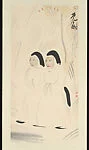
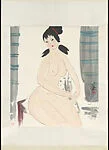
近代 林風眠 仕女 軸|Seated Woman
Lin Fengmian
late 1970s · Hanging scroll; ink and color on paper · Asian Art
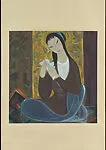
Lin Fengmian was one of the first Chinese artists to study in Europe. In 1919 he traveled to France, where he was attracted to the strong colors and semiabstract forms of the Impressionists and the Fauves. When Lin returned to China in 1926, he was appointed principal of the Beijing Art Academy, but his radical views on art alarmed conservatives. He soon left and founded an art academy in Hangzhou that became the locus for study of modern Western art in China before the war. The reorganization of the Hangzhou Academy after the founding of the People's Republic left Lin without a post. He moved to Shanghai and from 1949 to 1977 painted in virtual isolation, stubbornly resisting a Social Realist style. During the Cultural Revolution he was accused of spying and was jailed. In 1977 Lin was granted a leave to visit relatives in Hong Kong; he lived there until his death. Early in his career Lin abandoned oils for Chinese brush and gouache on paper in order to capture a sense of spontaneity—an intention that approached the traditional ideals of the Chinese literati painter. Here, the sweeping gestures of Lin's brushwork and the rhythmic cadences of his lines take precedence over anatomical accuracy.
- Artist
- Lin Fengmian
- Date
- late 1970s
- Medium
- Hanging scroll; ink and color on paper
- Culture
- China
- Department
- Asian Art
- Credit line
- Gift of Robert Hatfield Ellsworth, in memory of La Ferne Hatfield Ellsworth, 1986