Armor
Unknown
ca. 1540–50 and later · Steel, leather · Arms and Armor
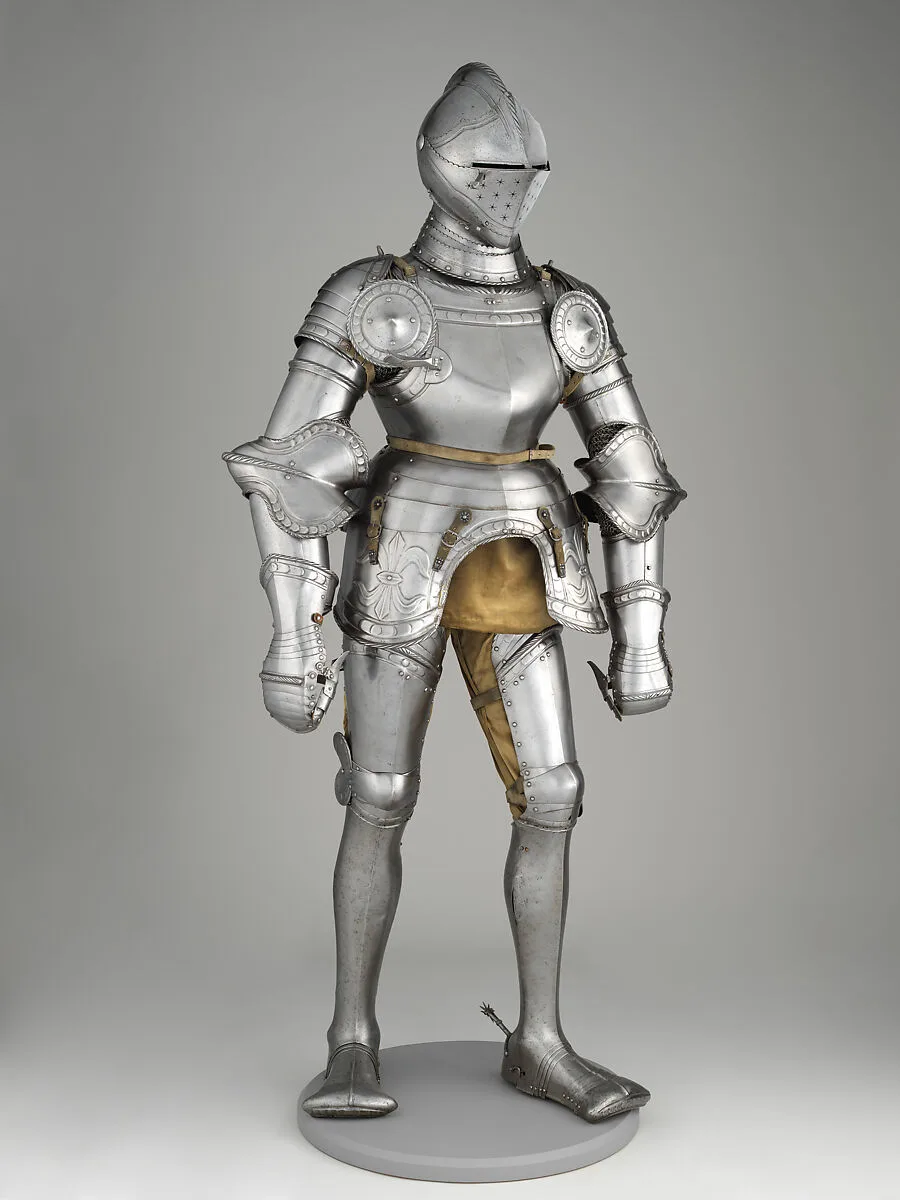
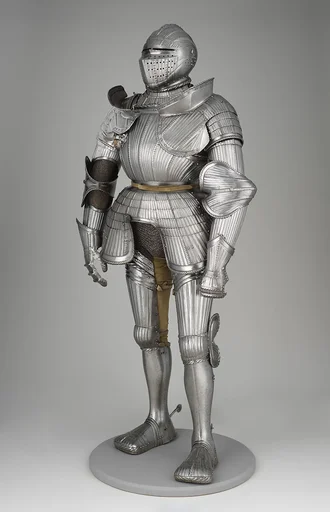
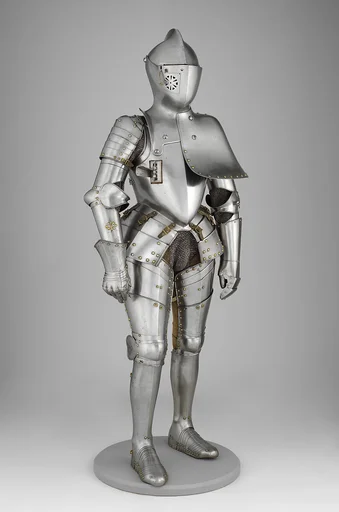
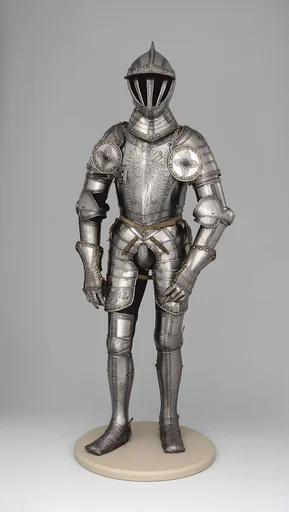
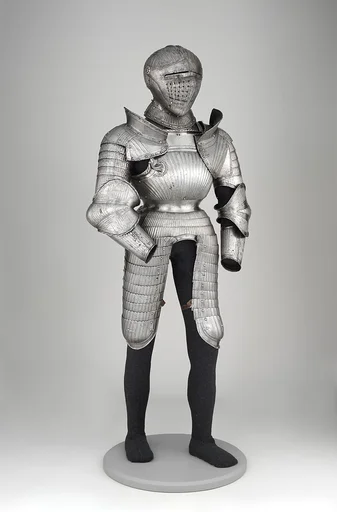
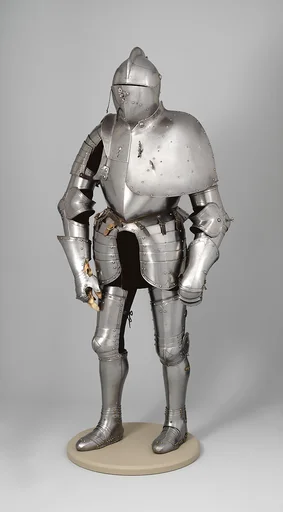
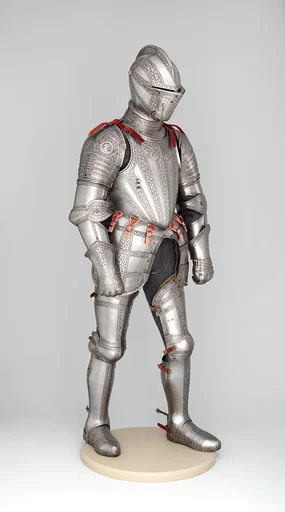
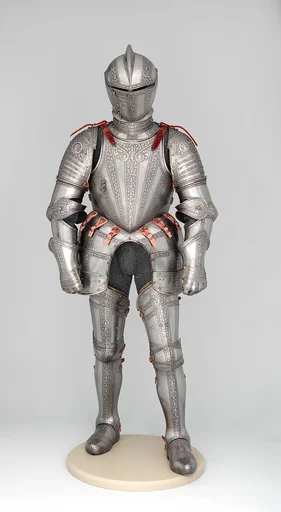
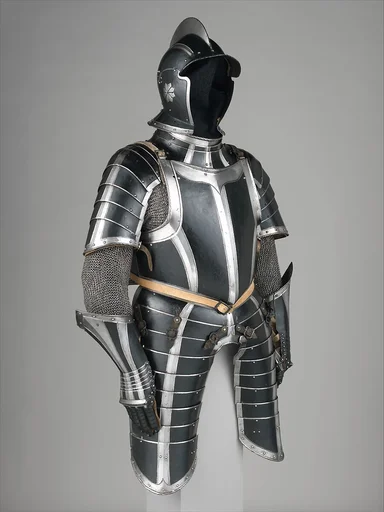
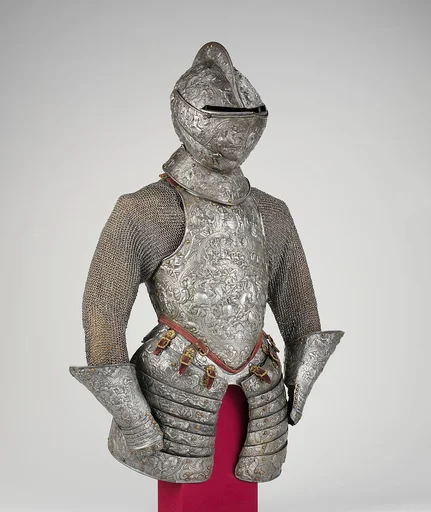
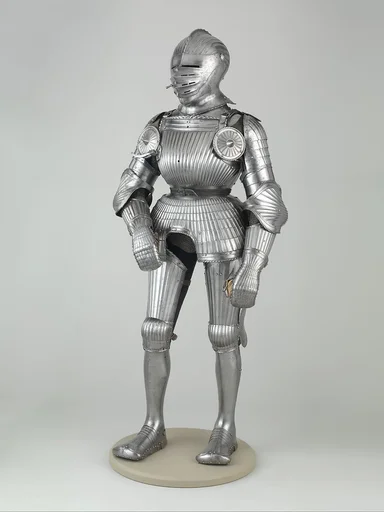
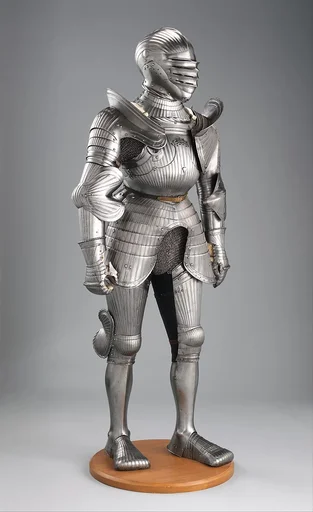
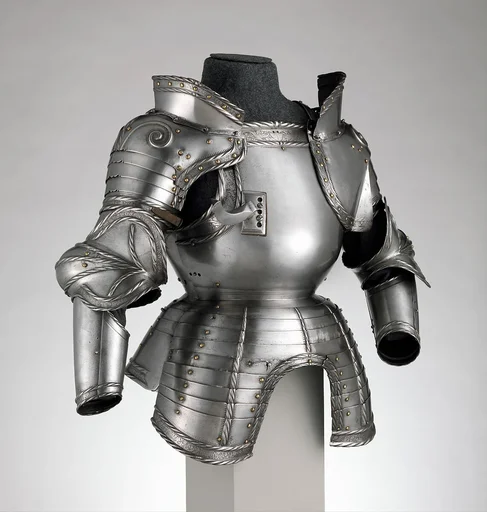
Although relatively plain in appearance, in many ways this armor is typical of armors worn in battle by the knightly cavalry of the mid-sixteenth century. Lacking surface ornamentation such as etching or gilding, it was known as “white armor,” a reference to the unaugmented color of the polished steel. Armor of this type, cap-à-pie (from head to foot), would have been commissioned individually by a noble patron for personal use, as opposed to the even simpler armors that were made in large numbers to be worn by average fighting men. The double lily on the tassets (upper thigh defenses) and the embossed scales on the borders are motifs frequently used on armors thought to have been made in northern Germany. This is one of several similar armors possibly commissioned by the princes Radziwill of Poland.
- Artist
- Unknown
- Date
- ca. 1540–50 and later
- Medium
- Steel, leather
- Culture
- German, possibly Lower Saxony
- Department
- Arms and Armor
- Credit line
- Armor: Bashford Dean Memorial Collection, Gift of Helen Fahnestock Hubbard, in memory of her father, Harris C. Fahnestock, 1929; mail: Bashford Dean Memorial Collection, Funds from various donors, 1929