Armor
Unknown
ca. 1520 and later · Steel, leather · Arms and Armor
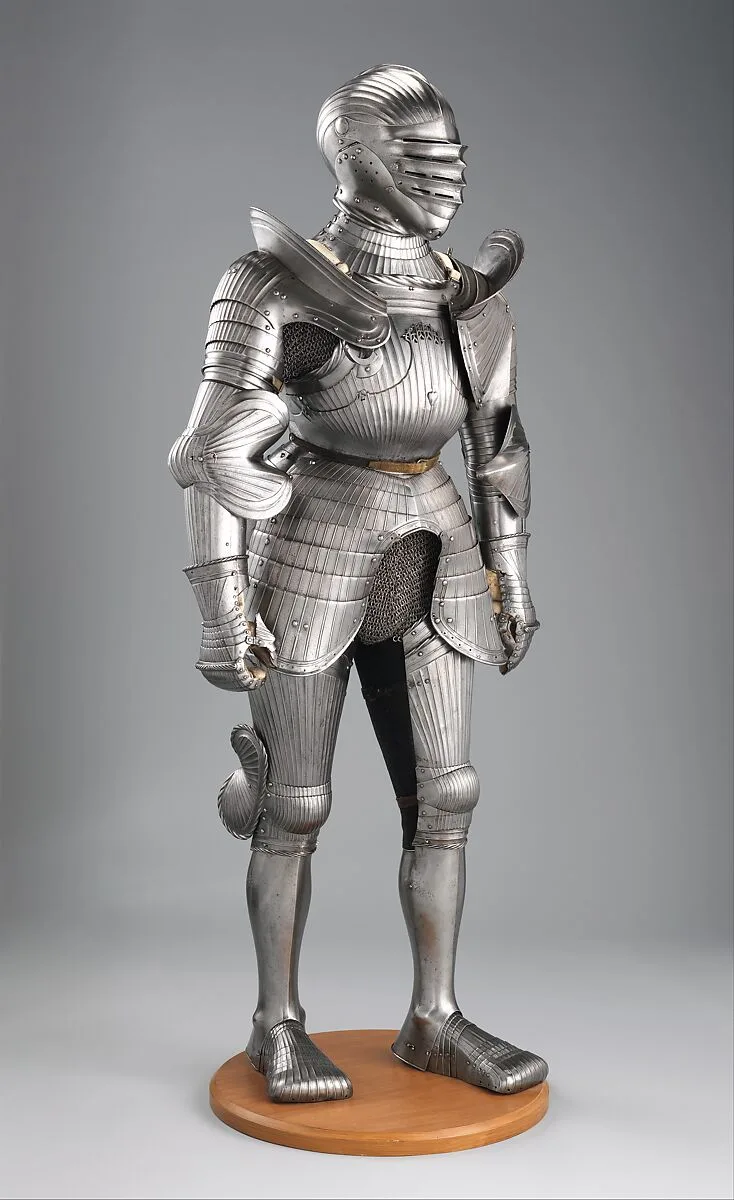
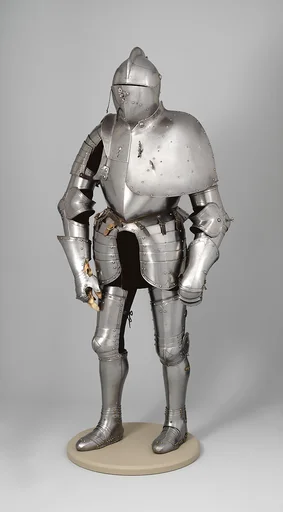
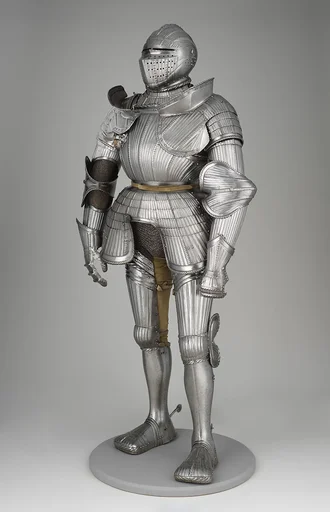
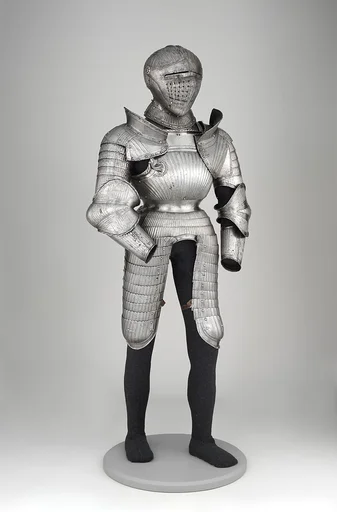
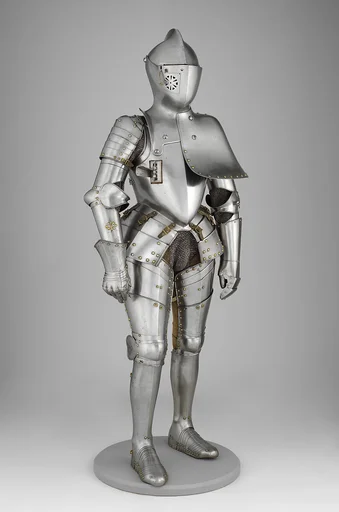
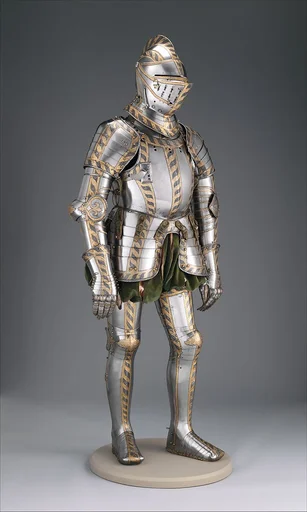
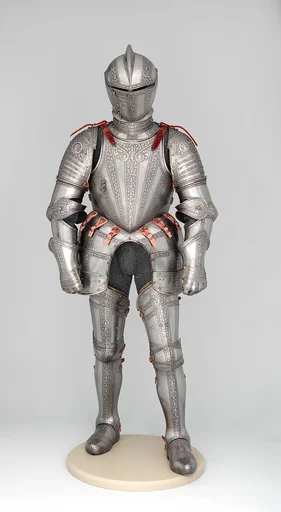
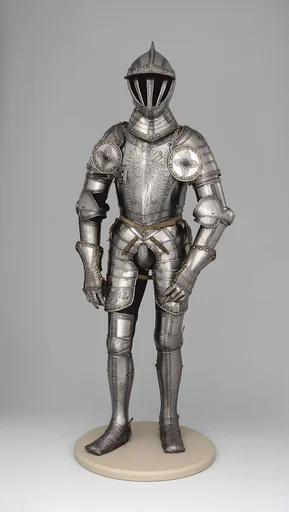
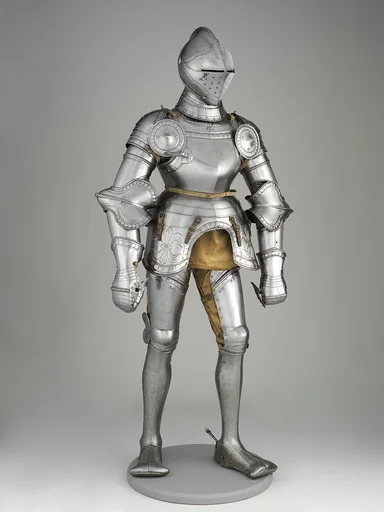
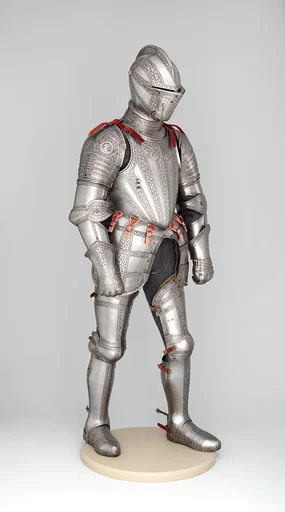
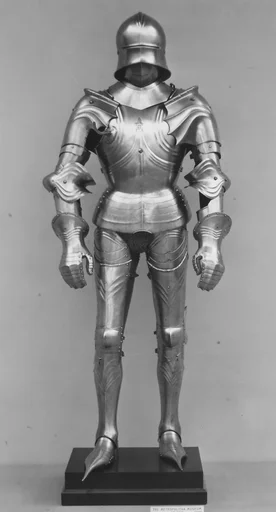
At the turn of the sixteenth century, German armorers abandoned the slender lines of the late Gothic style and adopted the fuller, more rounded forms favored in Italy. In the new style, the shallow parallel channels that covered almost the entire armor were not only decorative but actually strengthened the metal. This is often referred to as "Maximilian style" because it was introduced during the time of Emperor Maximilian I (1459–1519). Fluted armor appears to have been a specialty of Nuremberg. On this armor the two-piece construction of the breastplate and its pierced decoration, while standard on German Gothic armors, is highly unusual for this period. The waistplates and tassets (upper thigh defenses) are of a later date. The breastplate is stamped with the maker's mark: in a shield, a half lion or a bear above the letters L.B.
- Artist
- Unknown
- Date
- ca. 1520 and later
- Medium
- Steel, leather
- Culture
- German, Nuremberg
- Department
- Arms and Armor
- Credit line
- Gift of Alan Rutherfurd Stuyvesant, 1949