Armor
Unknown
ca. 1400–1450 and later · Steel, copper alloy, textile, leather · Arms and Armor
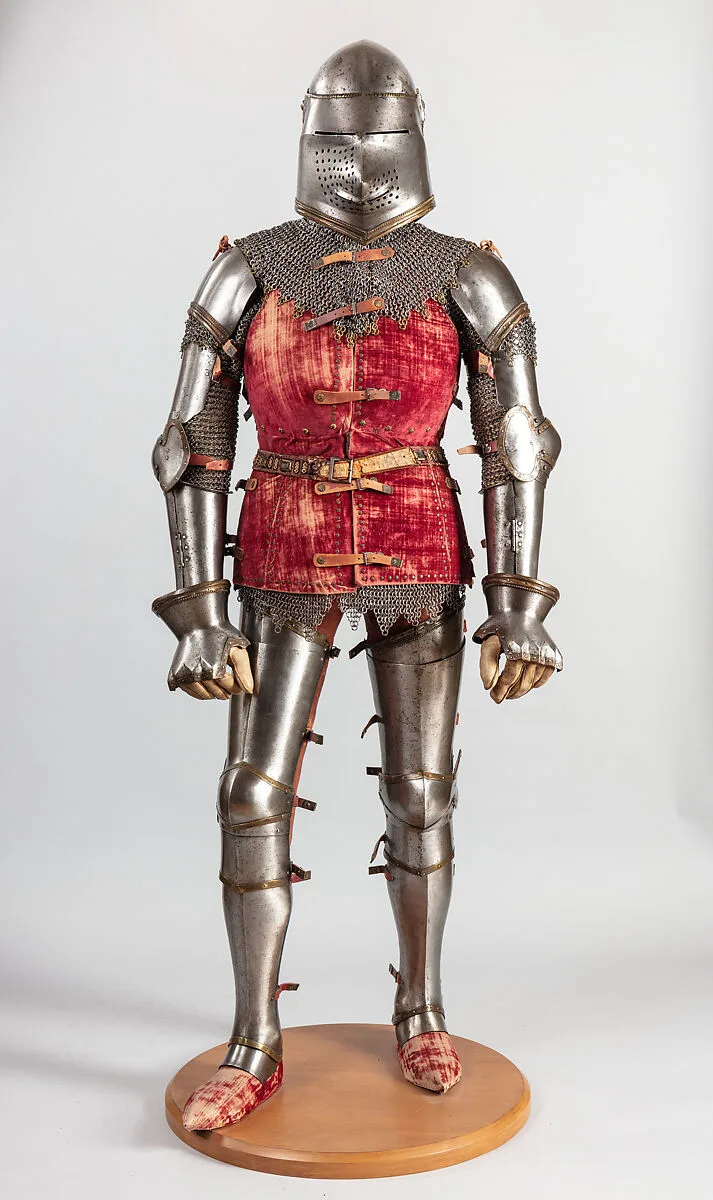
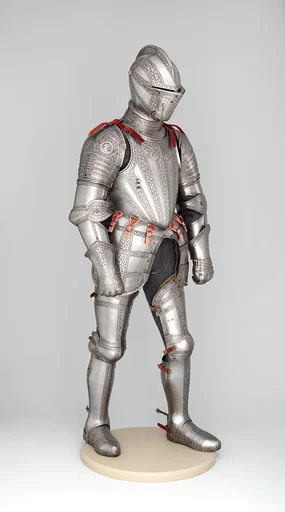
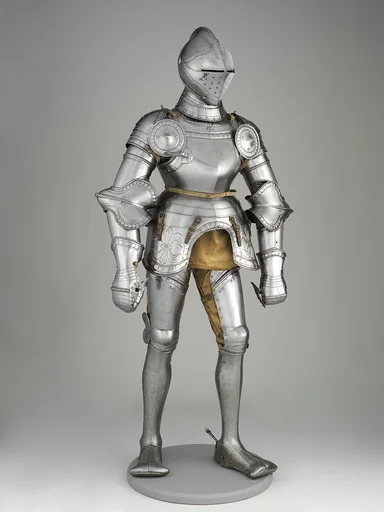
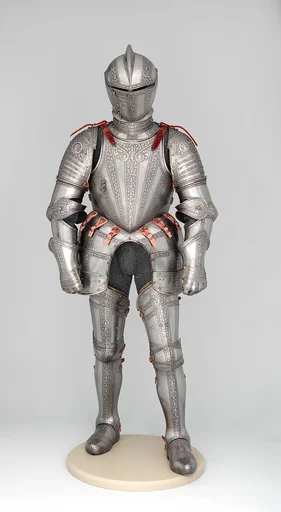
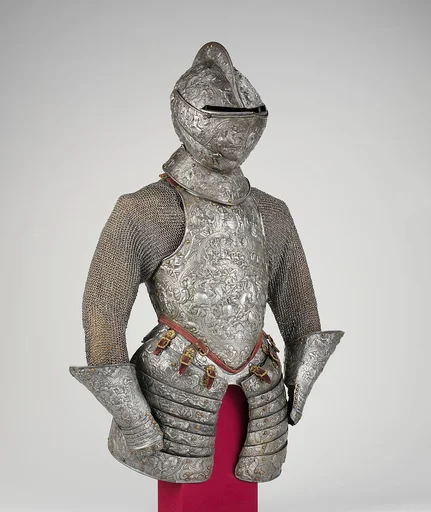
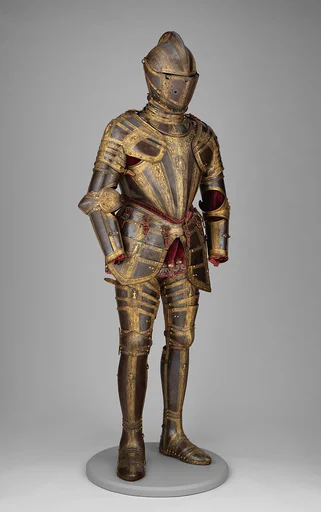
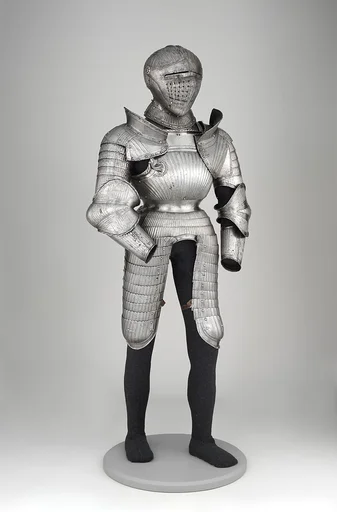
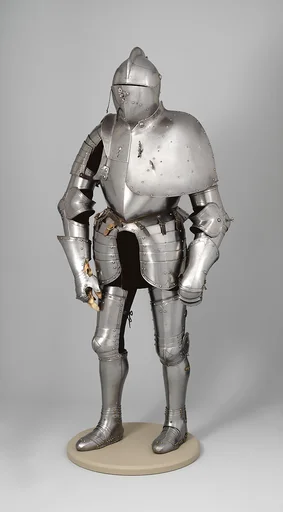
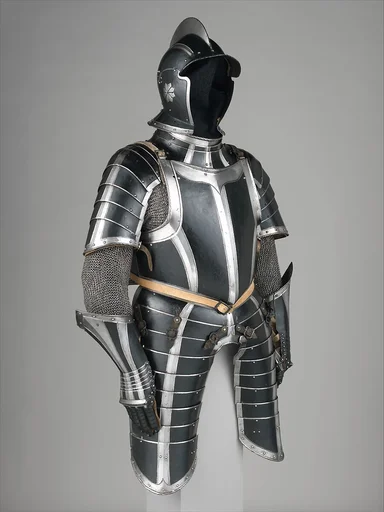
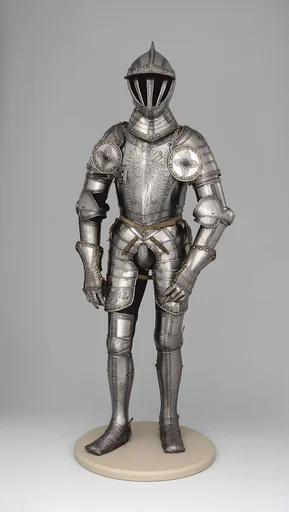
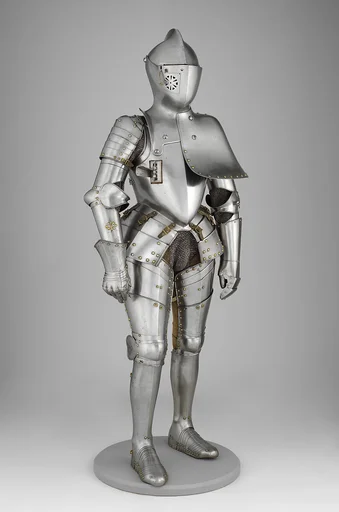
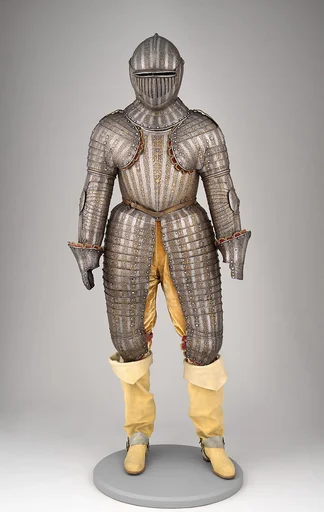
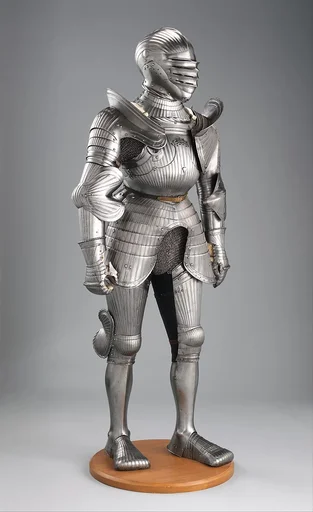
This armor was assembled and restored in the 1920s using individual elements that had been discovered in the ruins of the Venetian fortress at Chalcis, on the Greek island of Euboea, which had fallen to the Turks in 1470. The purpose was to present a full armor of the style worn about 1400, a period from which no complete armors survive. Distinctive features are the early form of brigandine (a torso defense constructed of numerous overlapping plates riveted inside a doublet) with two large breast halves and brass borders at the edges of the exposed plates. Portions of the brass at the top edge of the left cuisse (thigh defense), the lower edges of the right greave (lower leg defense), and the visor are genuine; the remainder is restored. The helmet, a visored bascinet, is associated with the armor. The velvet covering of the brigandine dates from the early 20th century.
- Artist
- Unknown
- Date
- ca. 1400–1450 and later
- Medium
- Steel, copper alloy, textile, leather
- Culture
- Italian
- Department
- Arms and Armor
- Credit line
- Bashford Dean Memorial Collection, Gift of Helen Fahnestock Hubbard, in memory of her father, Harris C. Fahnestock, 1929