Futuh al-Haramayn (Description of the Holy Cities)
Muhi al-Din Lari
16th century · Ink, opaque watercolor, gold on paper · Islamic Art
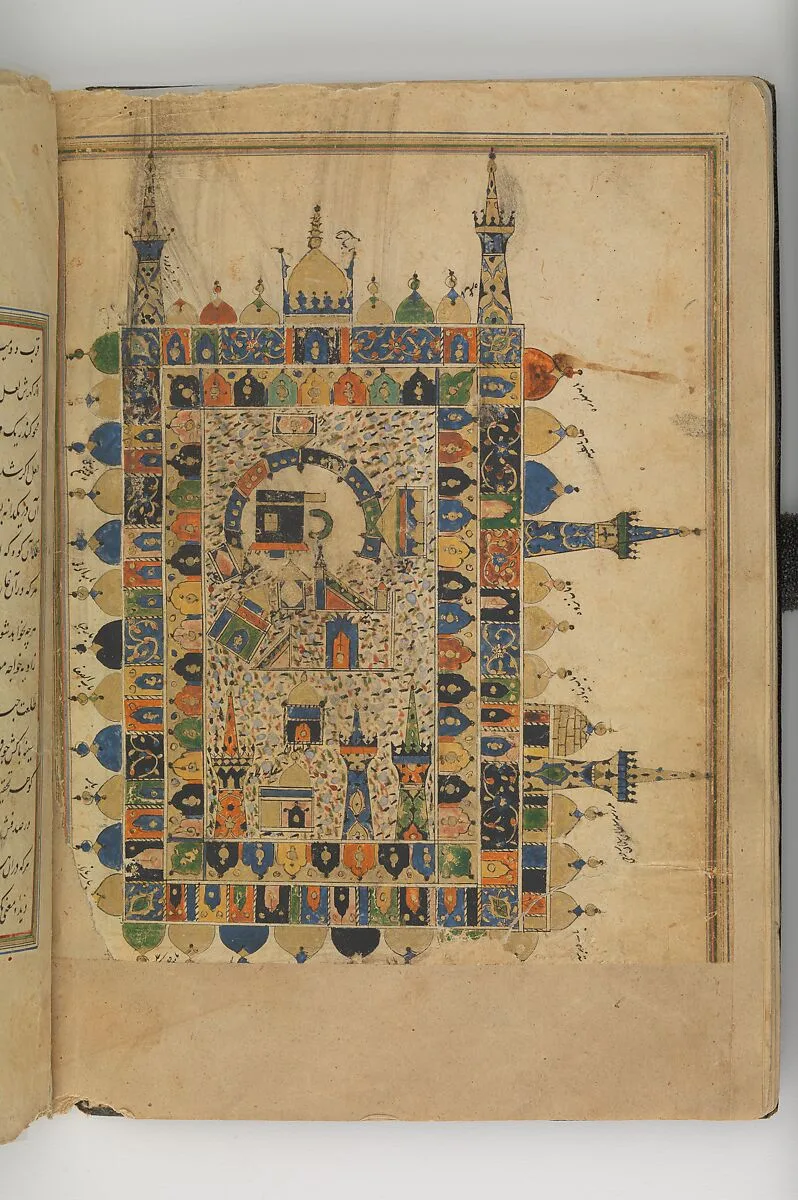
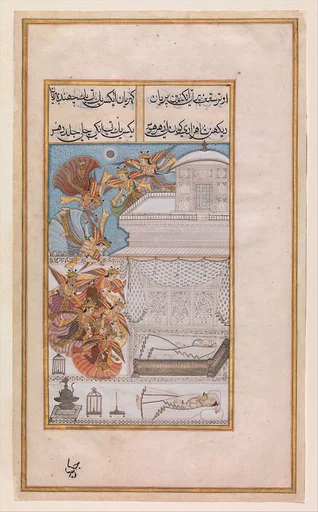
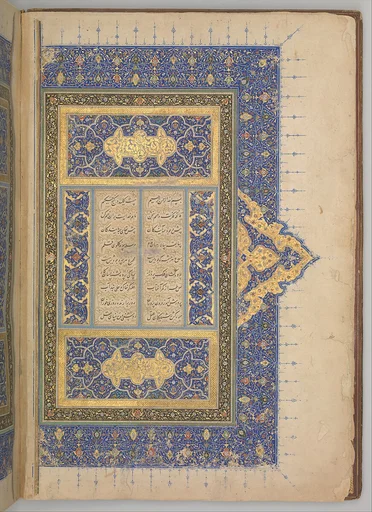
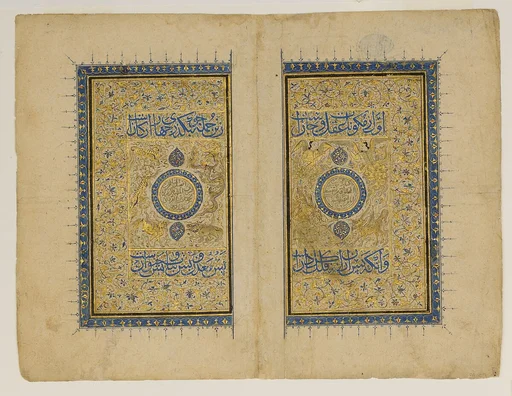
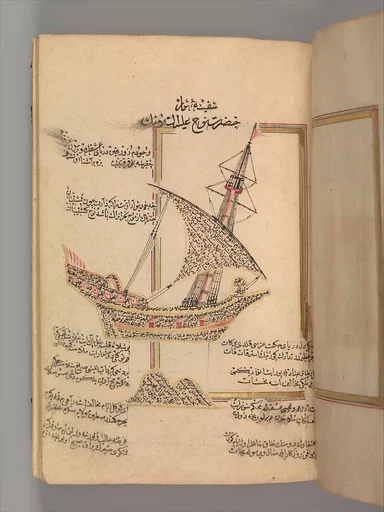
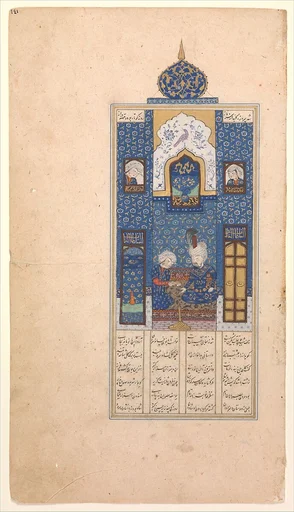
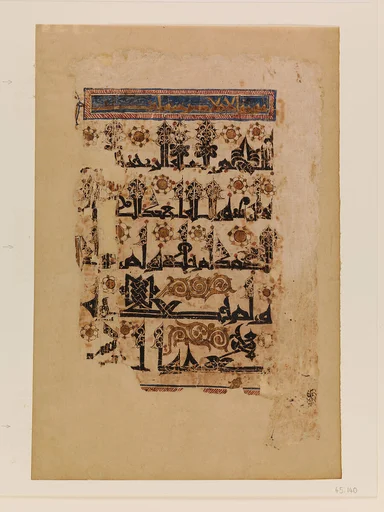
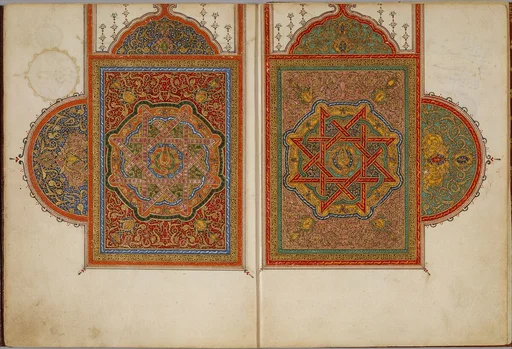
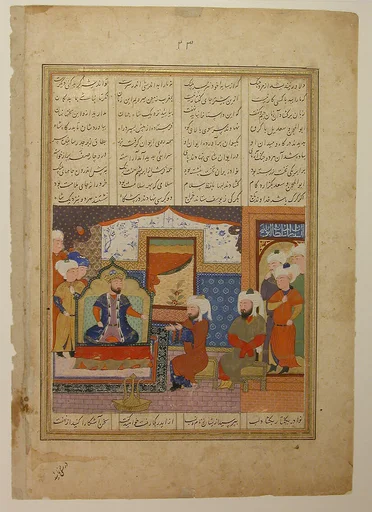
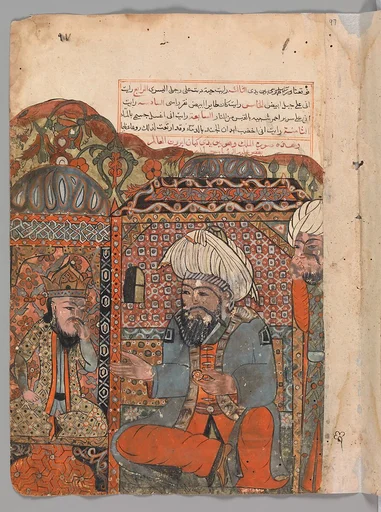
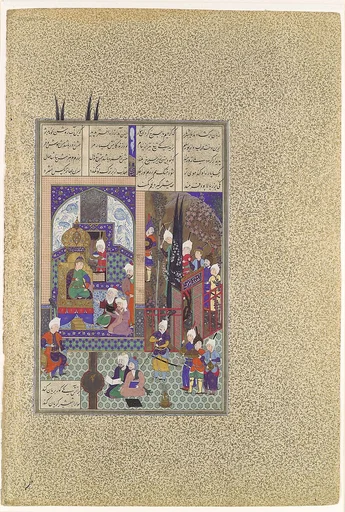
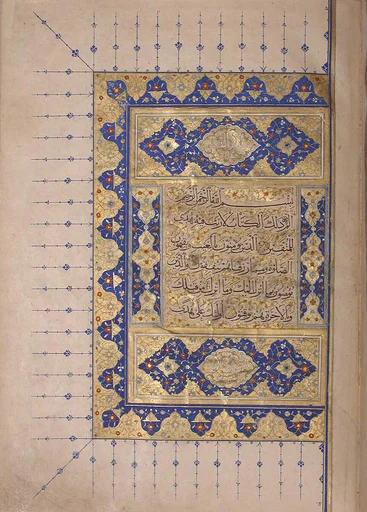
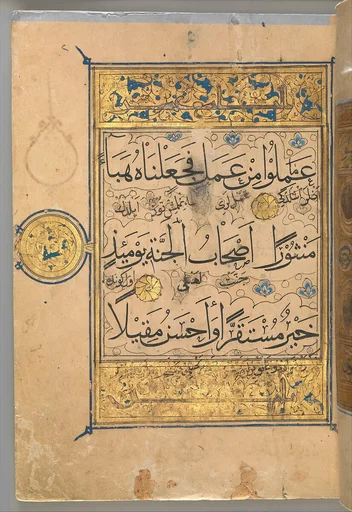
The Futuh al-Haramayn consists of a poetic description of the two holy Muslim sites of Mecca and Medina. It was intended to explain the rituals of the pilgrimage (hajj) all Muslims must complete once during their lifetime. The text was composed by Muhi al-Din Lari, completed in India in 1505–6, and copied many times afterwards. Often lavishly illustrated, the Futuh describes important sites to be visited during or after the pilgrimage. It was popular in the sixteenth and seventeenth centuries, when it was mainly copied in the Ottoman realm from Mecca to Istanbul, and also in Central Asia and India. Illustrations of sites and buildings are commonly shown from a bird’s-eye view. Symbols and other details often labeled with inscriptions, enable the reader to identify sites where important miracles of the Prophet and other events took place. Differences in style and quality exist. In the sixteenth century most copies were made in Mecca. This example is one of the first copies thought to have been made in Bukhara.
- Artist
- Muhi al-Din Lari
- Date
- 16th century
- Medium
- Ink, opaque watercolor, gold on paper
- Department
- Islamic Art
- Credit line
- Purchase, Patti Cadby Birch Gift, 2009