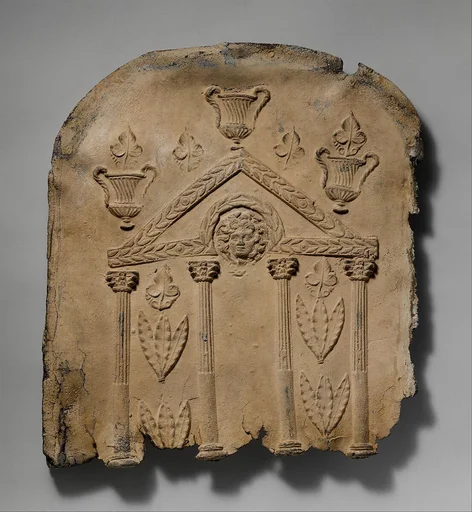
Funerary Stele with Architectural Frame
Unknown
6th–7th century · Limestone; carved in relief and painted · Islamic Art
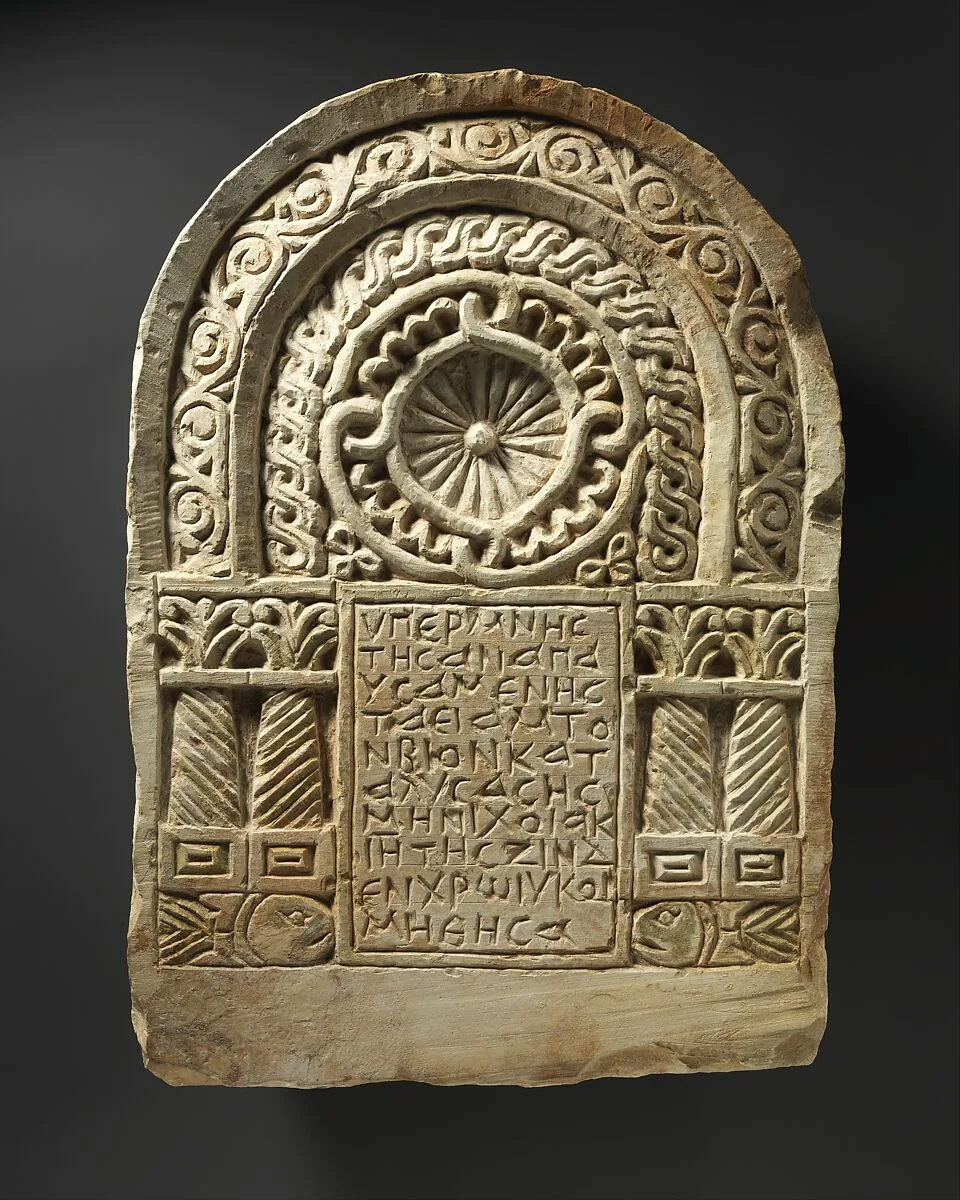
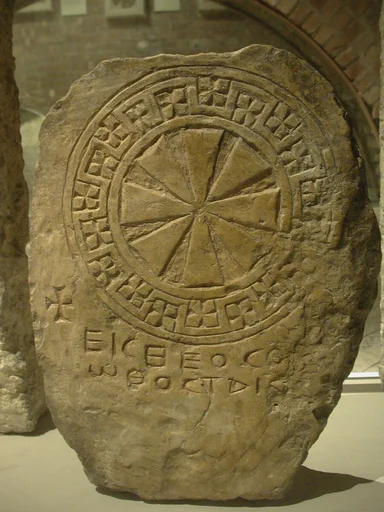
Funerary stelae from the Byzantine period in Egypt, carved in stone and usually painted, were permanent monuments to the deceased. While normally embedded in walls or floors near the tomb, some were part of larger structures. Their decorations include scenes of paradise and symbols of the Christian Church. This example, said to be from the Upper Nile Delta town of Armant, bears the name of a prominent citizen who was buried near the marker.
- Artist
- Unknown
- Date
- 6th–7th century
- Medium
- Limestone; carved in relief and painted
- Department
- Islamic Art
- Credit line
- Rogers Fund, 1936
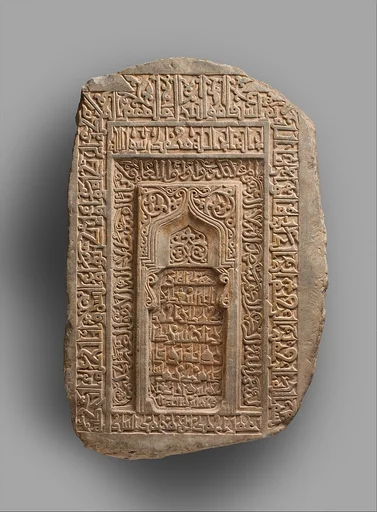
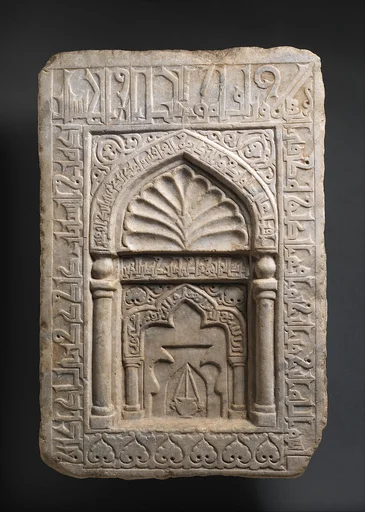
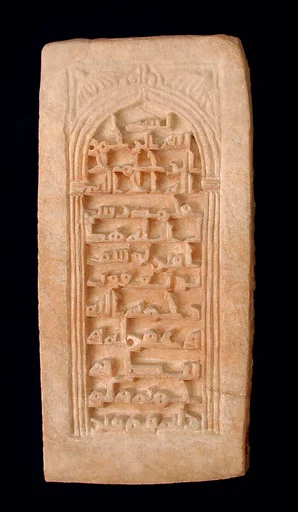
![Gravestone of Muhammad ibn Abi Bakr, died Shawwal 532 A.H. [June/July 1138 A.D.]](https://d2pvxr3eb77vb4.cloudfront.net/assets/v1/89/899d41a36a8a2a2191dc6d4fe6a23ae265622d850612ae27edc24b97da489dc8/graph.webp)