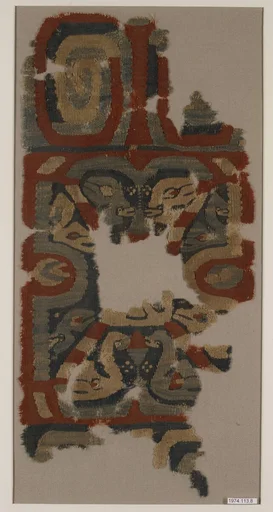
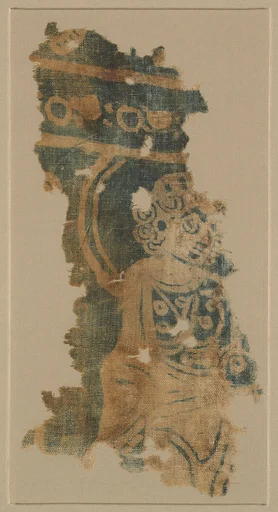
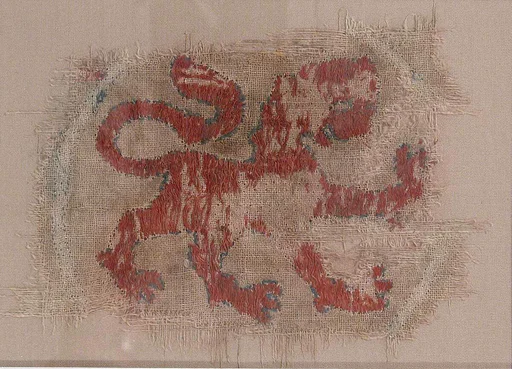
Roundel with Winged Horse
Unknown
9th century · Wool, linen; tapestry weave · Islamic Art
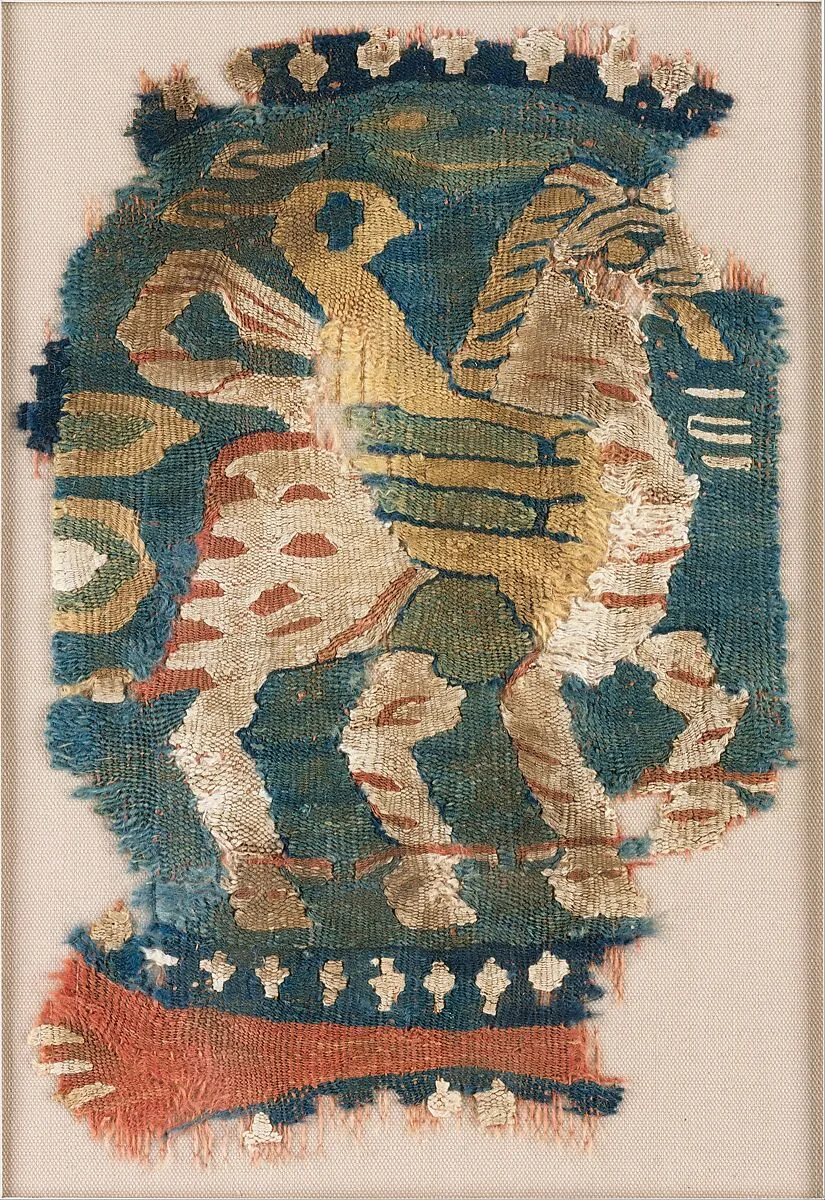
The extended tongue and long tail of this winged creature suggest that it may be a griffin, a part-lion, part-eagle emblem of power and protection common to the Byzantine and islamic worlds. The ultimate inspiration for this fragment may have been Sasanian, as it also resembles a winged horse with beribboned feet. Traces of another medallion at the lower edge of this piece suggest that it may have come from a hanging or other textile decorated with a repeat pattern of such roundels.
- Artist
- Unknown
- Date
- 9th century
- Medium
- Wool, linen; tapestry weave
- Department
- Islamic Art
- Credit line
- Rogers Fund, 1974