Tile Fragment
Unknown
12th–13th century · Stonepaste; carved decoration under opaque monochrome glaze · Islamic Art
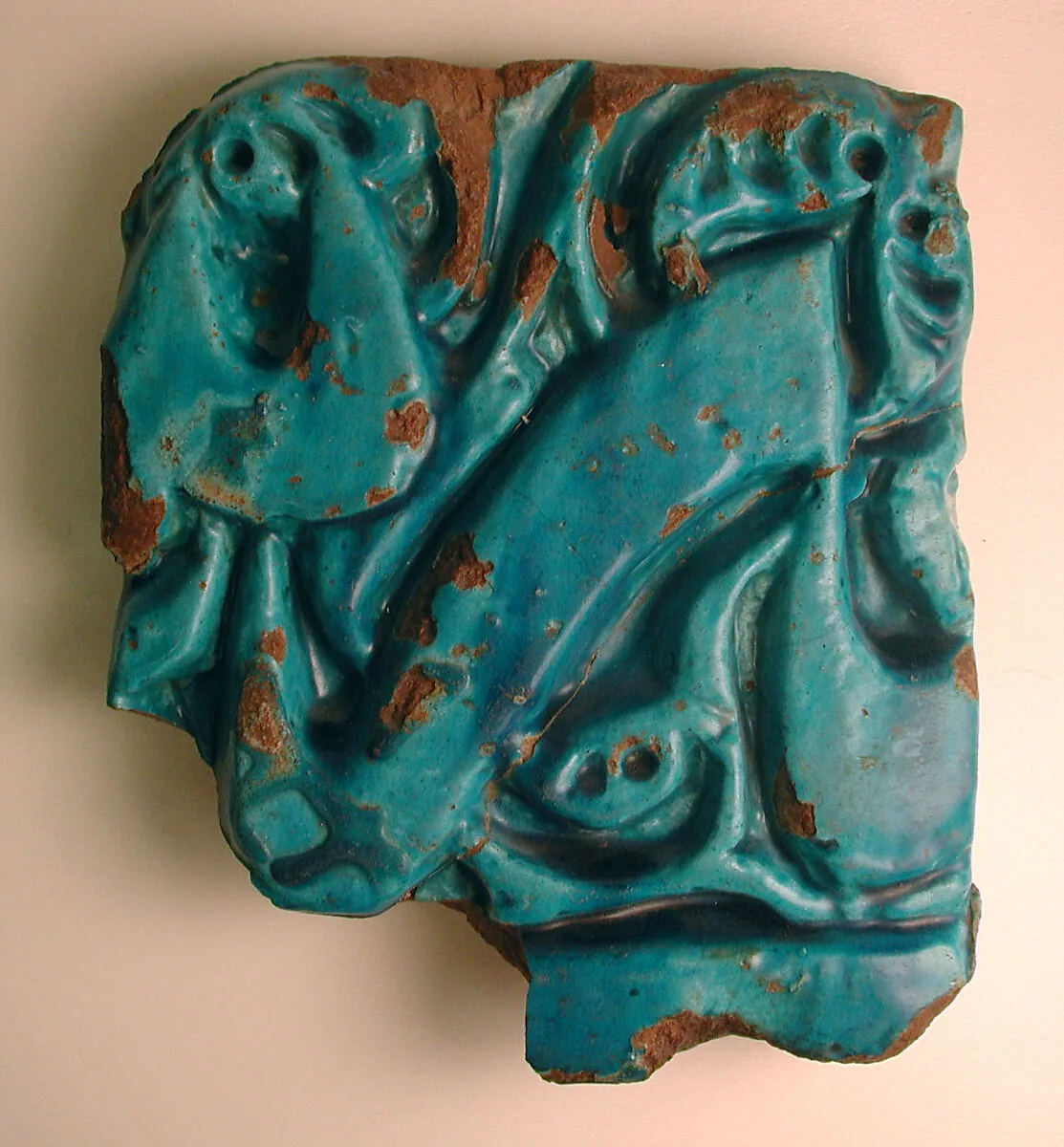
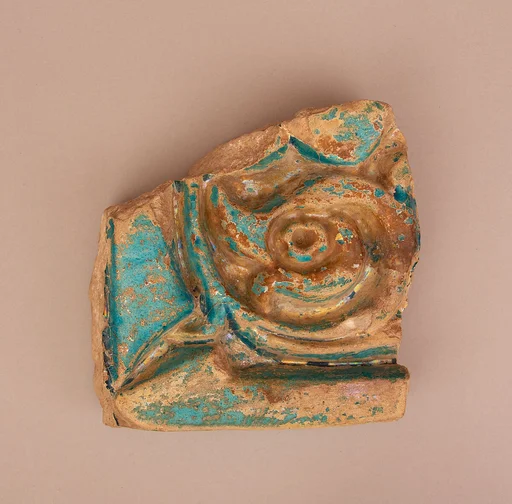
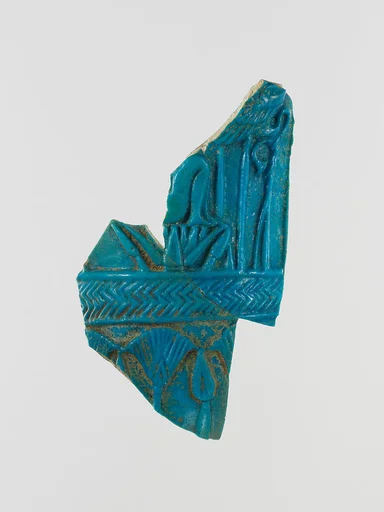
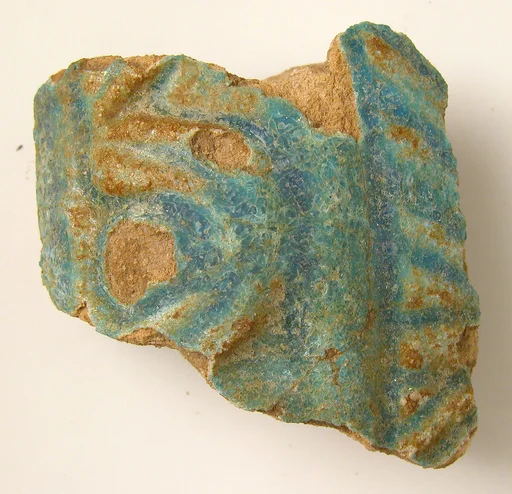
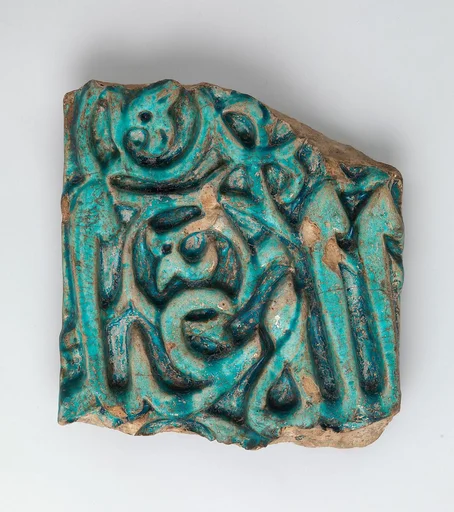
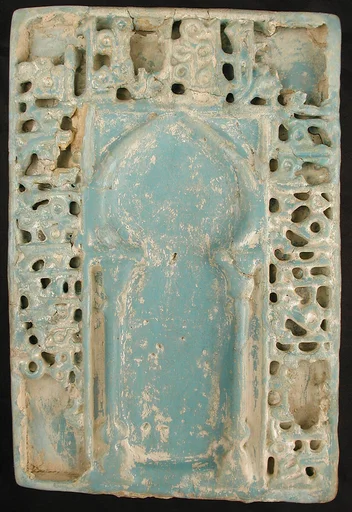
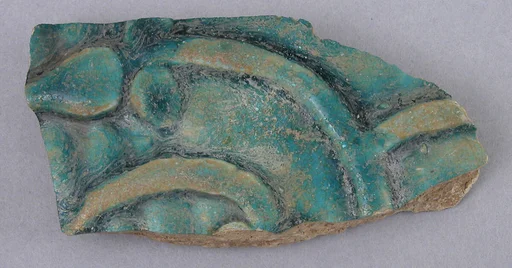
The carved decoration of this glazed wall tile found in a surface survey near the eastern Iranian city of Nishapur consists of a band of Arabic calligraphy set against a background of scrolling vines. The sense of foreground and background in the inscription is achieved through the varying levels at which the letters and vegetal motifs are carved. The pooling of the transparent turquoise glaze into the crevices amplifies the effect. The ceramic body used on this tile represents an innovation in ceramic technology that first occurs in Iran in the late eleventh century. The tile is made of stonepaste, which was predominantly composed of ground quartz with small amounts of refined clay and fused glass. Stonepaste produced a firmer and whiter fabric than earthenware. Research suggests that in the Islamic world, the first experimentations with technologies related to stonepaste occurred in ninth-century Iraq where quartz-based slips were applied to the surfaces of lead-glazed earthenware vessels. True stonepaste was probably perfected in Egypt during the tenth and eleventh centuries and then spread to Syria and Iran where it flourished at multiple centers of production.
- Artist
- Unknown
- Date
- 12th–13th century
- Medium
- Stonepaste; carved decoration under opaque monochrome glaze
- Department
- Islamic Art
- Credit line
- Rogers Fund, 1937