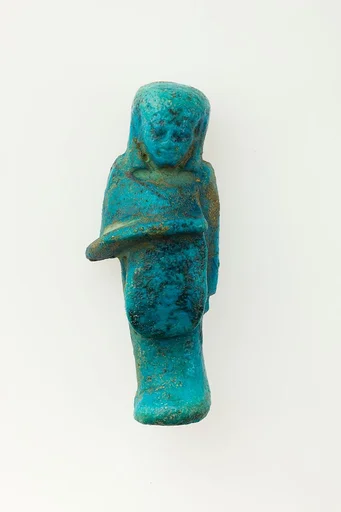
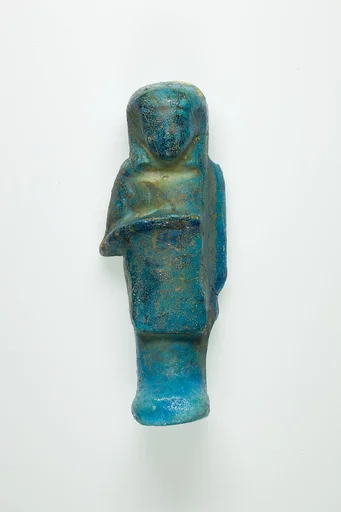
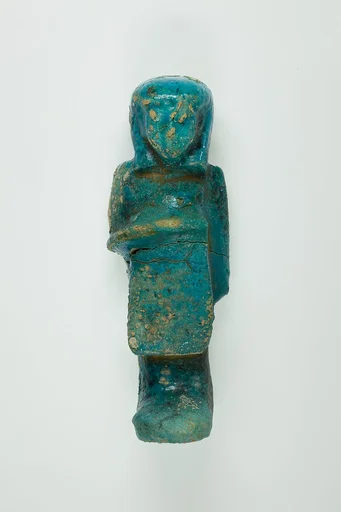
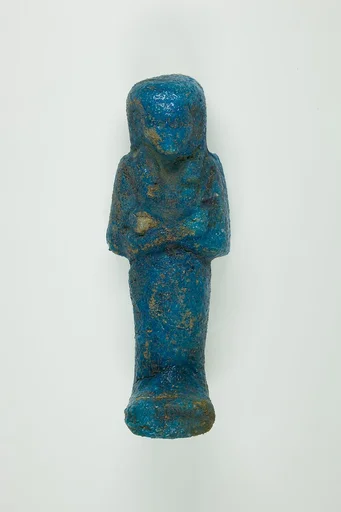
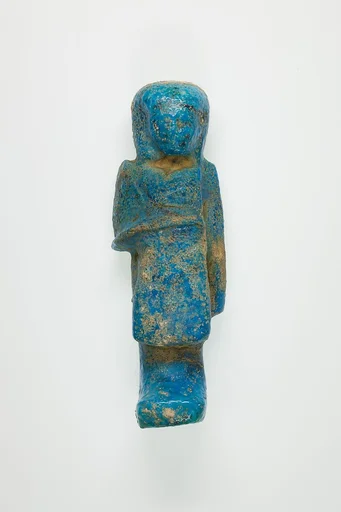
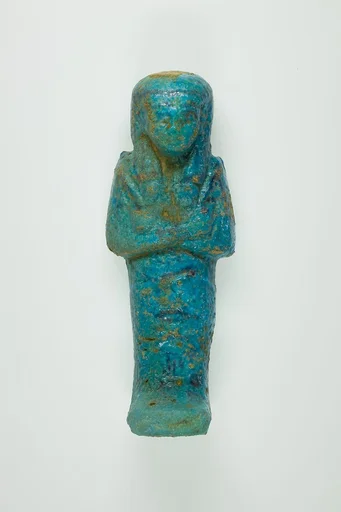
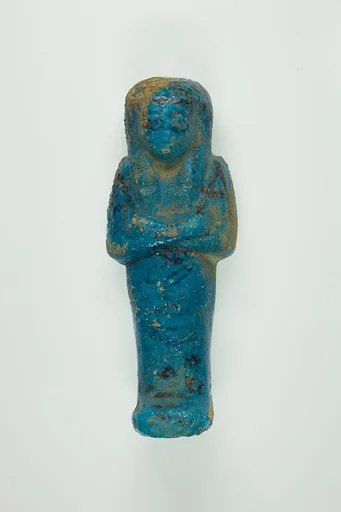
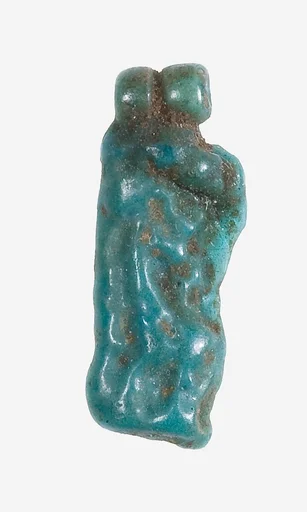
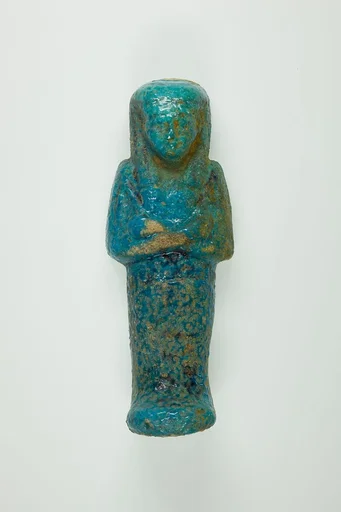
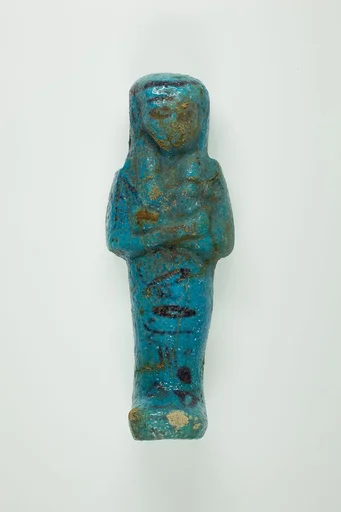
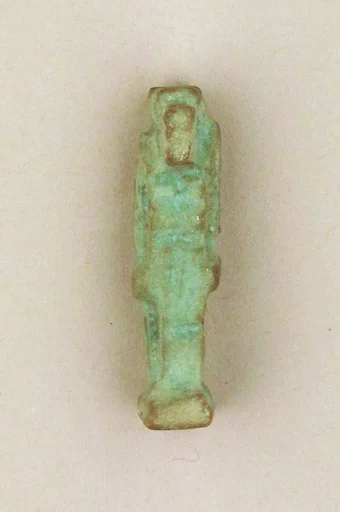
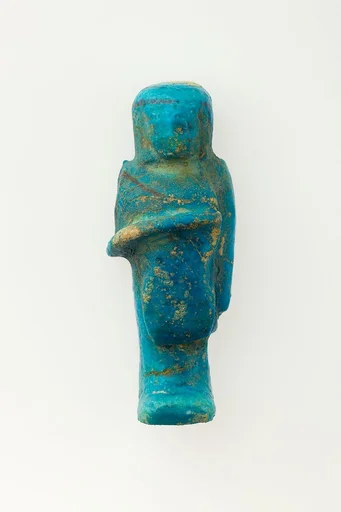
Fragment of a Figure in a Pointed Cap
Unknown
7th–9th century? · Earthenware; molded and glazed · Islamic Art
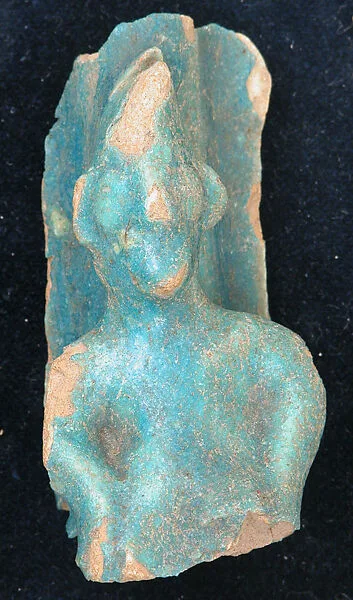
This ceramic fragment was excavated in Ctesiphon, the Sasanian metropolis and administrative capital conquered by Arab Muslim armies in 637. The city was known in Arabic as al-Mada’in, or "the cities", for its extended area. Arab historians indulge in describing al-Mada’in/Ctesiphon’s grand monuments, which obsessed Muslim rulers and may have acquired a symbolic meaning related to its imperial past. This was the case of the Taq-i Kisra, an impressively-sized ivan (a vaulted hall with one side open) partially dismantled to reuse its bricks in caliphal buildings in the new capital Baghdad. This fragment belongs to a long-standing tradition of turquoise-glazed ceramics made in Mesopotamia since the Parthian period, of which it represents a late Sasanian or Early Islamic evolution. The conical cap is linked to both Central Asian and Sasanian imagery.
- Artist
- Unknown
- Date
- 7th–9th century?
- Medium
- Earthenware; molded and glazed
- Department
- Islamic Art
- Credit line
- Rogers Fund, 1932