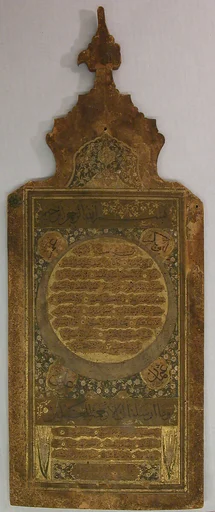
Hilya (Votive Tablet)
Unknown
second half of 18th century · Ink, opaque watercolor, and gold on paper, mounted on wood · Islamic Art
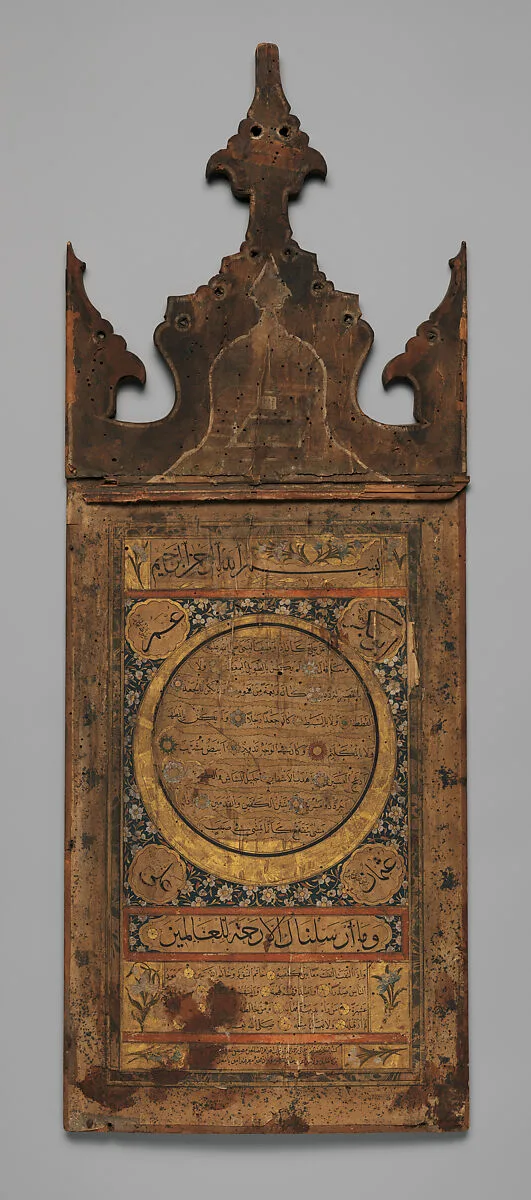
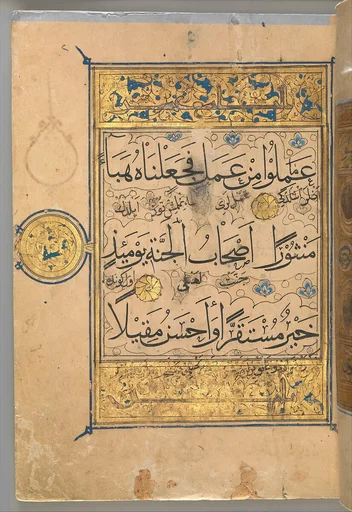
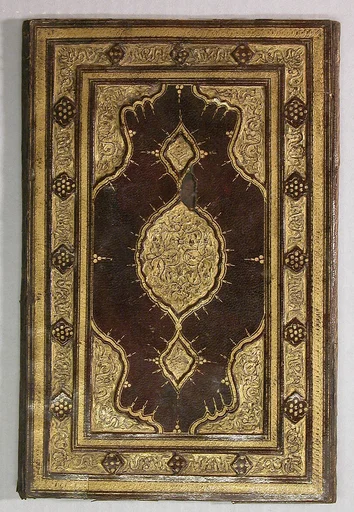
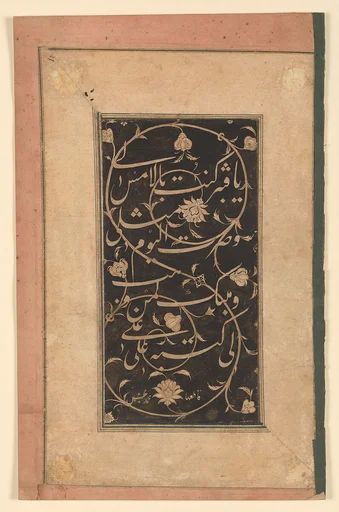
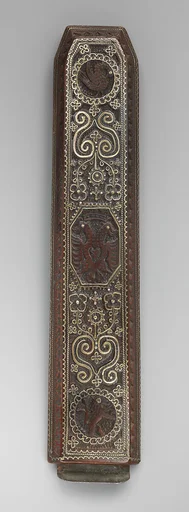
Hilya, Arabic for "ornament," refers to a genre of Ottoman Turkish literature associated with the physical description of Muhammad. The concept originated from the shamayil, the study of Muhammad’s appearance and character. According to Ottoman belief, reading or possessing an account of Muhammad’s attributes protects one from danger, harm, evil, and sickness. It became customary to carry a hilya in the form of a scroll, calligraphic study, or an amulet. In the seventeenth century, hilyas developed into an art form with a standardized layout.
- Artist
- Unknown
- Date
- second half of 18th century
- Medium
- Ink, opaque watercolor, and gold on paper, mounted on wood
- Department
- Islamic Art
- Credit line
- The Grinnell Collection, Bequest of William Milne Grinnell, 1920