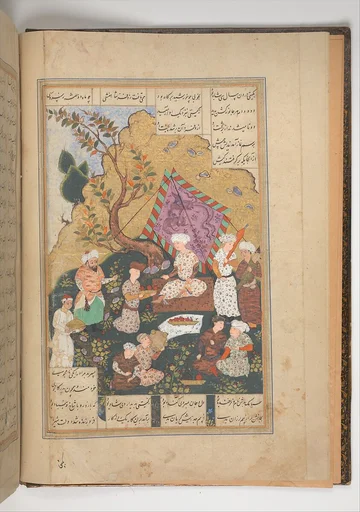
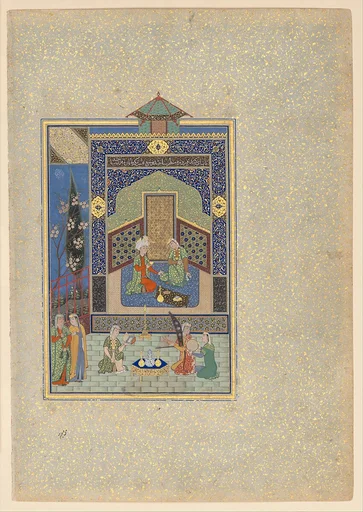
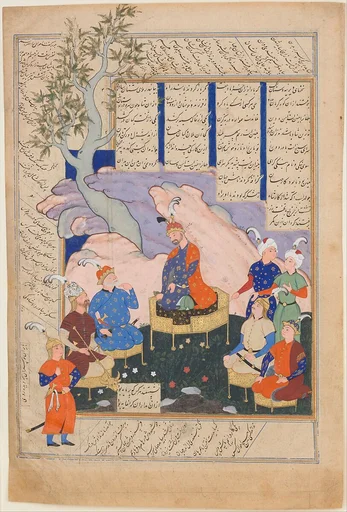
"Alexander at a Banquet", Folio 321b from a Khamsa (Quintet) of Nizami of Ganja
Sultan Muhammad Nur|Nizami
dated A.H. 931/1524–25 CE · Ink, opaque watercolor, silver, and gold on paper · Islamic Art
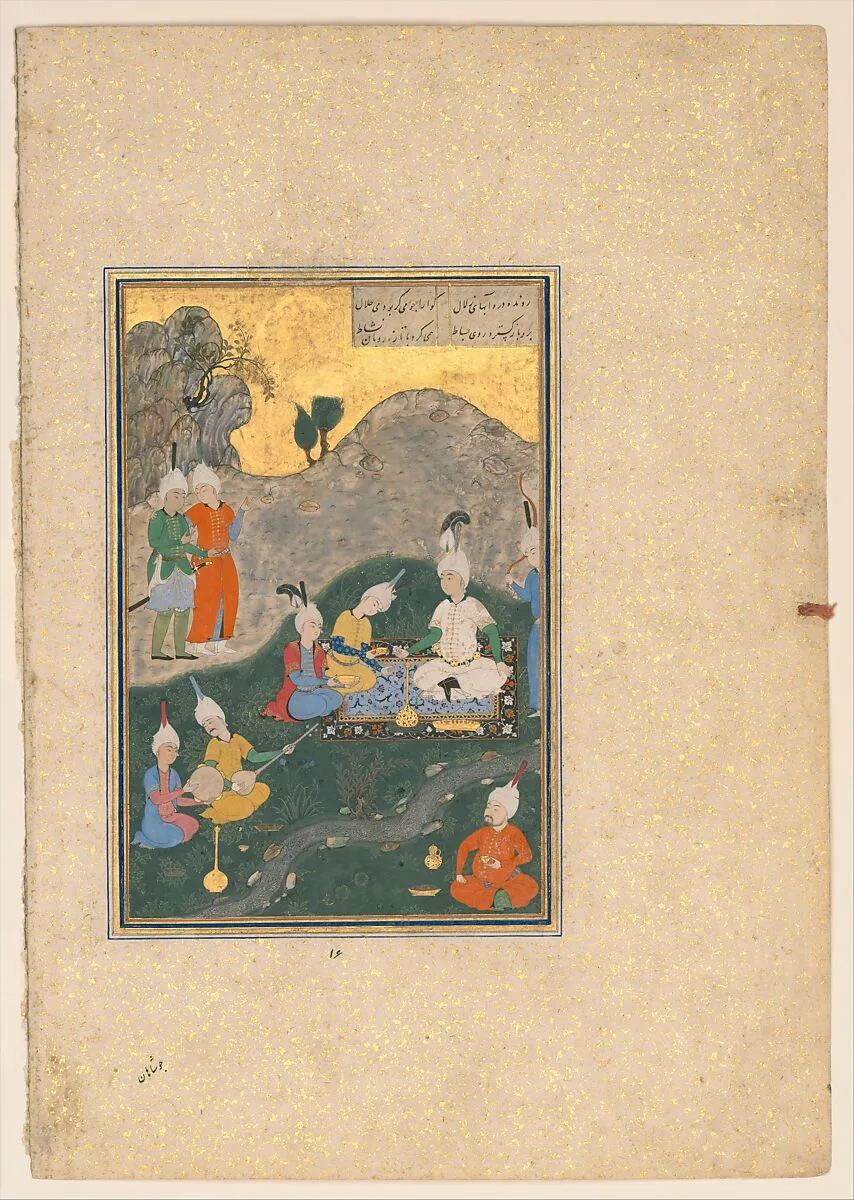
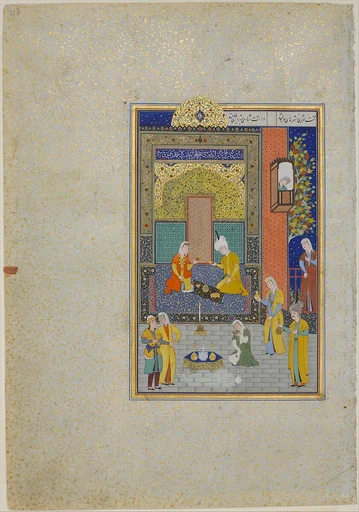
The Khamsa of Nizami, written between 1298 and 1302, is a canonical work of Persian literature. One of the five poems within it tells the story of Alexander the Great, who is identified as the half-brother of the Persian king Darab in various histories. By presenting Alexander in this manner, the audience was able to identify with its ancestors’ conqueror. Although the story took place in the fourth century BC, the objects that appear in this feast (bazm) scene provide an insight into the types of luxury objects and musical instruments that were in use at the time that the manuscript was produced. The figures wear their turbans in the style typical of Safavid Iran, with twelve folds wrapped around a baton to symbolize the twelve Shi’i imams.
- Artist
- Sultan Muhammad Nur|Nizami
- Date
- dated A.H. 931/1524–25 CE
- Medium
- Ink, opaque watercolor, silver, and gold on paper
- Department
- Islamic Art
- Credit line
- Gift of Alexander Smith Cochran, 1913