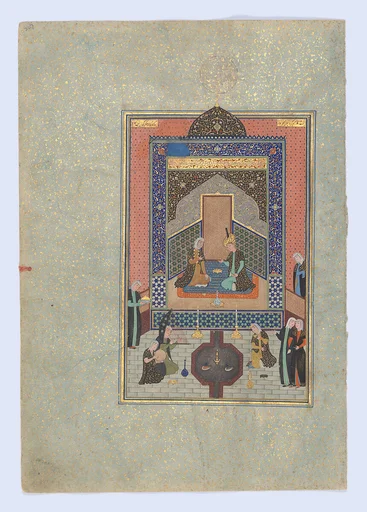
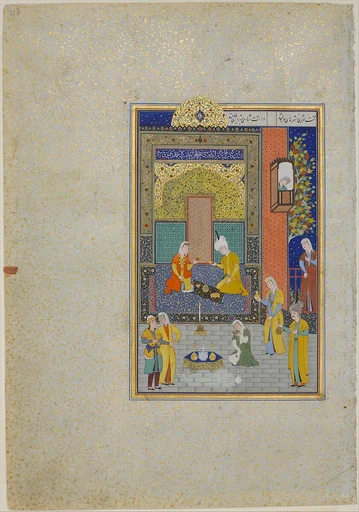
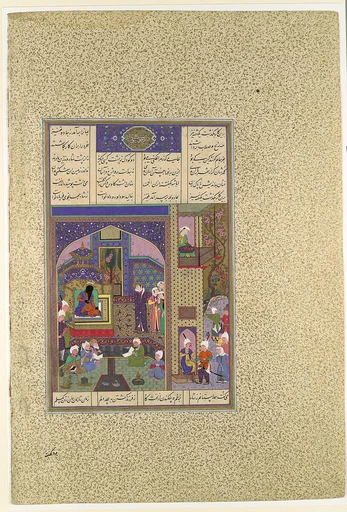
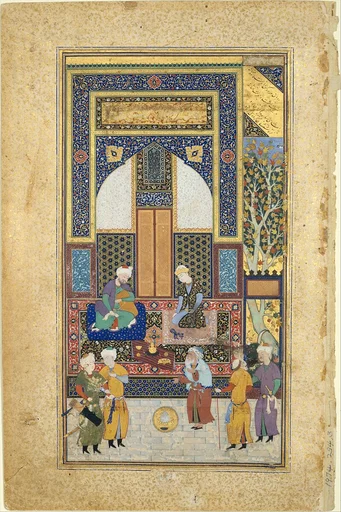
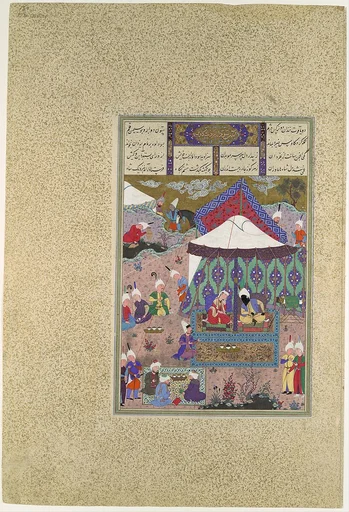
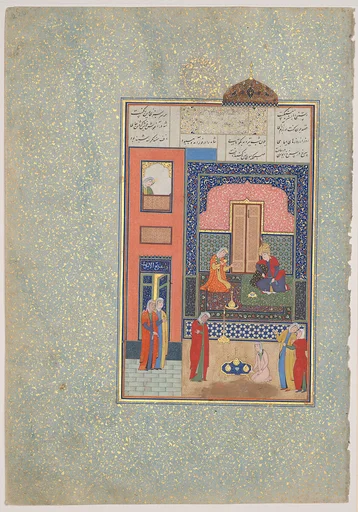
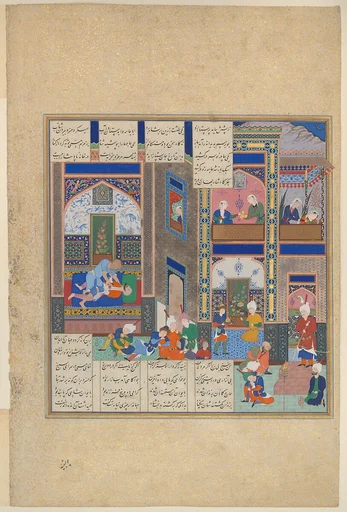
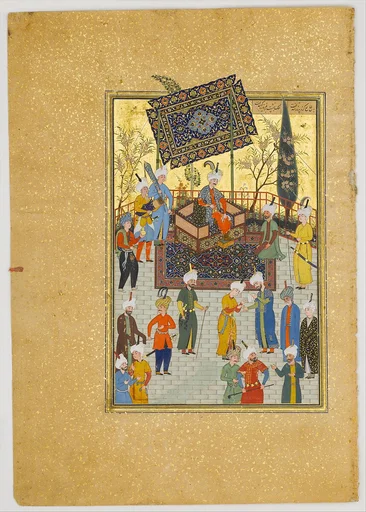
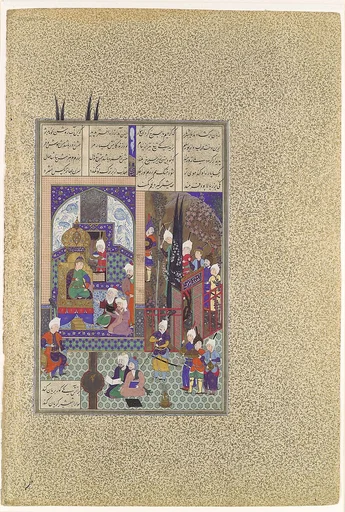
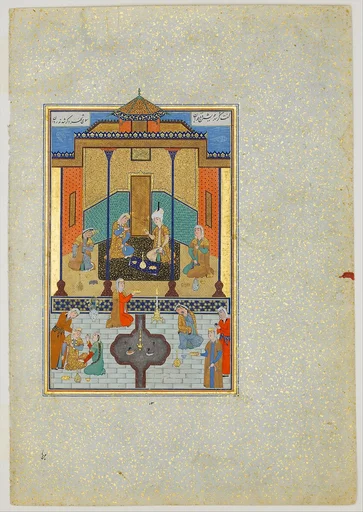
"Bahram Gur in the Turquoise Palace on Wednesday", Folio 216 from a Khamsa (Quintet) of Nizami of Ganja
Sultan Muhammad Nur|Mahmud Muzahib|Shaikh Zada|Nizami
dated A.H. 931/1524–25 CE · Ink, opaque watercolor, silver, and gold on paper · Islamic Art
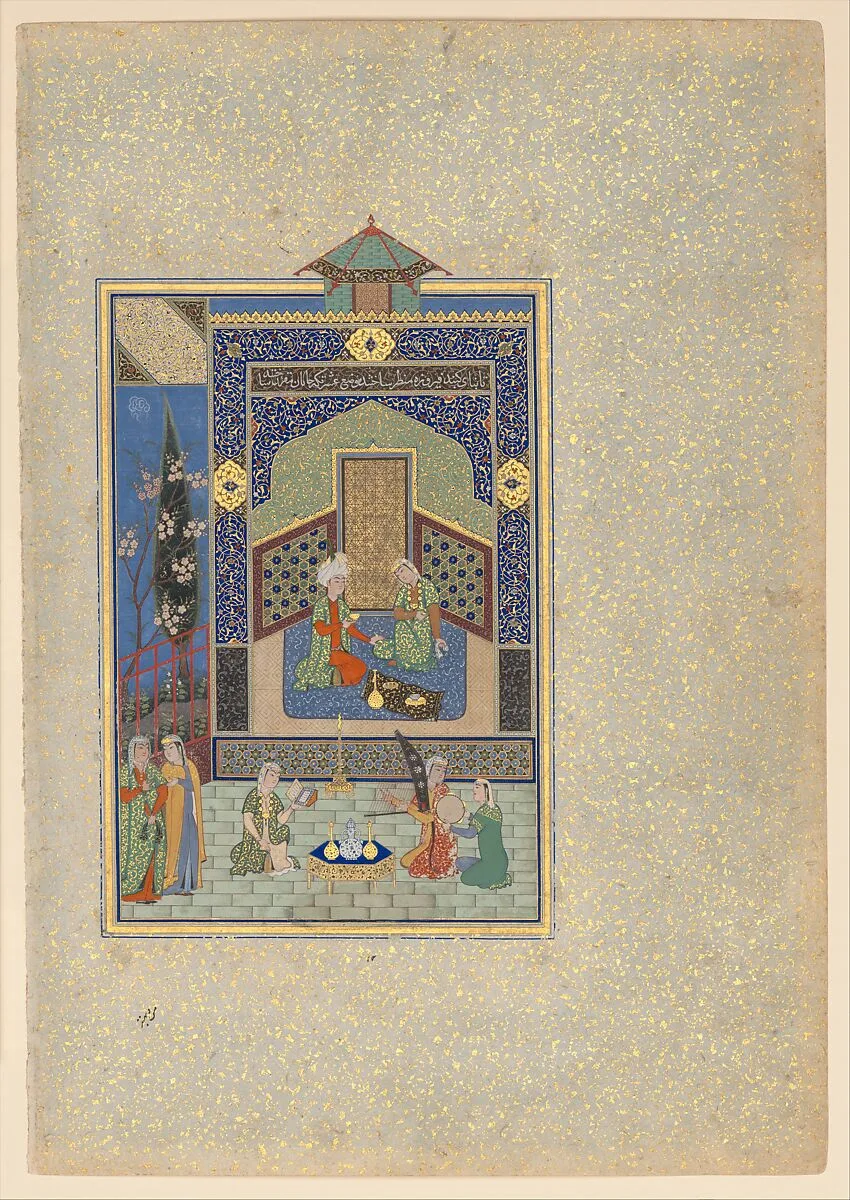
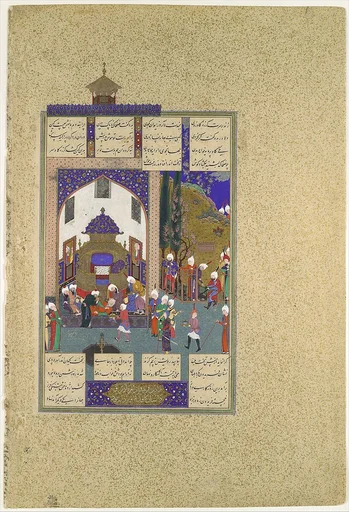
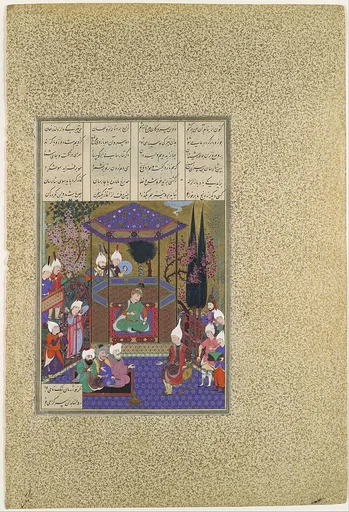
The fourth of the late twelfth-century Persian poet Nizami's five epic poems, later combined to form the famous Khamsa (Quintet), was the Haft Paikar, or Seven Portraits, so named from one incident in the story. It recounts the legendary history of the Sasanian king Bahram Gur, who is idealized as a great lover and hunter. The story is known also as the Seven Princesses because Bahram Gur, so the story goes, married seven beautiful princesses from the seven regions of the world, and visited each in her own pavilion on successive nights of the week. In this highly sensual but moralistic work, each princess tells a story and there are additional stories within these.
- Artist
- Sultan Muhammad Nur|Mahmud Muzahib|Shaikh Zada|Nizami
- Date
- dated A.H. 931/1524–25 CE
- Medium
- Ink, opaque watercolor, silver, and gold on paper
- Department
- Islamic Art
- Credit line
- Gift of Alexander Smith Cochran, 1913