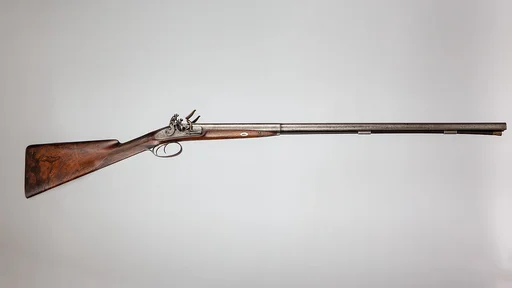
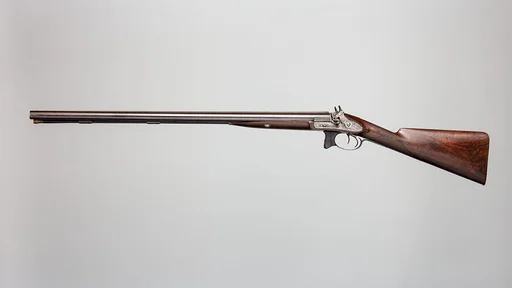
Side-by-Side Self-Priming Pellet-Lock Shotgun
Joseph Egg
ca. 1835 · Steel, wood (walnut, rosewood), brass · Arms and Armor
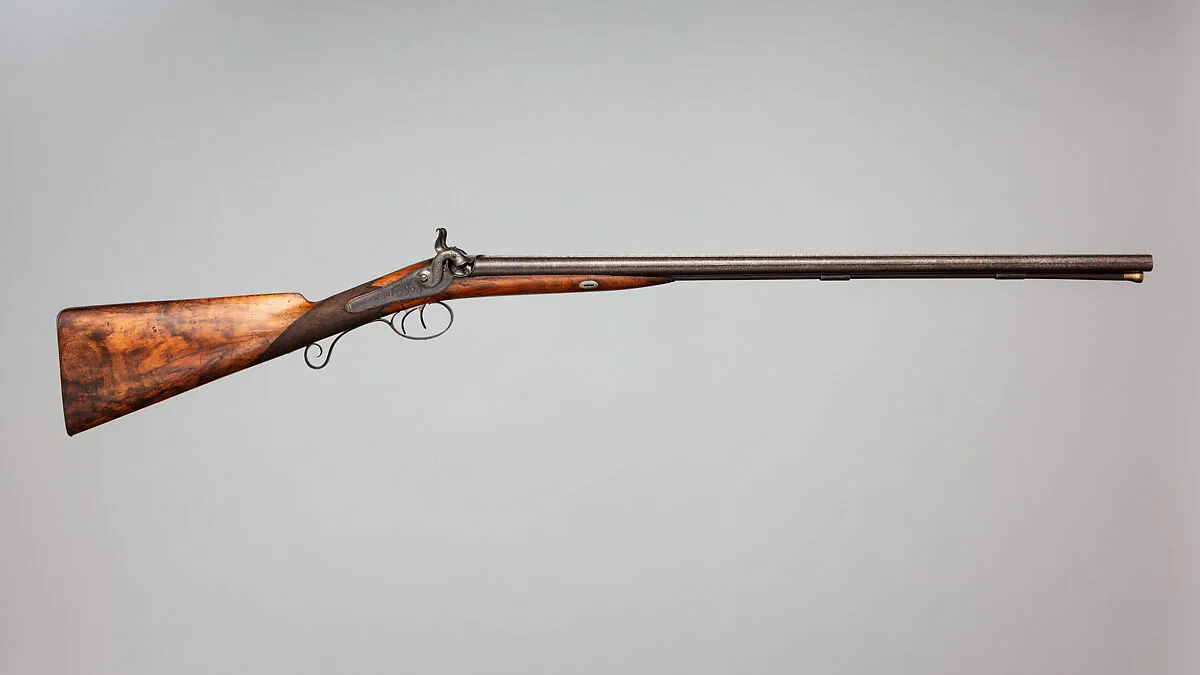
Made for hunting and sporting, this shotgun features a novel self-priming mechanism with a reservoir for tiny fulminate pellets behind the barrels. Despite its reputation for being dangerous, the design is remarkable for its clever concealment of the mechanism’s components inside the stock and lock interiors, maintaining the outward appearance of a traditional percussion shotgun. George IV (1762–1830) purchased a similar self-priming shotgun from Egg in 1825. Firearms technology advanced at a rapid pace in Europe in the early nineteenth century. London’s elite gunmakers, intensely focused on optimizing accuracy, handling, and speed to meet the expectations of England’s sporting gentry were at the forefront of its development. Building on design advancements made in the 1780s and 1790s, particularly the refinement of the flintlock ignition mechanism, they secured in the next three decades dozens of patents for a dizzying variety of new technologies ranging from improved lock mechanisms to novel barrel-making techniques, competing to protect and market their inventions. Handmade with remarkable precision, many London firearms of the period display extraordinary mechanical ingenuity, in addition to being elegantly designed. This creative push in the firearms field may be framed within the broader context of the Industrial Revolution in England—a period marked by the glorification of technological advancements and the celebration of individual inventors and engineers.
- Artist
- Joseph Egg
- Date
- ca. 1835
- Medium
- Steel, wood (walnut, rosewood), brass
- Culture
- British, London
- Department
- Arms and Armor
- Credit line
- Gift of Charles M. Schott Jr., 1917