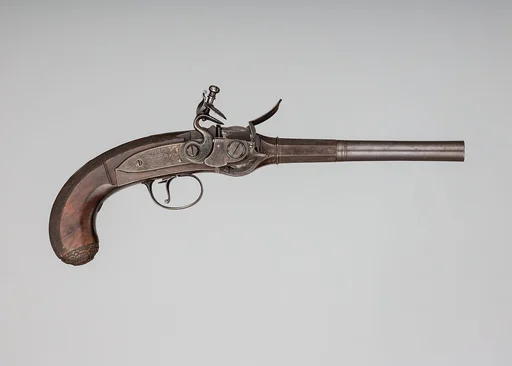
Flintlock Pistol with Inverted Lock
Joseph Egg|Henry Tatham
ca. 1813–14 · Steel, wood (walnut, rosewood), horn · Arms and Armor
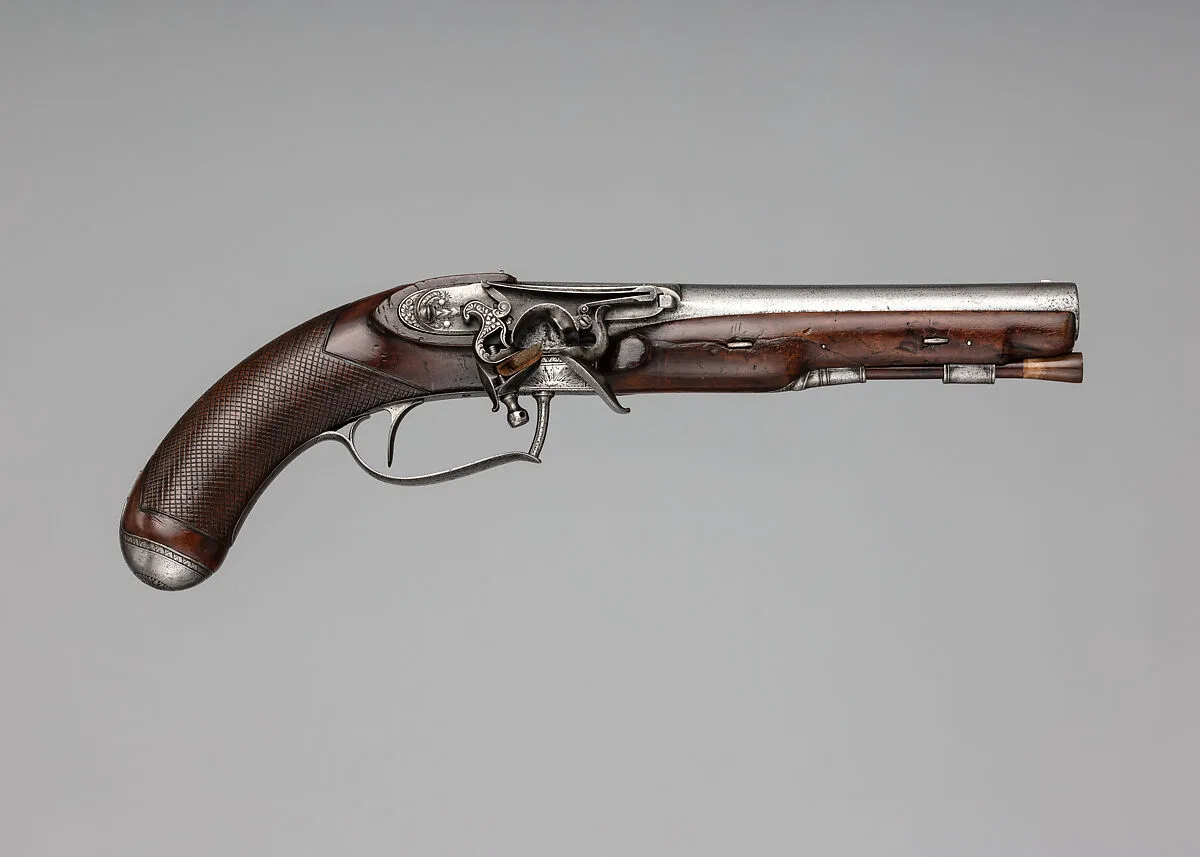
Firearms technology advanced at a rapid pace in Europe in the early nineteenth century. London’s elite gunmakers, focused on optimizing accuracy, handling, and speed to meet the expectations of England’s sporting gentry were at the forefront of its development. Building on design advancements made in the 1780s and 1790s, particularly the refinement of the flintlock ignition mechanism, they secured in the next three decades dozens of patents for new technologies ranging from improved lock mechanisms to novel barrel-making techniques, and competed to protect and market their inventions. This creative push in the firearms field may be framed within the broader context of the Industrial Revolution in England—a period marked by the glorification of technological advancements and the celebration of individual inventors and engineers. This rare pistol is distinguished by its inverted flintlock. This repositioning of the ignition mechanism is emblematic of London gunmakers’ pursuit of inventive methods to improve upon traditional firearm design. Joseph Egg, one of the preeminent gunmakers active in London in the early nineteenth century, patented the configuration in 1813, likely drawing inspiration from a small group of German rifles made in the 1750s which also featured inverted flintlocks. Benefits of the inverted lock included a cleaner sightline down the barrel and a downward-directed flash that allowed for improved vision when firing. Ultimately, Egg’s design failed to gain popularity and few firearms of this type were made. Today, only three examples of inverted flintlocks by Egg and Henry Tatham, a gunmaker with whom Egg parterened from 1801–14, are known.
- Artist
- Joseph Egg|Henry Tatham
- Date
- ca. 1813–14
- Medium
- Steel, wood (walnut, rosewood), horn
- Culture
- British, London
- Department
- Arms and Armor
- Credit line
- Gift of Charles M. Schott Jr., 1917