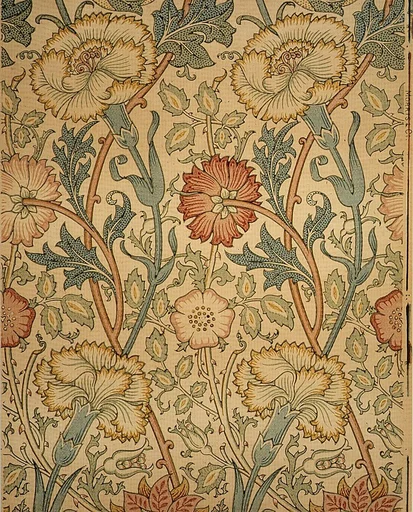
Wild Tulip
William Morris|Morris & Company|Jeffrey & Co.
1884 · Block-printed in distemper colors · Drawings and Prints
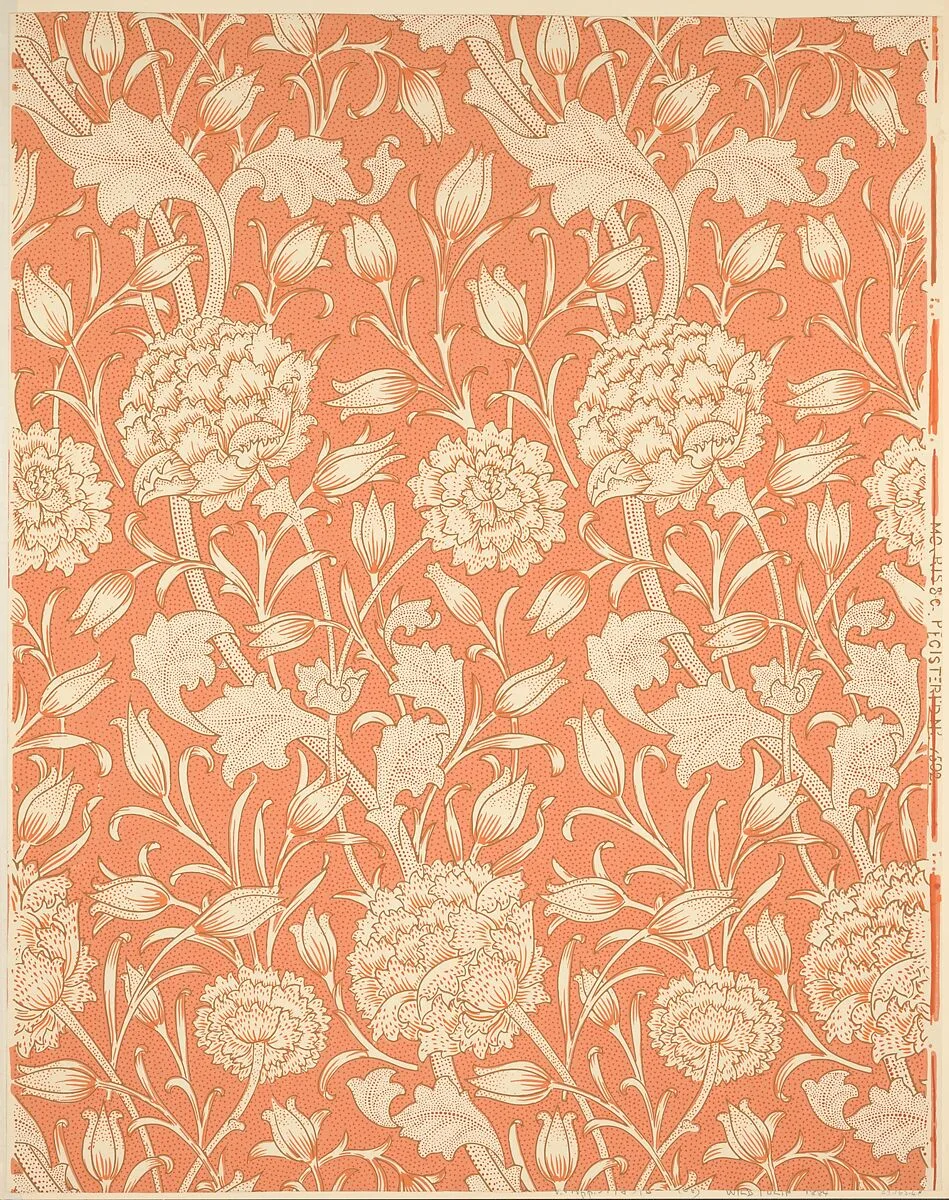
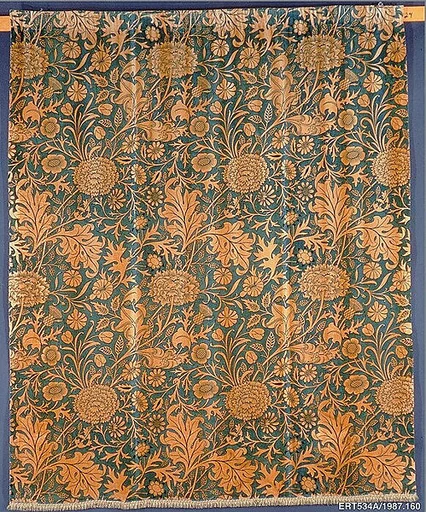
Inspired by seventeenth-century Turkish brocades, the clarity of this wallpaper design is typical of Morris's late style. The pattern features tulips and stylized carnations or peonies, intertwined in a repeating meander. A leader of the Arts and Crafts movement in England, Morris used Moorish, Turkish, Persian, medieval, and Byzantine sources for his furniture, carpets, textiles, and papers. Over his long career, he produced forty-one wallpapers and five ceiling papers, printed by hand with wood blocks, which distinguished them from mass-produced products. Tulips were unknown in Europe until the sixteenth century. Originating as wildflowers indigenous to western Anatolia and eastern Persia, they were first brought to the Holy Roman Emperor Ferdinand I in bulb form by an ambassador who had encountered them in the Ottoman court of Süleyman I. The English word tulip derives from the Perisan dulband and the Turkish tulbant (turban).
- Artist
- William Morris|Morris & Company|Jeffrey & Co.
- Date
- 1884
- Medium
- Block-printed in distemper colors
- Department
- Drawings and Prints
- Credit line
- Purchase, Edward C. Moore Jr. Gift, 1923