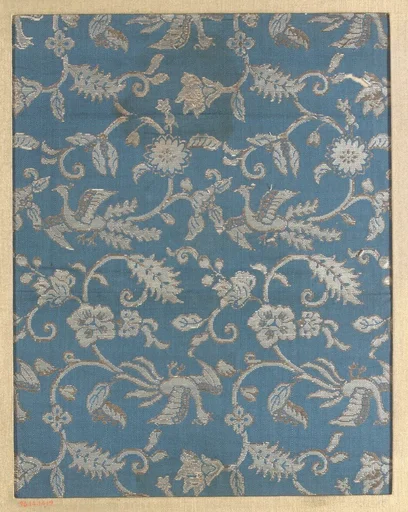
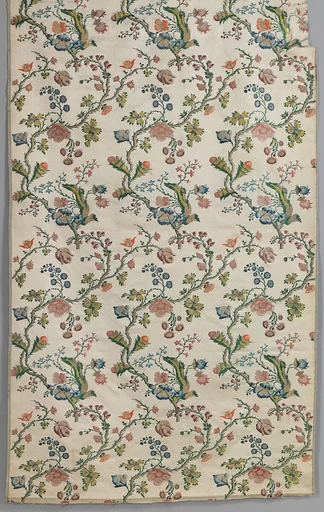
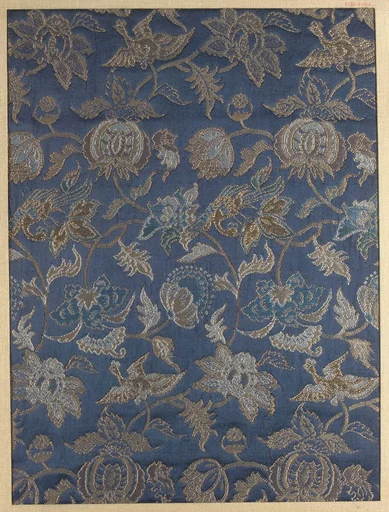
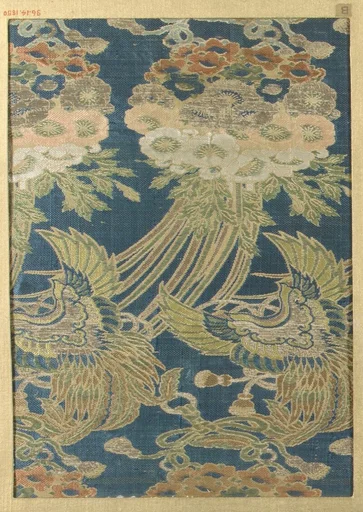
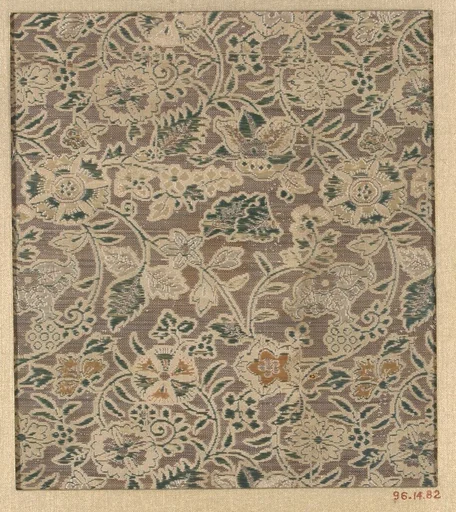
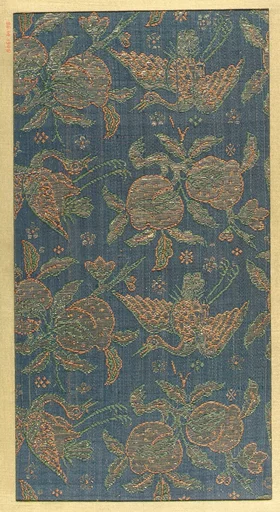
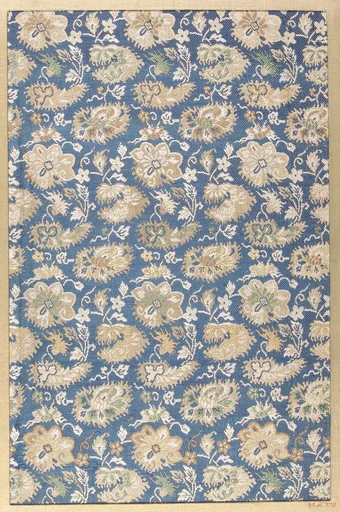
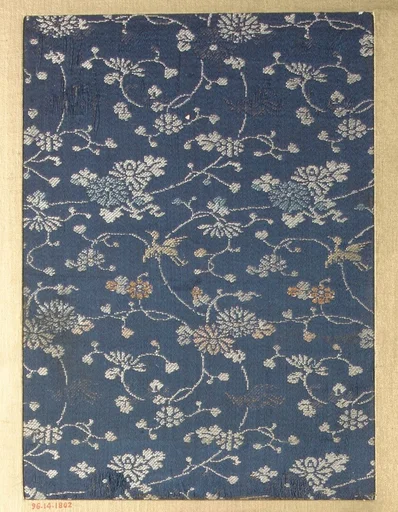
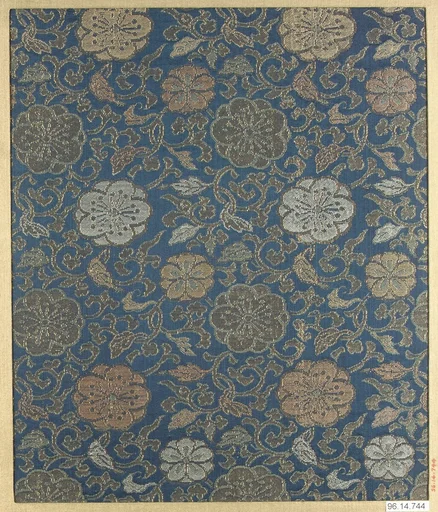
Panel with Rosebush, Birds, and Deer Pattern
Unknown
late 17th–early 18th century · Silk, silver and gilded metal wrapped thread; compound twill weave, brocaded · Islamic Art
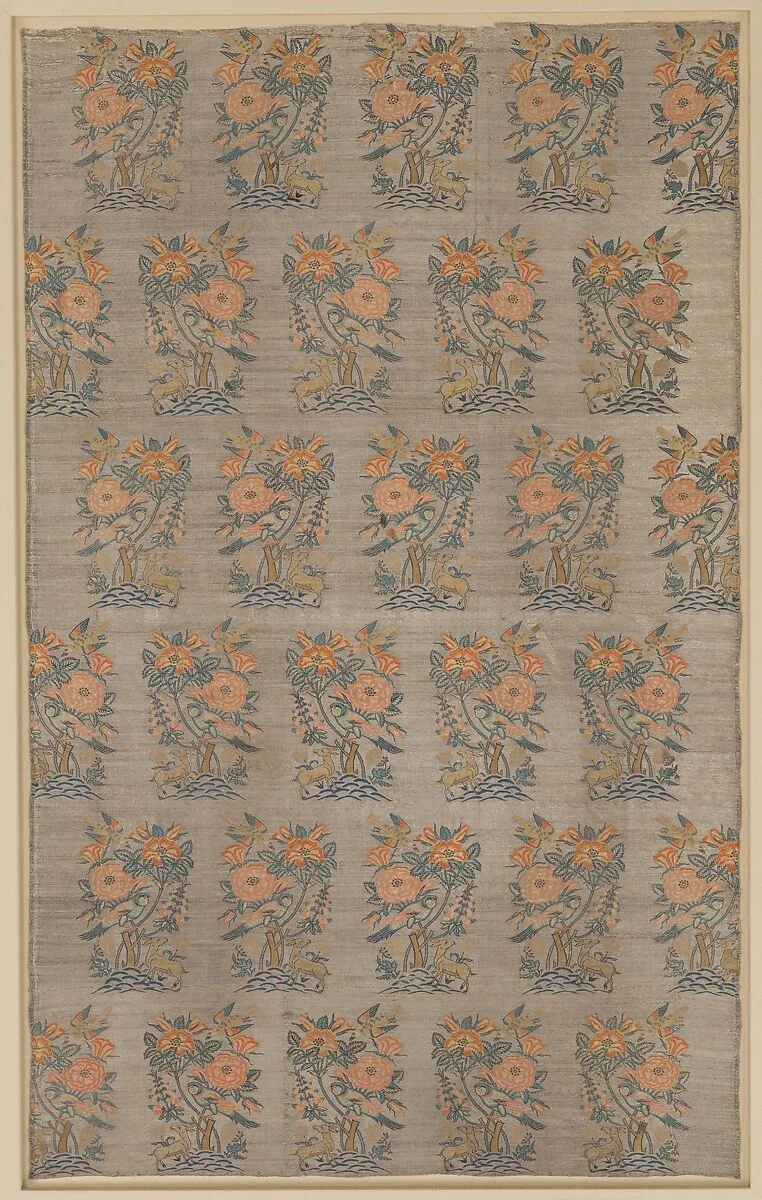
Iranian silk production expanded markedly in the early seventeenth century, thanks to the patronage of Shah 'Abbas I. Silk was most intensively farmed in the Caspian Sea provinces of Gilan and Mazandaran and was woven all over Iran. Raw silk was also exported to Turkey, Russia, Central Asia, India, and Europe. The motifs of a rosebush, birds, and deer on this piece relate it to the popular group of bird and flower textiles in the seventeenth century, anticipating the fashion for bird and flower decoration in the eighteenth and nineteenth centuries. The unnatural relationship of scale among the birds, deer, and flowers is most likely the artist’s interpretation.
- Artist
- Unknown
- Date
- late 17th–early 18th century
- Medium
- Silk, silver and gilded metal wrapped thread; compound twill weave, brocaded
- Department
- Islamic Art
- Credit line
- Anonymous Gift, 1949