Scale Armor
Unknown
8th–3rd century BCE · Leather, pigments · Arms and Armor
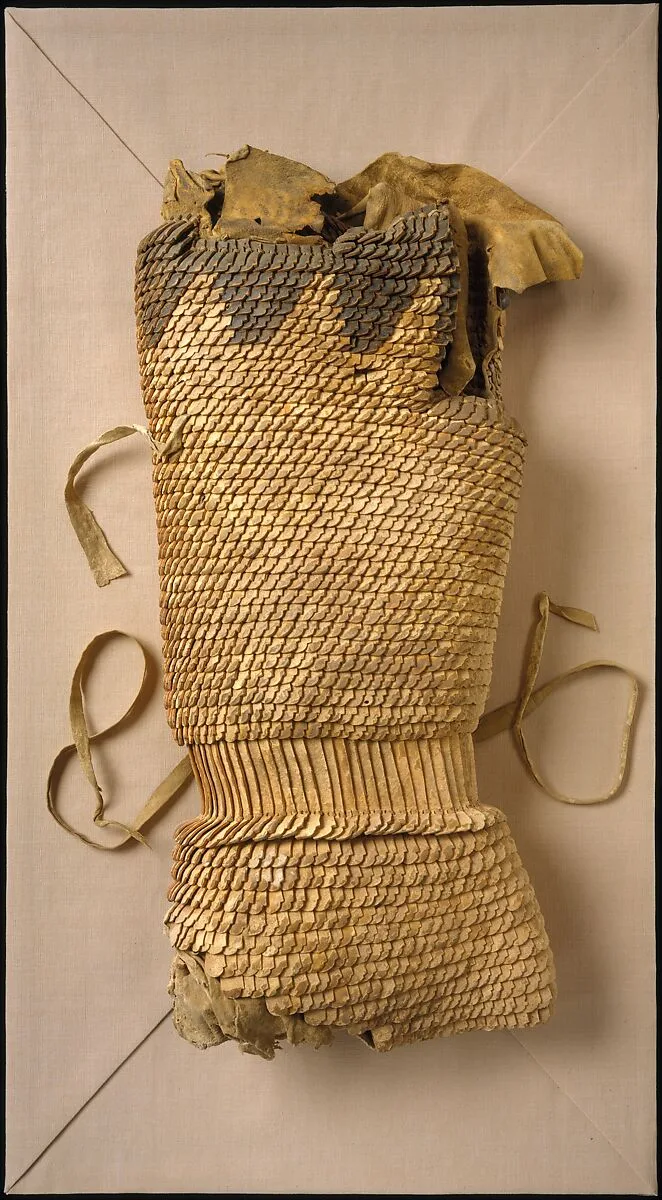
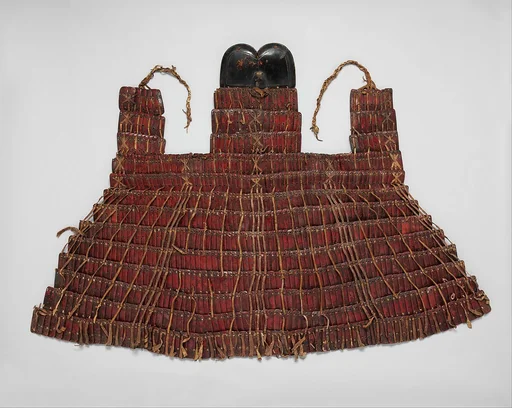
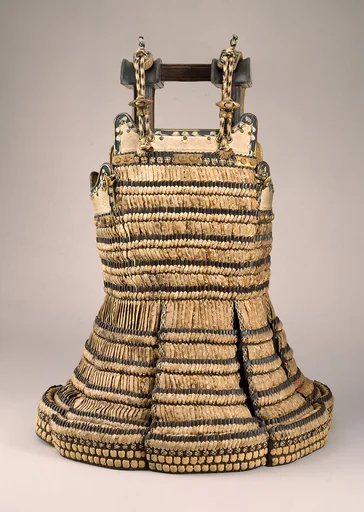
Not only is this extraordinary armor the best-preserved scale armor from antiquity, but it is also one of only a few examples entirely of leather that survive from such an early period. It consists of a sleeveless garment made of fifty-six rows of hard scales, which are secured by rawhide laces to a soft leather lining. The armor reaches from the shoulders to the upper thighs, with a wide band at the waist. It wraps around the torso and overlaps on the right side. Leather laces, by which the armor would have been tied closed, are found at the side of the chest and at the small of the back. A subsidiary skirt, consisting of several layers of soft leather (not visible in the photograph), is stitched to the interior lining at the bottom edge of the armor. This skirt would have reached to just below the wearer's knees. The positioning and extent of the skirt were only revealed during the conservation treatment of the armor, which is ongoing. Historically scale armor, usually of bronze or iron, was among the most long-lived and widely used forms of protection. It first appeared in Egypt and the Near East about the middle of the second millennium BCE. and continued to be worn in Europe as late as the seventeenth century CE. Based on the style and construction of the Museum's example, it seems most likely that the armor was made by one of the nomadic cultures of Eurasia, who dominated the steppes from the sixth to the second century BCE.
- Artist
- Unknown
- Date
- 8th–3rd century BCE
- Medium
- Leather, pigments
- Culture
- Subeixi or Scythian
- Department
- Arms and Armor
- Credit line
- Purchase, Arthur Ochs Sulzberger Gift, 2000