Snaphaunce Hunting Rifle
Jonas Schertiger the Younger
dated 1722 · Steel, wood (walnut), brass, horn · Arms and Armor
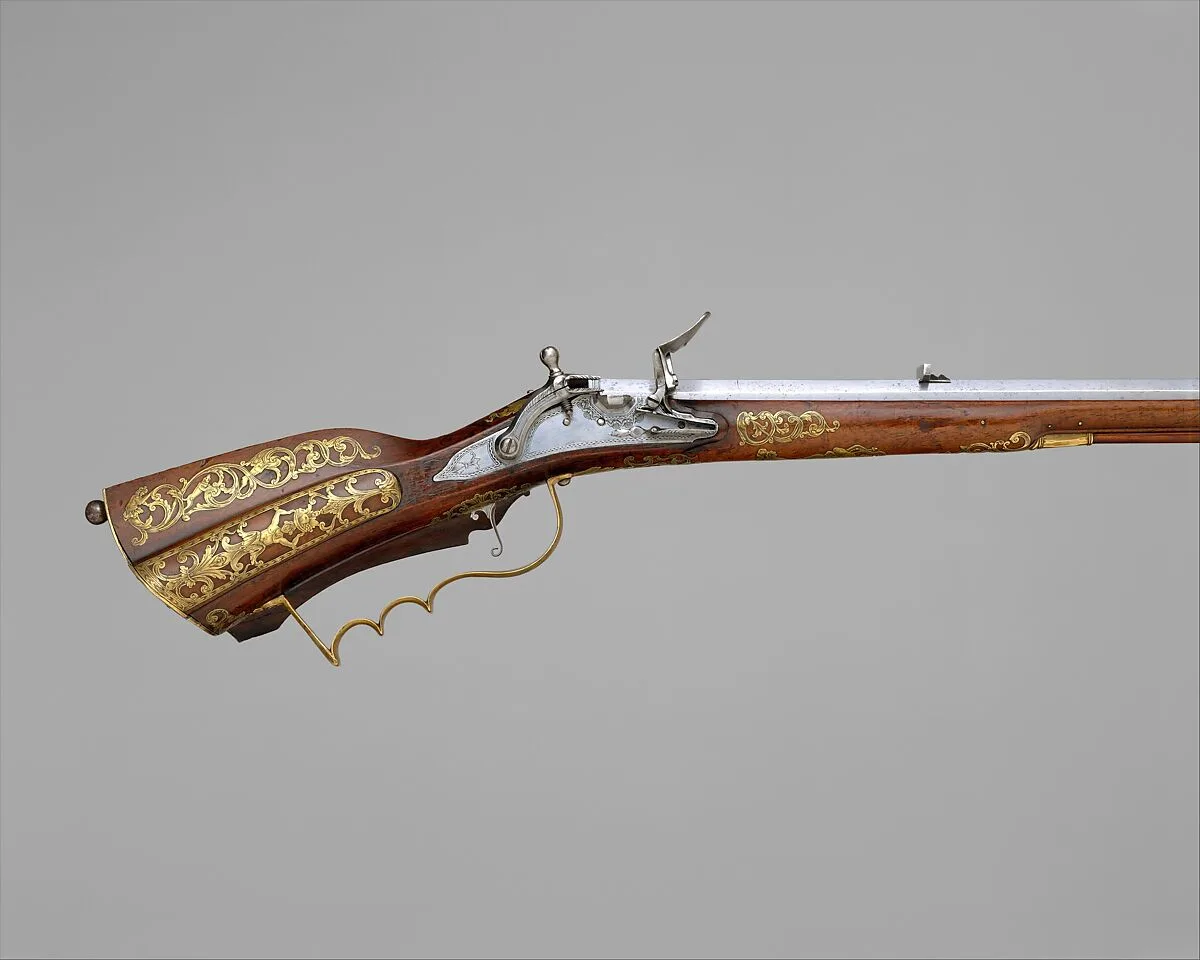
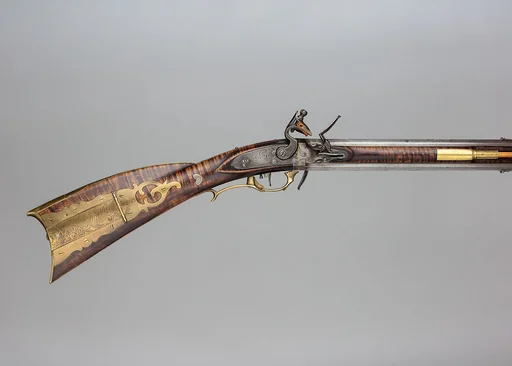
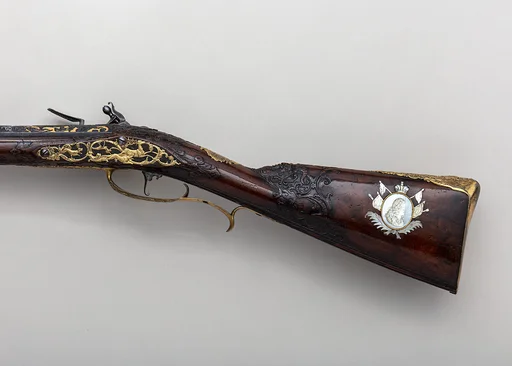
This rifle exemplifies the diverse influences shaping firearms design in eighteenth-century Sweden. Its slender proportions and small-caliber barrel are modeled after the Silesian Tschinke rifle; the prominent cheek stock is typically German, as is the use of inset brass decoration, yet the flat-faced lock copies French models. The lock mechanism, however, is unmistakably Swedish, as the snaphaunce lock was favored in Scandinavia over the wheellock and flintlock commonly used on the Continent. A gunstocker by trade, Jonas Schertiger the Younger was a member of the Stockholm cabinetmakers' guild. His name and the date of manufacture are prominently engraved on the brass inlay on the cheek stock. A blank escutcheon surmounted by a royal crown on the sideplate suggests that this gun was intended for the hunting cabinet of King Frederick I of Sweden (reigned 1720–51).
- Artist
- Jonas Schertiger the Younger
- Date
- dated 1722
- Medium
- Steel, wood (walnut), brass, horn
- Culture
- Swedish, Stockholm
- Department
- Arms and Armor
- Credit line
- Purchase, Gifts of Prince Albrecht Radziwill and Charles M. Schott Jr., by exchange, and Rogers Fund, 1997