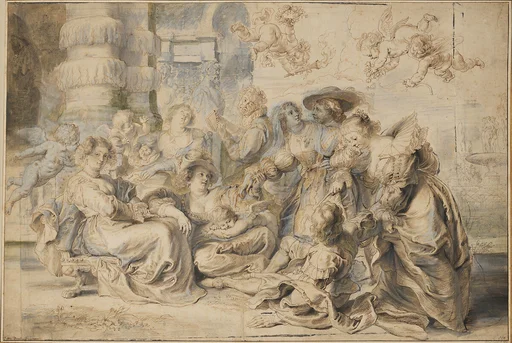
The Garden of Love (left portion)
Peter Paul Rubens|Peter Paul Rubens
ca. 1633–35 · Pen, brown ink, brush and gray-green wash over traces of black chalk, touched with indigo, green, yellowish, and white paint · Drawings and Prints
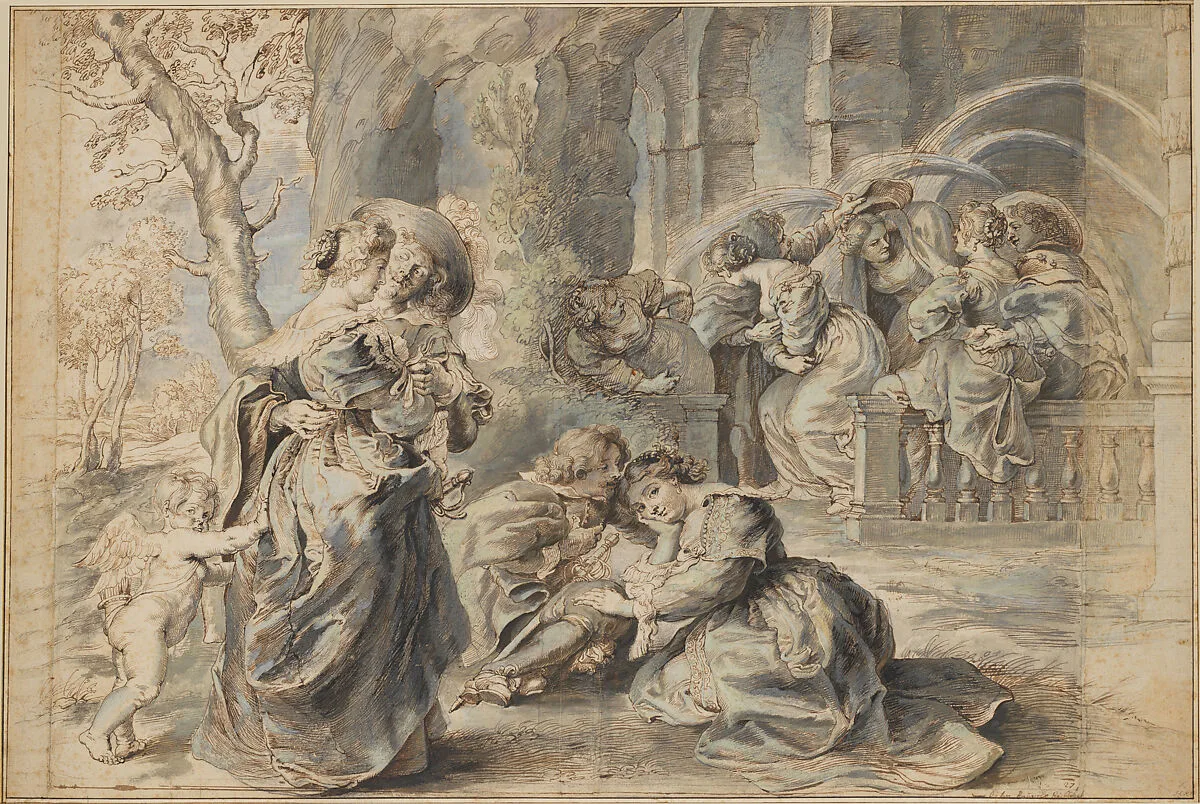
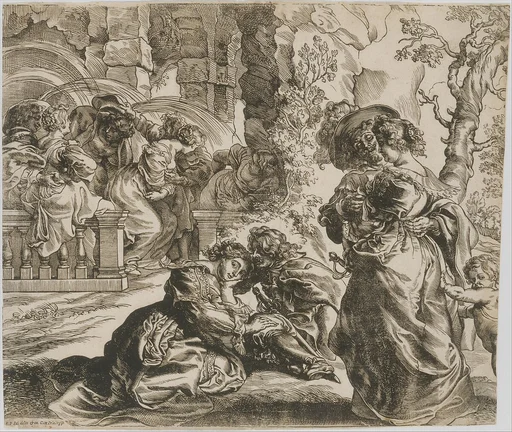
Rubens supervised the engravers who reproduced his paintings throughout his career. Only in the early 1630s did he turn to woodcuts, in close collaboration with Christoffel Jegher. These monumental drawings are models based on a composition also known from Rubens’s painting in the Museo del Prado, Madrid. They were made for Jegher’s woodcuts, which reproduce them in reverse. The initial design in black chalk is by Rubens, while most of the rest of the drawing can be attributed to a workshop assistant. The drawings essentially transform the composition into a frieze, most notably by dividing it into two separate parts, pushing the figures to the foreground and cropping the architecture at the top. This frieze-like adaptation gives the figural groups a wonderful immediacy.
- Artist
- Peter Paul Rubens|Peter Paul Rubens
- Date
- ca. 1633–35
- Medium
- Pen, brown ink, brush and gray-green wash over traces of black chalk, touched with indigo, green, yellowish, and white paint
- Department
- Drawings and Prints
- Credit line
- Fletcher Fund, 1958