Garroted Man
Goya (Francisco de Goya y Lucientes)
ca. 1775–78 · Etching, printed in blue (working proof) · Drawings and Prints
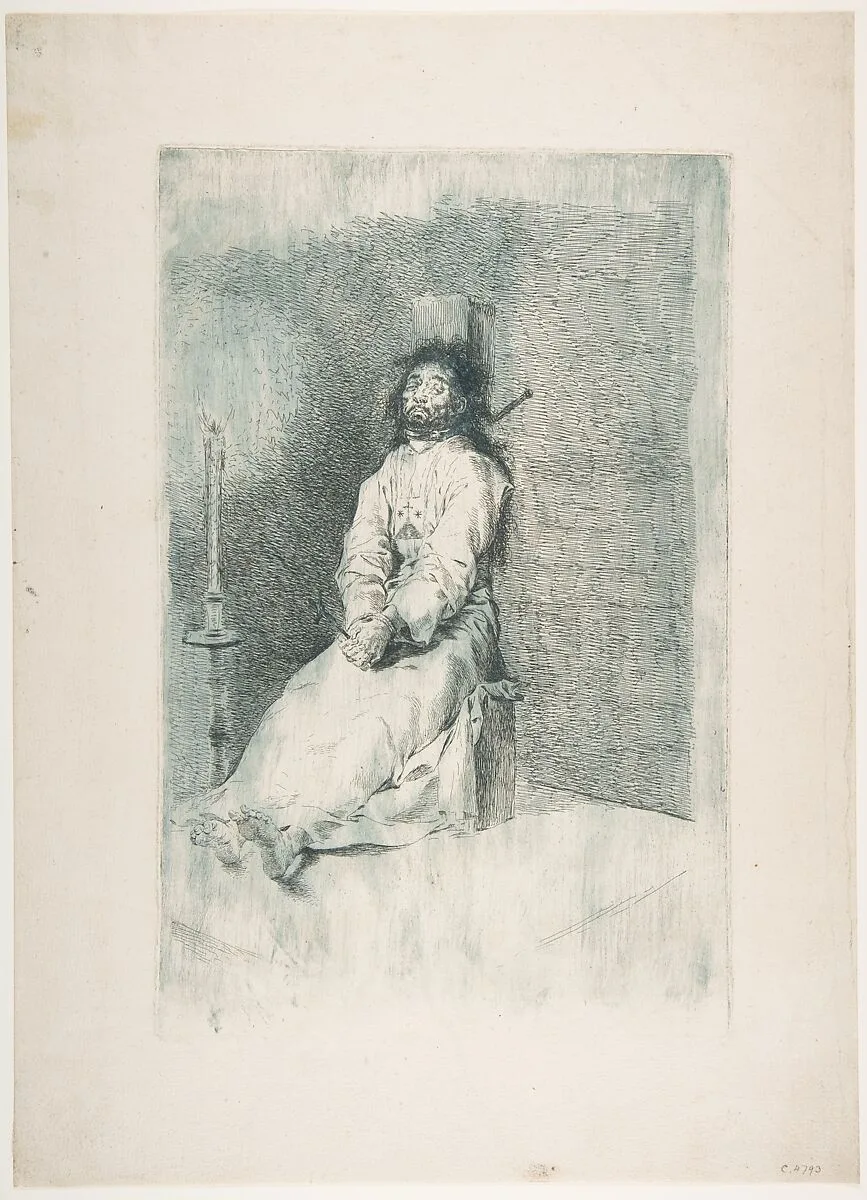
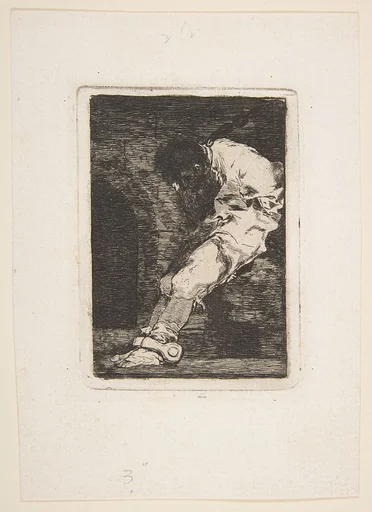
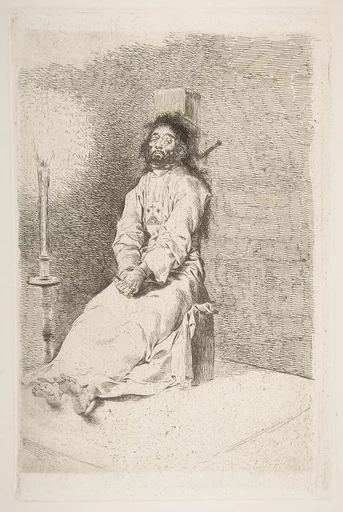
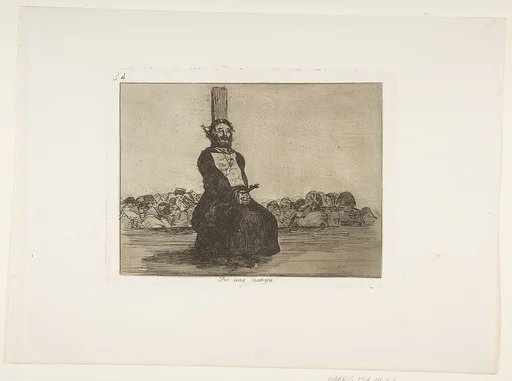
This is one of Goya's earliest etchings, made when he was exploring the technique. It shows a man being killed by a garrotte, the standard civilian method of execution in Spain of which there were several methods. That depicted here shows the prisoner sat on a stool with his back to the post, wrists bound and a hinged iron collar closed around his neck. It is a strange subject for a print, perhaps addressing judicial abuse and it is hard to guess what sort of audience Goya anticipated. Goya might not have intended it for wide distribution as it was made when he was beginning as a printmaker and exploring subjects that interested him personally. Goya’s unflinching depiction of this method of execution anticipates his brutally frank representation of conflict in the 'Disasters of War' began over thirty years later, in 1810. This etching, printed in blue ink is a unique working proof. The tone imparts an eerie sense to the composition, suggesting an interior nocturnal setting.
- Artist
- Goya (Francisco de Goya y Lucientes)
- Date
- ca. 1775–78
- Medium
- Etching, printed in blue (working proof)
- Department
- Drawings and Prints
- Credit line
- Rogers Fund, 1920
![Plate 36 from "The Disasters of War" (Los Desastres de La Guerra): 'Not [in this case] either' (Tampoco)](https://d2pvxr3eb77vb4.cloudfront.net/assets/v1/b2/b2652d1a3a337ee66f5dded279044bdb5d6542db08c0e7552109f1c02c8ea8ea/graph.webp)