Arrowhead
Unknown
ca. 1st century BCE–3rd century CE · Bronze · Ancient Near Eastern Art
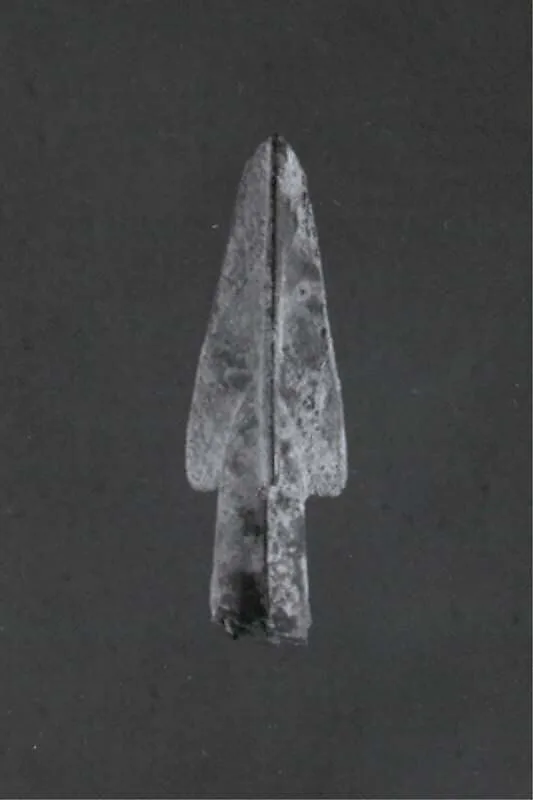
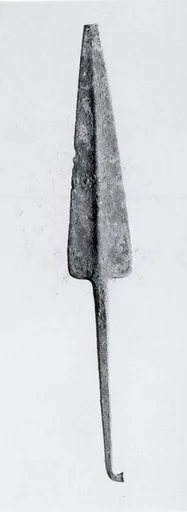
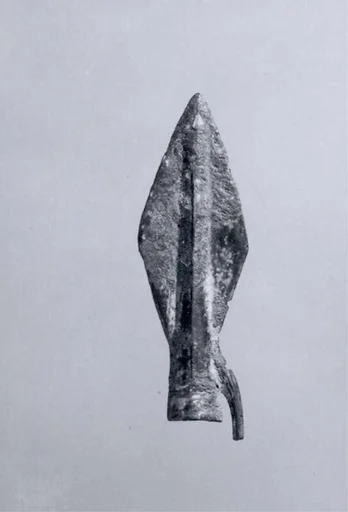
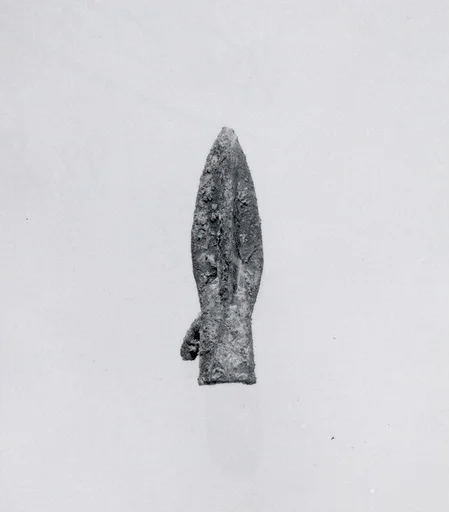
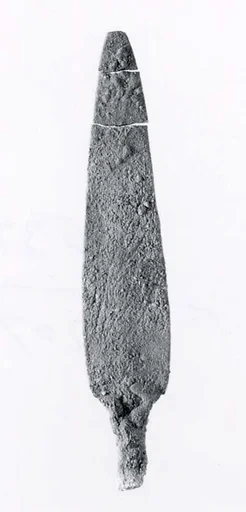
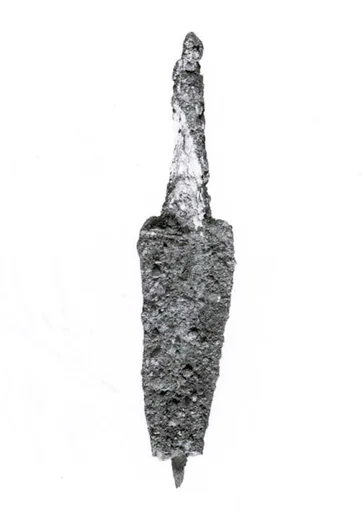
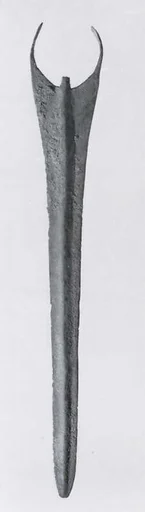
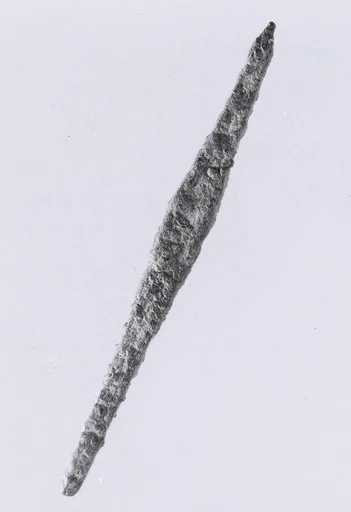
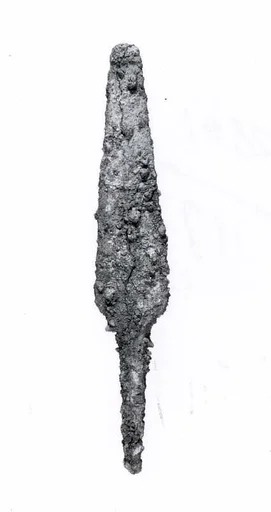
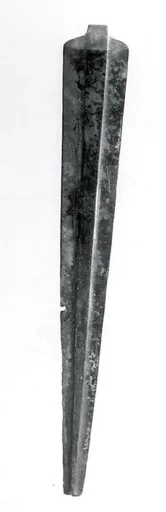
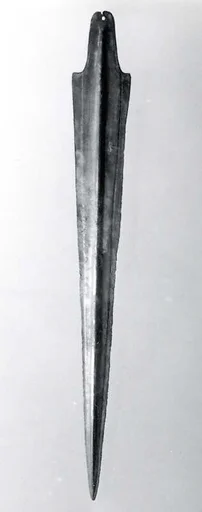
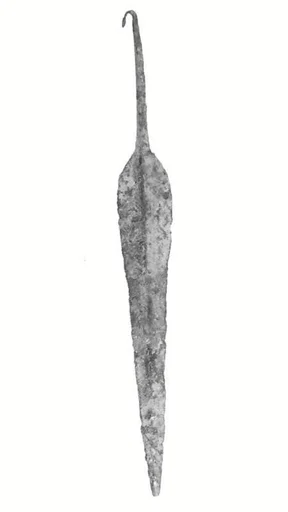
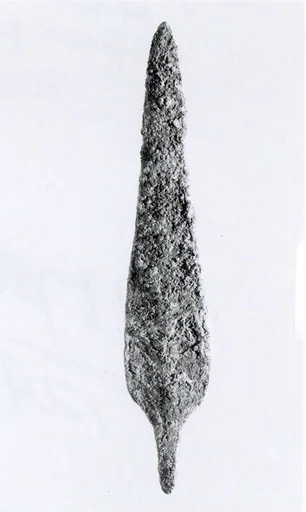
This is a bronze socketed trilobate (i.e., ‘three-bladed’) arrowhead. It was discovered on the surface at Shahr-i Qumis in northern Iran, which has been identified as the ancient city of Hecatompylos, established by the Parthians as their capital by about 200 B.C. In Greek Hecatompylos means ‘a hundred gates,’ suggesting that the city was quite large. Indeed, the modern archaeological site includes several mounds, only a few of which have been excavated, and a vast area covered with potsherds. Trilobate arrowheads were once associated with the Scythians and Cimmerians, nomadic peoples from the Eurasian steppe who invaded the Near East in the 8th century B.C. However, this type of arrowhead appears far and wide in space and time, indicating it was widely used in the ancient Near East, doubtless on account of its efficacy at piercing armor. Since Shahr-i Qumis was the site of a Parthian city, this arrowhead is most likely of Parthian date. The Parthians were famed in antiquity as archers, and gave their name to the ‘Parthian shot,’ a tactic in which a mounted archer rides away from his enemy while firing arrows at him.
- Artist
- Unknown
- Date
- ca. 1st century BCE–3rd century CE
- Medium
- Bronze
- Culture
- Parthian (?)
- Department
- Ancient Near Eastern Art
- Credit line
- Purchase, H. Dunscombe Colt Gift, 1969