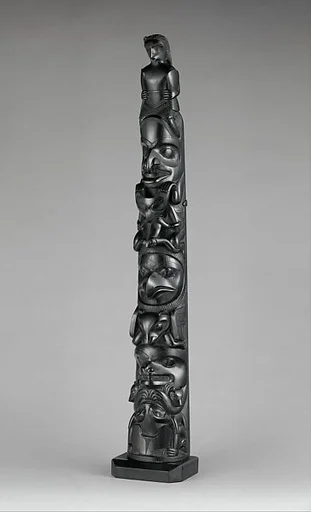
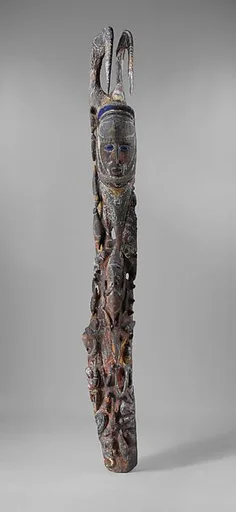
Totem Pole Model
Charles Edenshaw
ca. 1890 · Argillite · Arts of Africa, Oceania, and the Americas
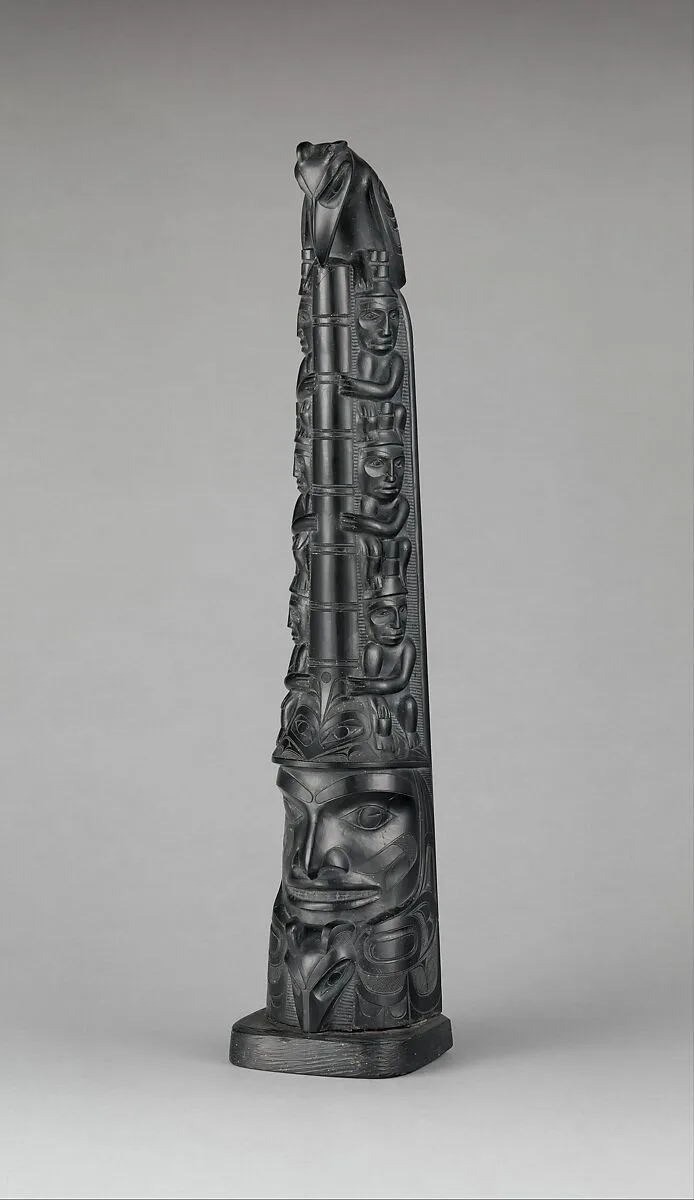
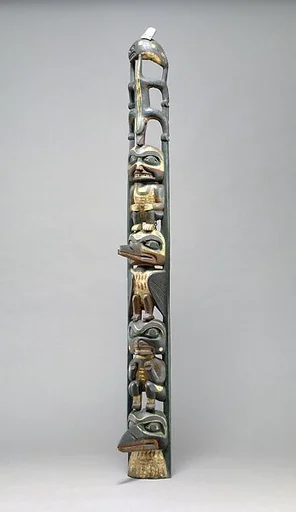
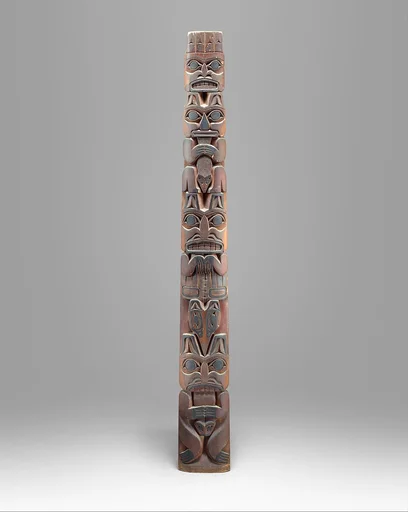
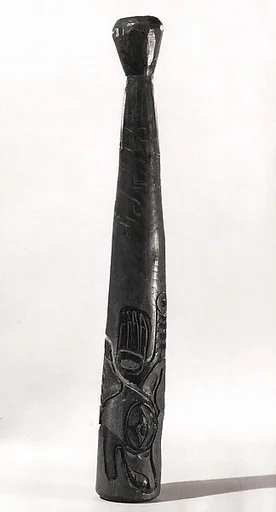
Model totem poles began to be carved in the Pacific Northwest in the mid-1860s, when full-sized totem poles were no longer being worked. Both wood and argillite, a black shale, were used for the model carvings, the bulk of which were made for sale to outsiders. The Native population had been decimated by smallpox earlier in the decade, and the continuance of full-scale local traditions was not possible in the aftermath. The imagery of the model poles--often similar to that of full-scale poles without directly reproducing it--is credited with providing a vehicle through which many artistic conventions were continued into the next generation. By the 1880s, the identity and artistic personality of individual carvers began to surface. One well-known sculptor, the Haida Charles Edenshaw (ca. 1839-1920) of Haida Gwaii (Queen Charlotte Islands), was prolific in the carving of argillite model poles. They comprise a significant body of his work.
- Artist
- Charles Edenshaw
- Date
- ca. 1890
- Medium
- Argillite
- Culture
- Haida
- Department
- Arts of Africa, Oceania, and the Americas
- Credit line
- Ralph T. Coe Collection, Gift of Ralph T. Coe Foundation for the Arts, 2011