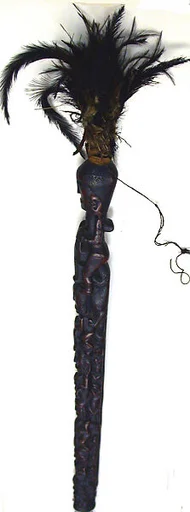
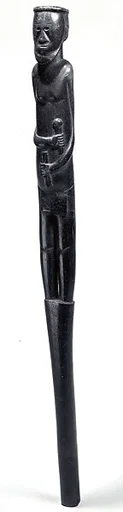
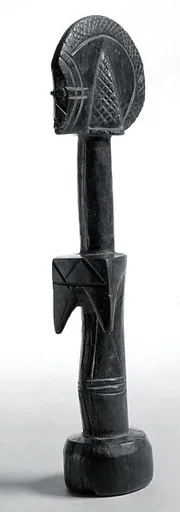
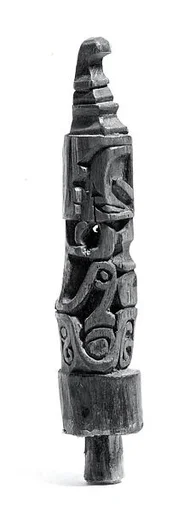
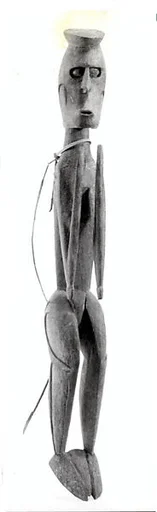
Charm
Unknown
late 19th–early 20th century · Wood, glass beads, fiber · Arts of Africa, Oceania, and the Americas
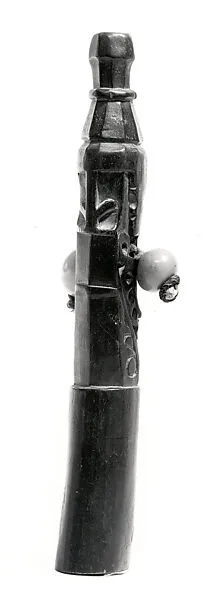
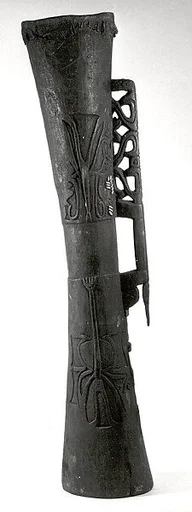
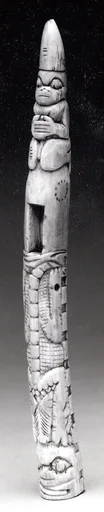
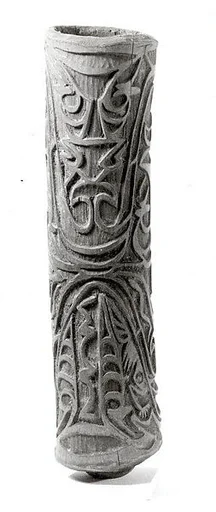
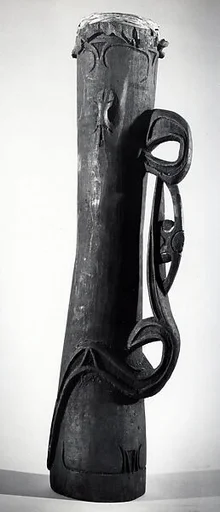
The lengthy coastline and numerous islands of Cenderawasih Bay in northwest New Guinea were, and to some extent remain, linked by a vast maritime trade network, which extended eastward along the New Guinea coast and westward to Indonesia. The frequent contact resulting from this network was responsible in part for the development of a shared artistic style, which, with local variants, appears across the region. In the past, the central images in Cenderawasih art were korwar, human figures with enlarged heads and arrow-shaped noses. Korwar portrayed recently deceased ancestors. The most important were freestanding figures that housed the spirits of the dead. Smaller korwar served as charms, and korwar images frequently appear on objects such as staffs, canoe prows, and headrests.
- Artist
- Unknown
- Date
- late 19th–early 20th century
- Medium
- Wood, glass beads, fiber
- Culture
- Cenderawasih Bay
- Department
- Arts of Africa, Oceania, and the Americas
- Credit line
- The Michael C. Rockefeller Memorial Collection, Gift of Mr. and Mrs. Herbert Baker, 1971