Figure
Unknown
150 BCE–100 CE · Ivory (walrus) · Arts of Africa, Oceania, and the Americas
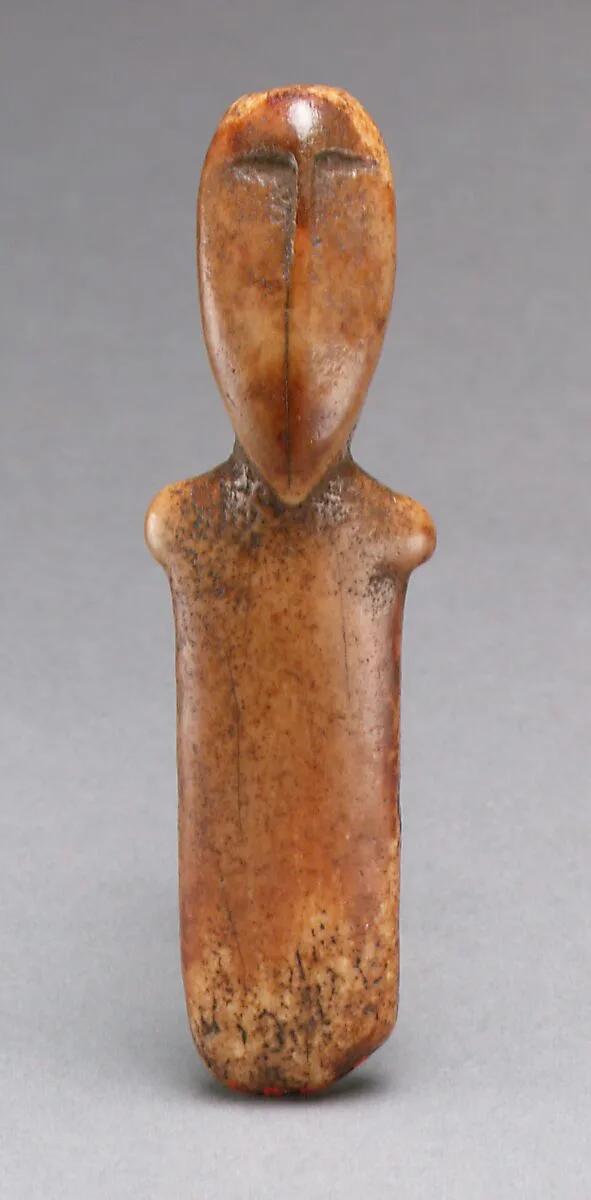
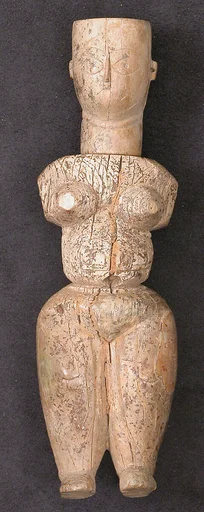
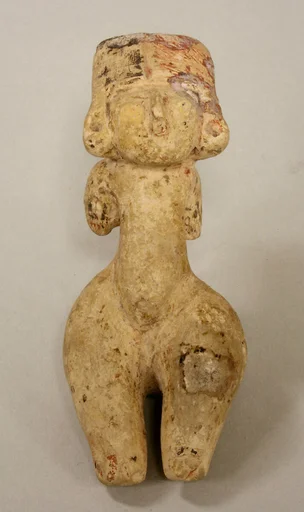
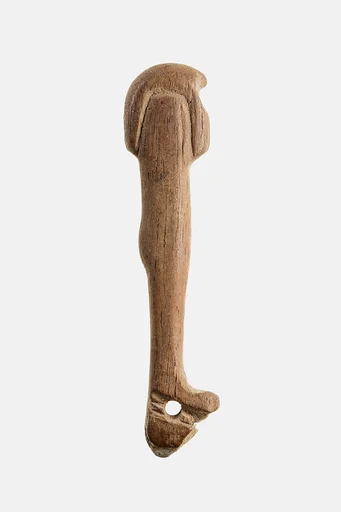
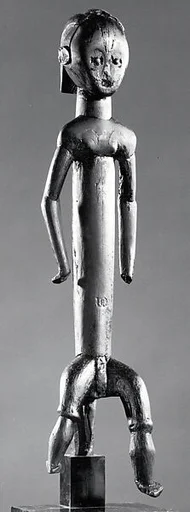
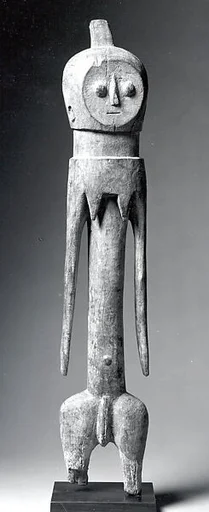
The ivory half-figures or torsos made during the late centuries of the first millennium BCE were often rendered with such a minimum of detail that they remain enigmatic to the most insightful of viewers. Armless and legless, with faces reduced to essential elements, the figures are part of a larger group of works that have been called dolls by some, ceremonial or shamanistic objects by others. Most frequently they represent females. In Siberia during the nineteenth century, armless female figures were house guardians and spirits of illness; it has been suggested that in ancient times they may have had a similar role. The ivory torsos are known primarily from the region of the St. Lawrence and Punuk islands in the Bering Sea between Alaska and Siberia.
- Artist
- Unknown
- Date
- 150 BCE–100 CE
- Medium
- Ivory (walrus)
- Culture
- Old Bering Sea
- Department
- Arts of Africa, Oceania, and the Americas
- Credit line
- The Michael C. Rockefeller Memorial Collection, Bequest of Nelson A. Rockefeller, 1979
![Figure (Gai Masok [?])](https://d2pvxr3eb77vb4.cloudfront.net/assets/v1/e7/e7280686a5840f69fec42ee15d7369fc9835d014c9c6b2216f96cefc83c5aa81/graph.webp)