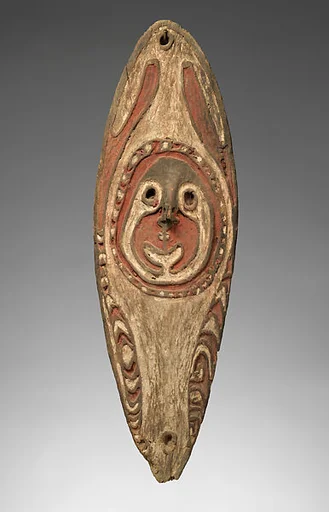
Figure (Gra or Garra)
Unknown
late 19th–early 20th century · Wood, paint · Arts of Africa, Oceania, and the Americas
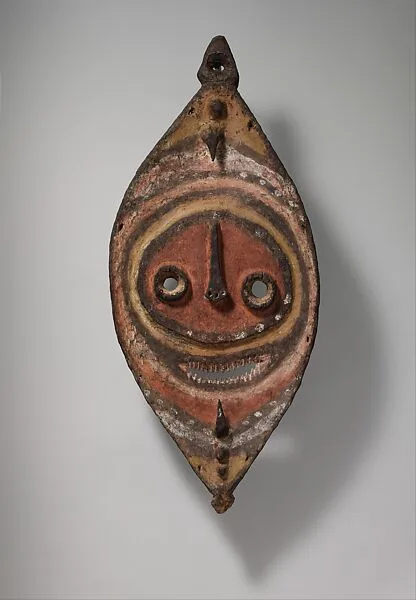
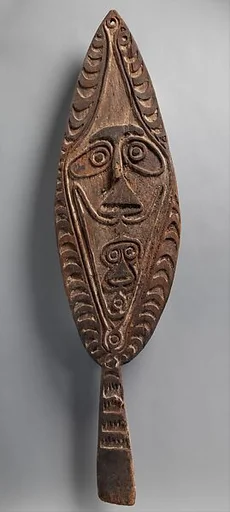
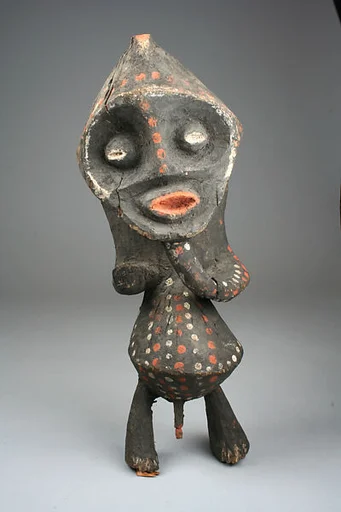
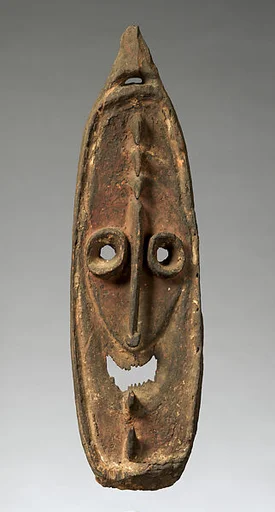
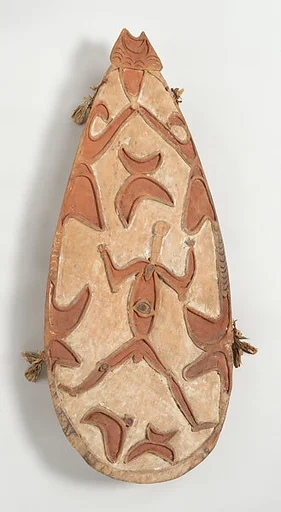
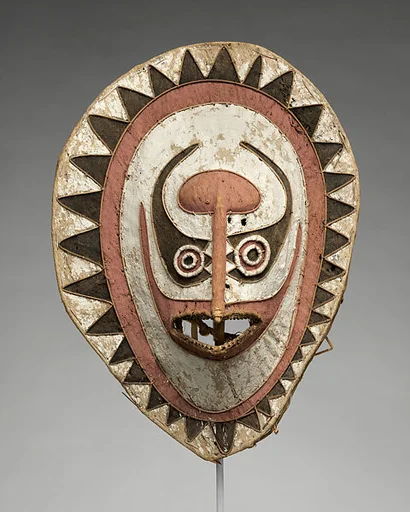
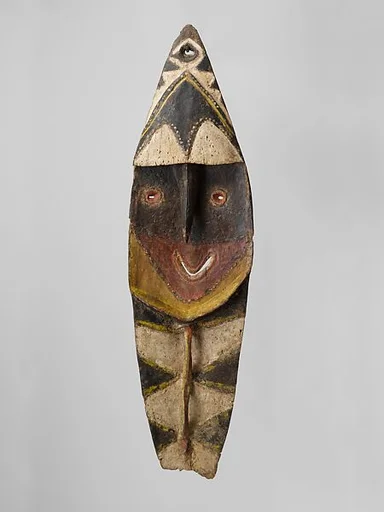
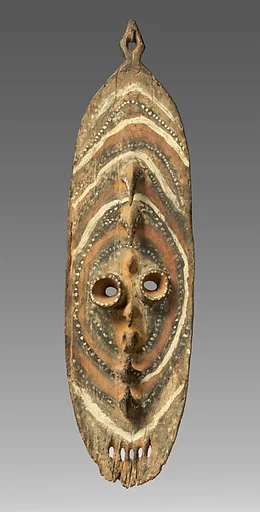
In former times, the focus of artistic and religious life among the Bahinemo people of the Hunstein mountains south of the middle Sepik River was the men’s ceremonial house, in which initiation and other rites took place and sacred objects, collectively called gra or garra, were kept. Bahinemo artists created two distinct forms of hook figures: flat, mask-like panels with stylized human faces bracketed by hook-shaped forms and tall slender images, intended to be seen in profile, consisting of a series of concentric hooks surrounding a central projection. Mask-like forms were associated, broadly, with forest spirits, while the slender profile images were connected with water spirits, their curving hooks identified, in some cases, as catfish whiskers. Like the hook figures (yipwon) of the Yimam people, Bahinemo hook images formerly served as hunting helpers, their supernatural powers assisting in the capture of game. They also played a role in male initiation ceremonies, in which they were carried by initiated men during dances.
- Artist
- Unknown
- Date
- late 19th–early 20th century
- Medium
- Wood, paint
- Culture
- Bahinemo people
- Department
- Arts of Africa, Oceania, and the Americas
- Credit line
- The Michael C. Rockefeller Memorial Collection, Purchase, Mr. and Mrs. John J. Klejman Gift and Nelson A. Rockefeller Gift, 1968
![Mask (Lor [?])](https://d2pvxr3eb77vb4.cloudfront.net/assets/v1/2c/2c55031deb8b5d5a4c6eef9acacdac95e30aebc4e6a9ff84f7e2f7a5eb8b0400/graph.webp)