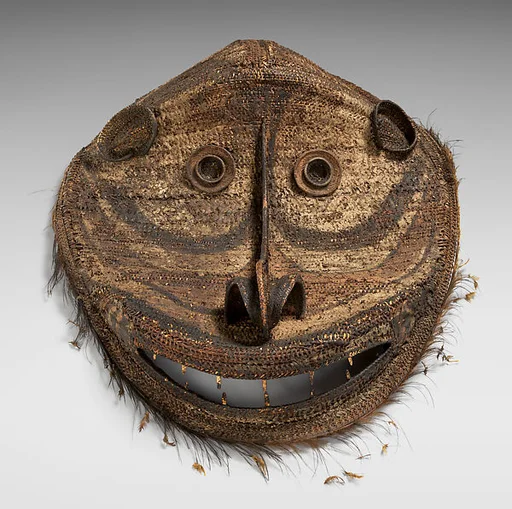
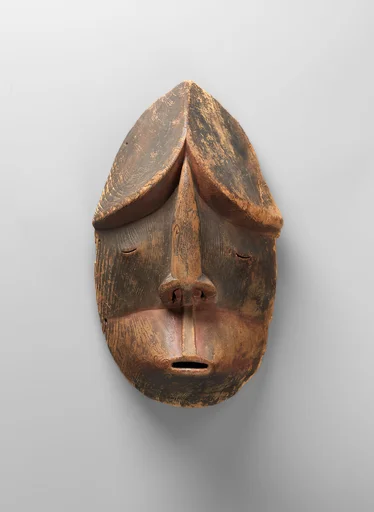
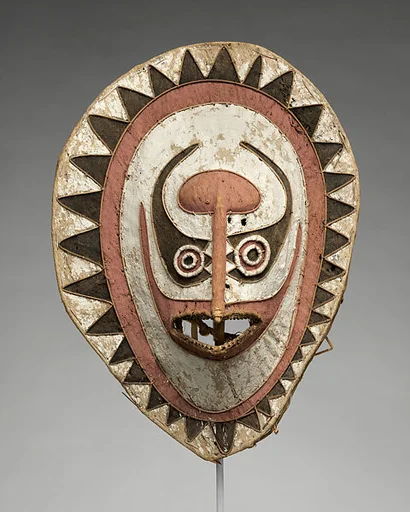
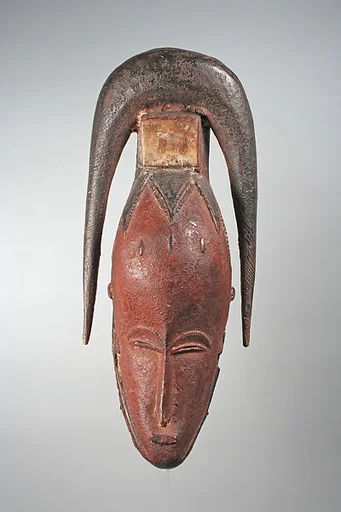
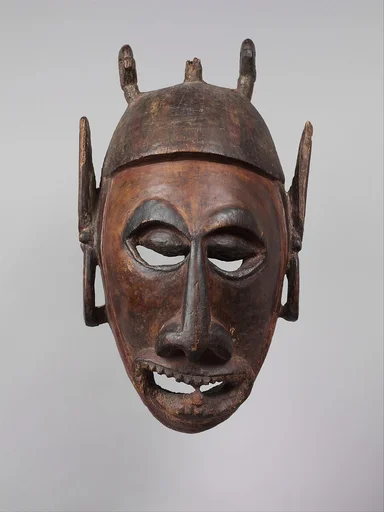
Mask (Lor [?])
Unknown
late 19th–early 20th century · Wood, paint, fiber · Arts of Africa, Oceania, and the Americas
![Mask (Lor [?]) — Unknown](https://d2pvxr3eb77vb4.cloudfront.net/assets/v1/2c/2c55031deb8b5d5a4c6eef9acacdac95e30aebc4e6a9ff84f7e2f7a5eb8b0400/full.webp)
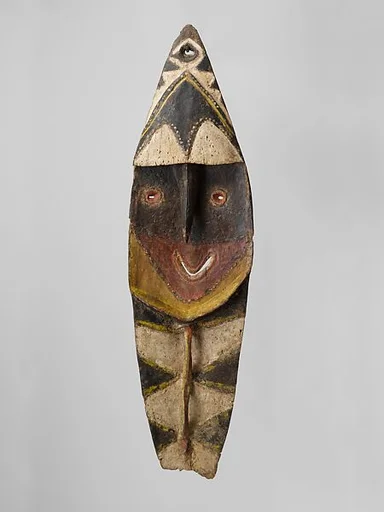
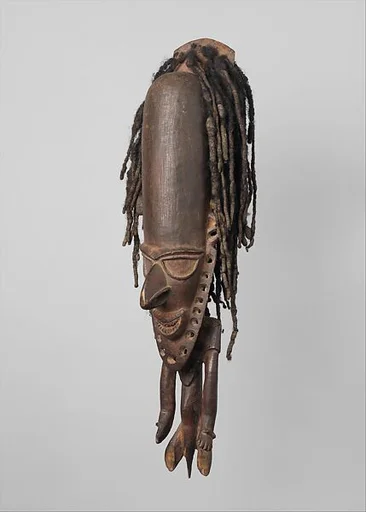
The masks of the Duke of York Islands, between New Britain and New Ireland, are part of a broader masking tradition that originally extended from southern New Ireland to the Tolai people of northern New Britain. Known by variants of the name lor, which means skull in Tolai, the masks have white faces with mouths that often appear to be smiling. The significance of lor masks in the Duke of York Islands is uncertain, but they likely played similar roles to those of Tolai, where the tradition persists. Today, Tolai lor masks are worn by performers in a dance called tambaran kakao (spirit that crawls). The masks reportedly represent a spirit that comes to a local leader in dreams and reveals the details of dance paraphernalia and choreography.
- Artist
- Unknown
- Date
- late 19th–early 20th century
- Medium
- Wood, paint, fiber
- Culture
- New Britain
- Department
- Arts of Africa, Oceania, and the Americas
- Credit line
- The Michael C. Rockefeller Memorial Collection, Purchase, Nelson A. Rockefeller Gift, 1967