Eharo Mask
Unknown
early 20th century · Bark cloth, bamboo, cane, fiber, paint · Arts of Africa, Oceania, and the Americas
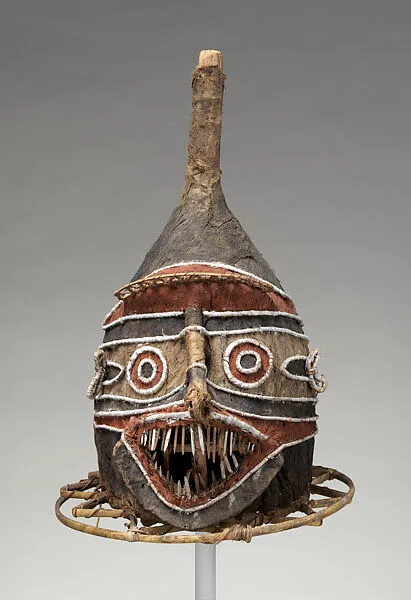
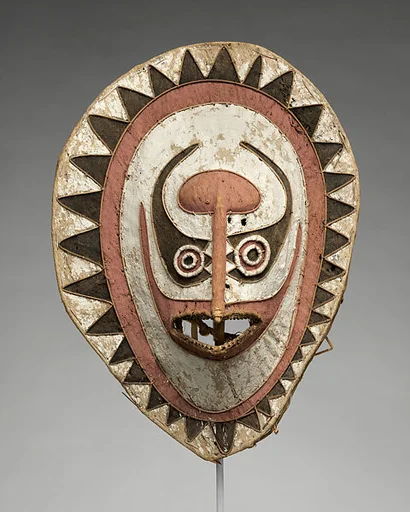
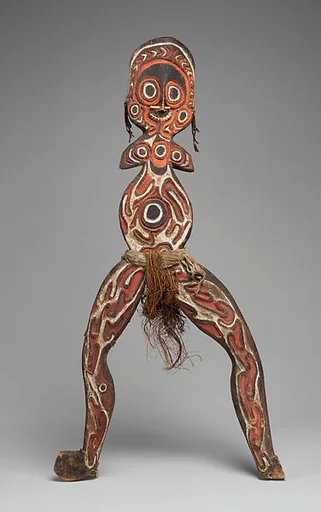
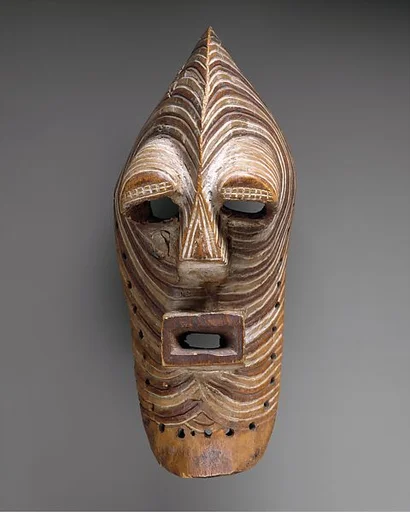
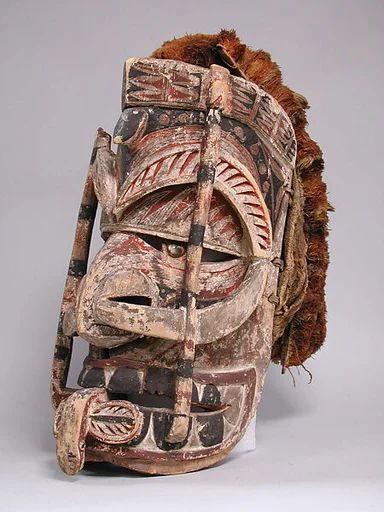
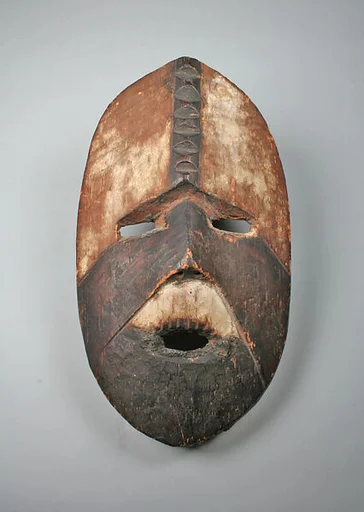
The Elema people of the eastern Papuan Gulf region in southeast New Guinea formerly practiced a lengthy cycle of masked rituals centered on the visitation of water spirits. The large masks representing the water spirits were highly sacred. However, other masks, called eharo, such as that seen here, were created primarily for amusement. Described as maea morava eharu (things of gladness), eharo were worn in performances during two stages of the cycle, as a prelude to more serious activities. Most depicted spirits and totemic species associated with individual clans or characters from local oral tradition. Eharo masks were made and worn by men from neighboring villages at the request of the village hosting the ceremony. As the men entered the host village, the resident women pelted them with shredded coconut to neutralize their seductive powers, which might otherwise prove irresistible. The men wearing the eharo masks then danced, surrounded by women from their home villages. A lighthearted atmosphere prevailed, and eharo performances were often boisterous and bawdy.
- Artist
- Unknown
- Date
- early 20th century
- Medium
- Bark cloth, bamboo, cane, fiber, paint
- Culture
- Elema people
- Department
- Arts of Africa, Oceania, and the Americas
- Credit line
- The Michael C. Rockefeller Memorial Collection, Purchase, Nelson A. Rockefeller Gift, 1960
![Mask (Lor [?])](https://d2pvxr3eb77vb4.cloudfront.net/assets/v1/2c/2c55031deb8b5d5a4c6eef9acacdac95e30aebc4e6a9ff84f7e2f7a5eb8b0400/graph.webp)