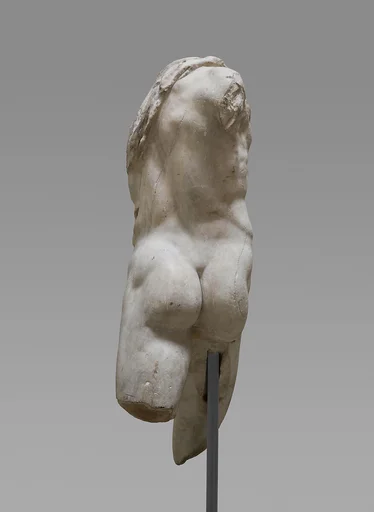
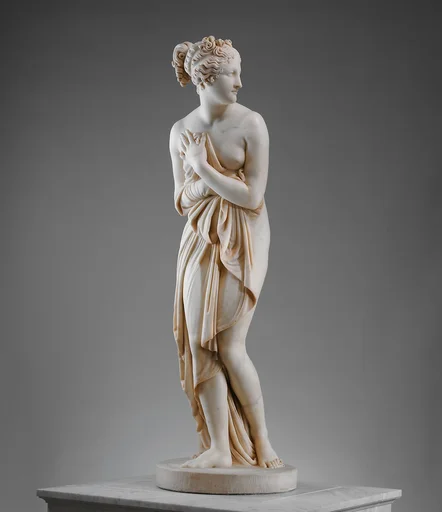
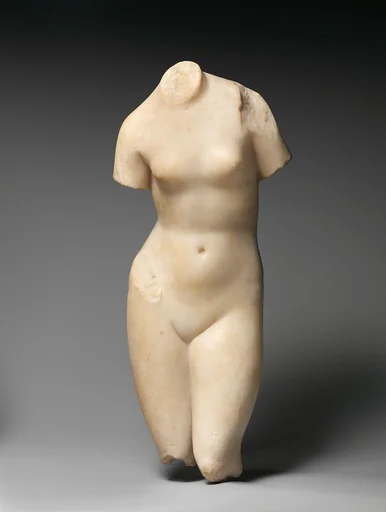
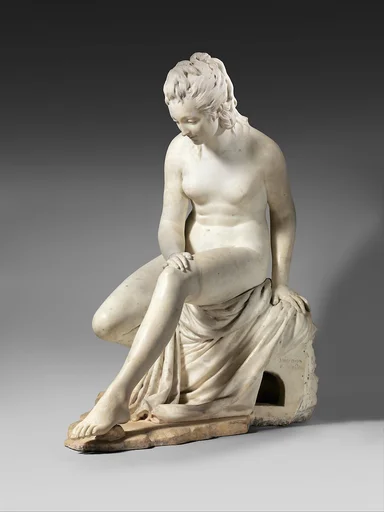
Marble Statue Group of the Three Graces
Unknown
2nd century CE · Marble · Greek and Roman Art
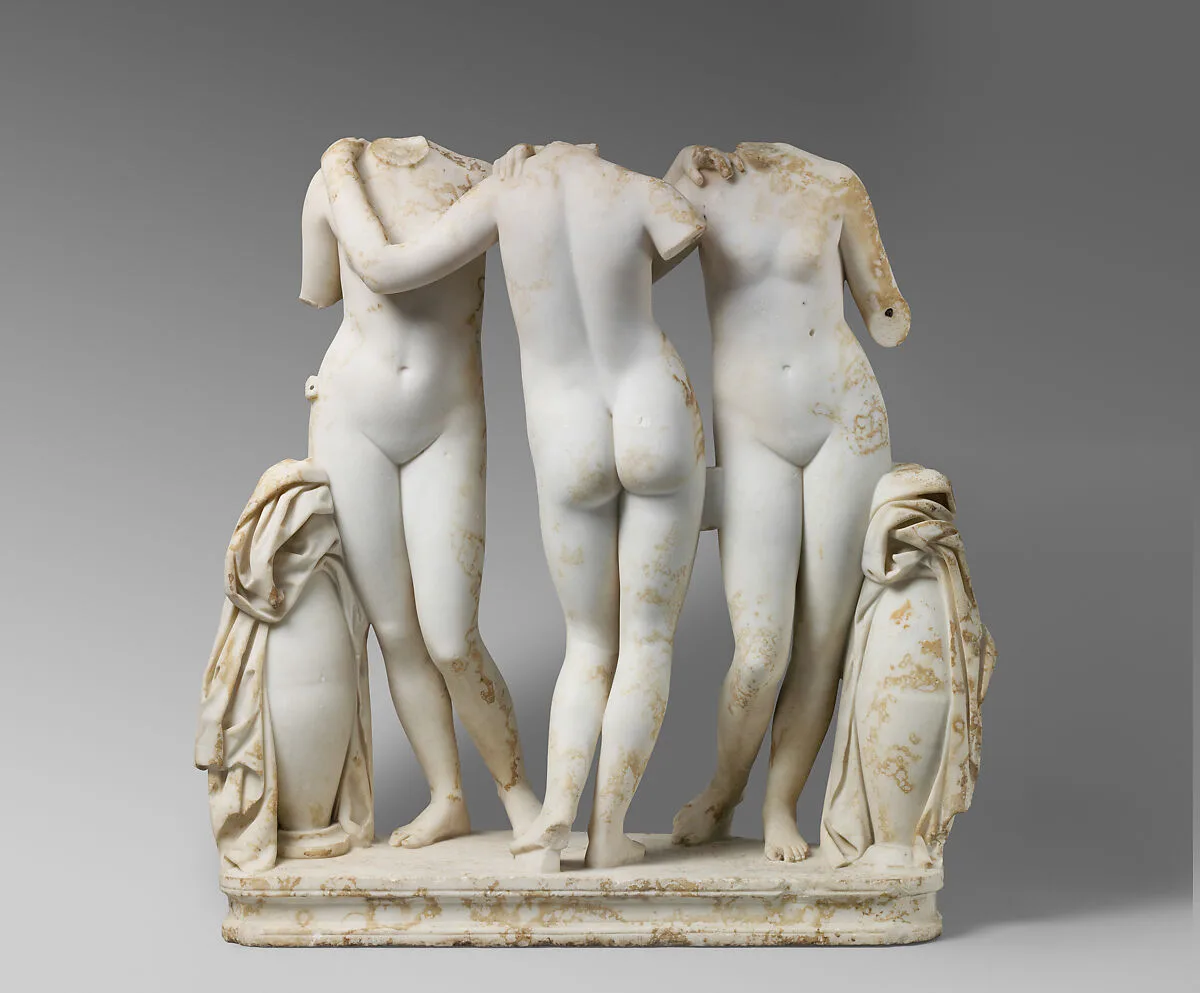
Roman copy of a Greek work of the 2nd century B.C. These young girls, linked in a dance-like pose, represent The Three Graces: Aglaia (Beauty), Euphrosyne (Mirth), and Thalia (Abundance). They bestow what is most pleasurable and beneficent in nature and society: fertility and growth, beauty in the arts, harmonious reciprocity between men. They enjoyed venerable cults in Greece and Asia Minor. In mythology, they play an attendant role, gracing festivals and organizing dances. Their closest connection is with Aphrodite, whom they serve as handmaidens. This carefully calculated, frieze-like composition is typical of classicizing art of the second and first centuries B.C. Instantly recognizable, it soon became the canonic formula for representing the Graces, who appeared in every medium and on every kind of object, from mirrors to sarcophagi.
- Artist
- Unknown
- Date
- 2nd century CE
- Medium
- Marble
- Culture
- Roman
- Department
- Greek and Roman Art
- Credit line
- Purchase, Philodoroi, Lila Acheson Wallace, Mary and Michael Jaharis, Annette and Oscar de la Renta, Leon Levy Foundation, The Robert A. and Renée E. Belfer Family Foundation, Mr. and Mrs. John A. Moran, Jeannette and Jonathan Rosen, Malcolm Hewitt Wiener Foundation and Nicholas S. Zoullas Gifts, 2010