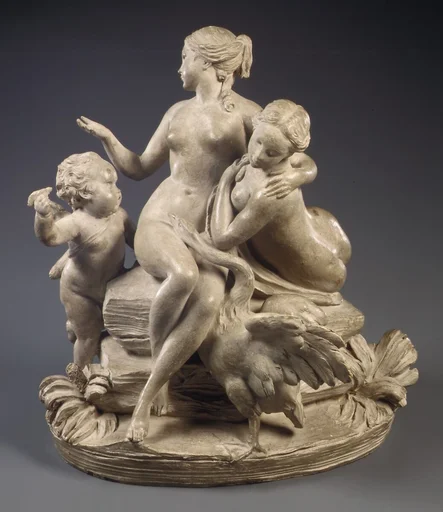
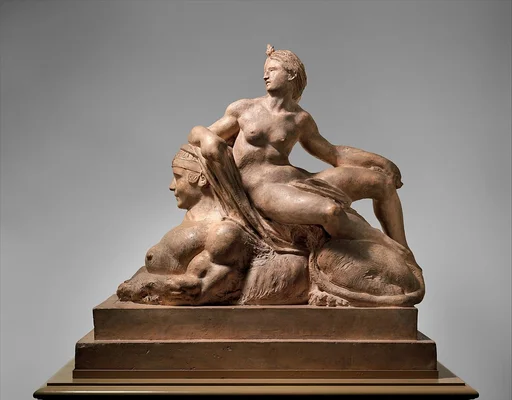
Leda and the Swan
Albert-Ernest Carrier-Belleuse
ca. 1870 · Cast terracotta · European Sculpture and Decorative Arts
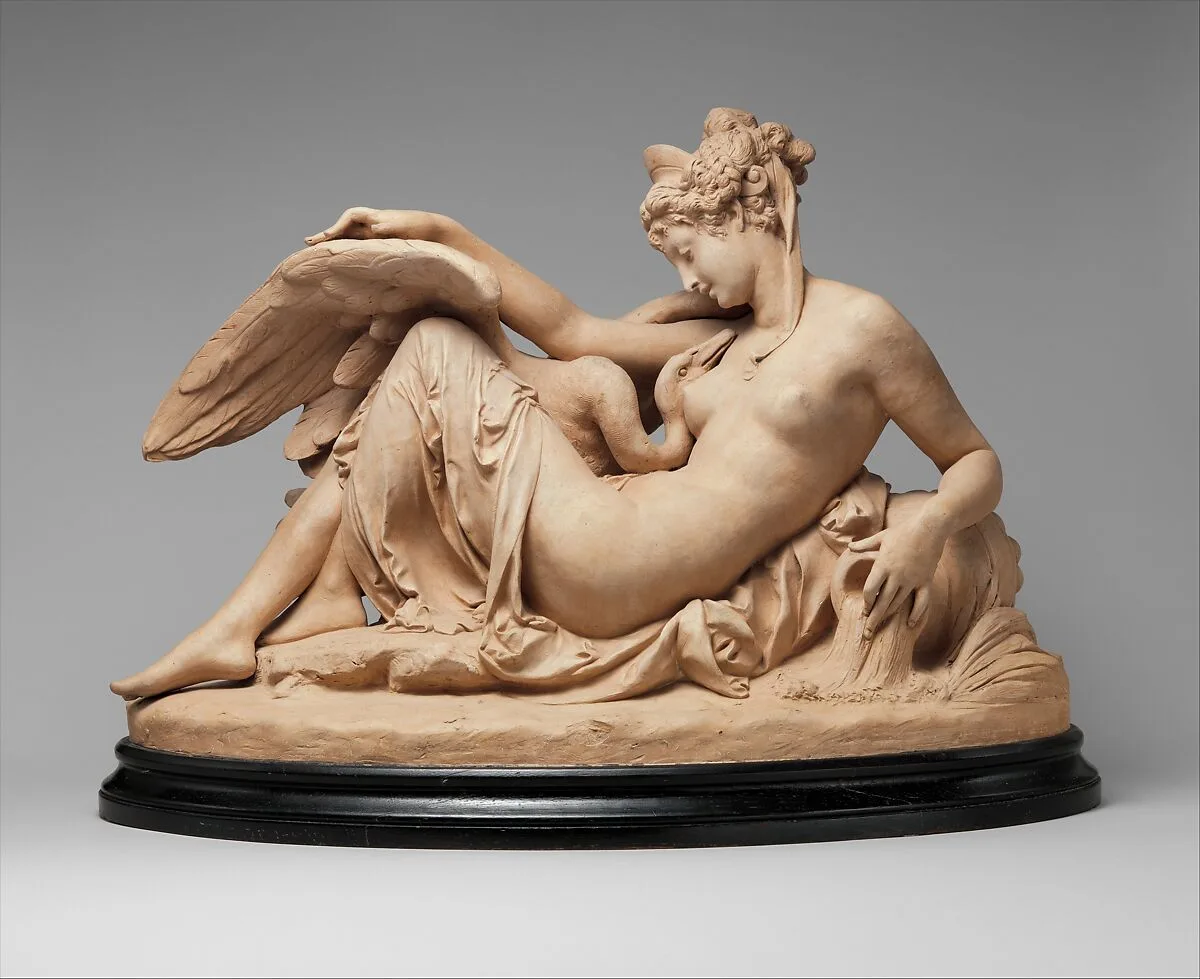
Carrier-Belleuse, best known as the employer of Rodin, was an essential participant in the eclectic Second Empire style. Here he unites elements from seemingly irreconcilable opposites: the composition of a brooding, supine Leda by Michelangelo, from a lost painting familiar through copies, and the fancy attributes and svelte line of the Diana of Fontainebleau, a French Mannerist marble in the Louvre long attributed to Jean Goujon. Carrier's approaches to the handling of surface and to the character of the drama are lighthearted, showing the fullness of his debt to the eighteenth-century master of terracotta statuettes, Clodion. To the lessons of past masters he adds touches entirely his own—notably, the crinkled drapery and the delightful way in which Leda's long fingers echo the sinuous line of the swan's neck. Carrier's terracottas, cast but with details modeled and added by hand, were a staple of Second Empire decoration. A variant composition of the Leda exists in bronze; larger statuettes in terracotta (19-11/16 in.) as well as plaster (23-5/8 in.) were in his studio sale of 1887.
- Artist
- Albert-Ernest Carrier-Belleuse
- Date
- ca. 1870
- Medium
- Cast terracotta
- Culture
- French, Paris
- Department
- European Sculpture and Decorative Arts
- Credit line
- Rogers Fund and Mr. and Mrs. Claus von Bülow Gift, 1980