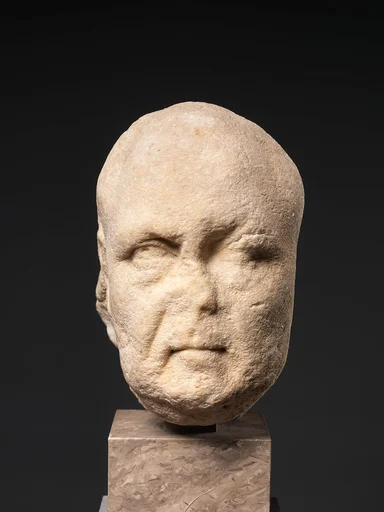
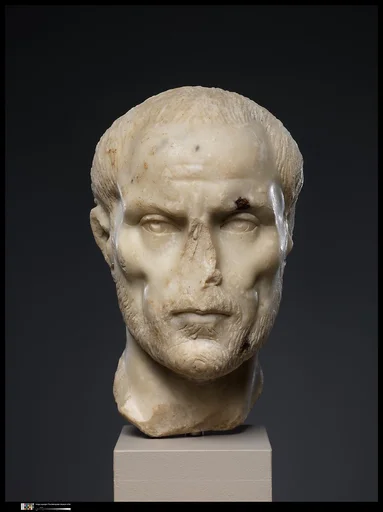
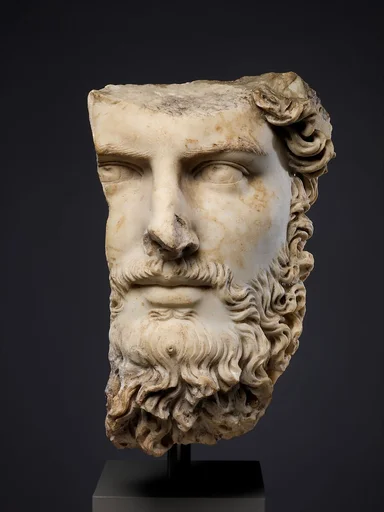
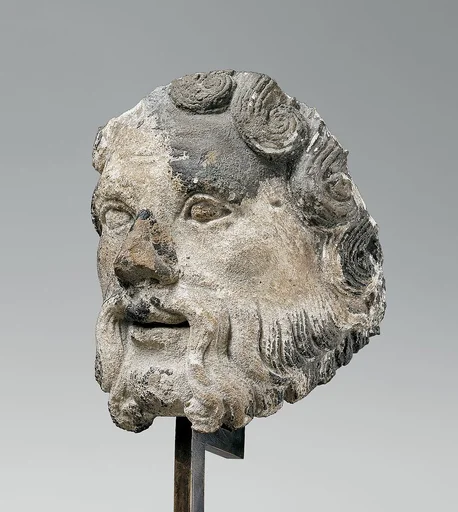
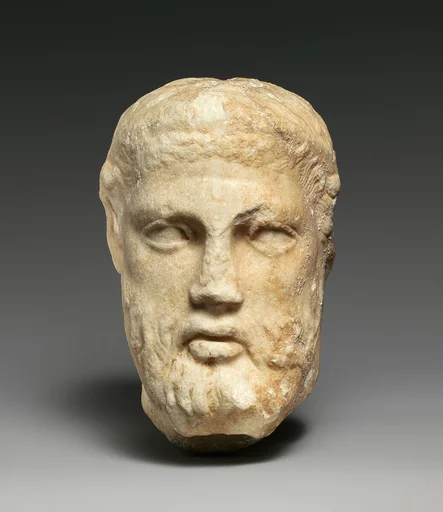
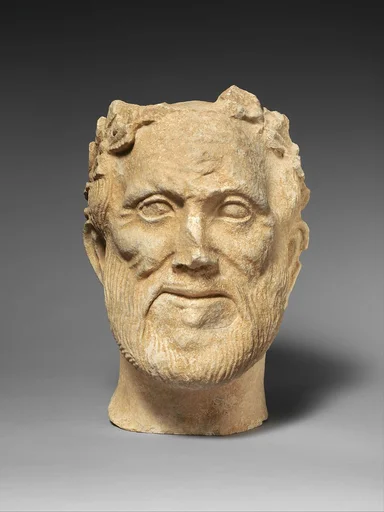
Marble portrait head of the philosopher Chrysippos
Unknown
1st century CE · Marble · Greek and Roman Art
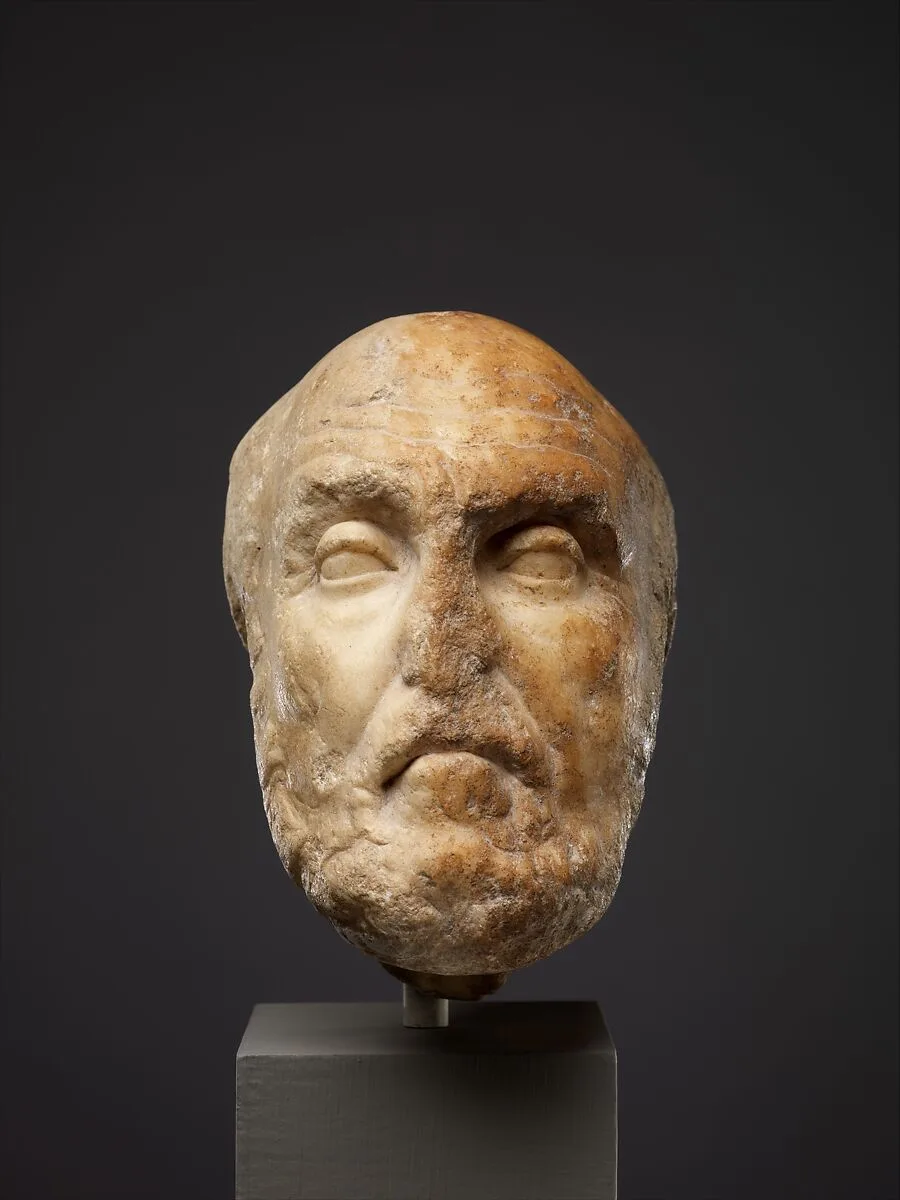
Copy of a Greek statue of the late 3rd century B.C., probably by Euboulides Chrysippos was one of the most important Stoic philosophers of the third century B.C. His writings helped establish Stoicism as a major philosophical movement. Stoicism held that human beings should be free from passion and calmly accept all occurrences as the unavoidable result of divine will. The term Stoic derives from the Greek word stoa, a type of colonnaded building in which the philosophers gathered. It is clear from other copies of this type that Chrysippos was usually represented seated, as a fragile elderly man with his right hand outstretched as if in the midst of making a point. In a manner characteristic of most early Hellenistic art, the viewer would be drawn into the pictorial space and become, as it were, the philosopher's interlocutor. His winning intellect, eloquently conveyed in the features of this head, would have contrasted markedly with his frail old body, emphasizing that the power of the spirit triumphs over physical weakness.
- Artist
- Unknown
- Date
- 1st century CE
- Medium
- Marble
- Culture
- Roman
- Department
- Greek and Roman Art
- Credit line
- Fletcher Fund, 1924