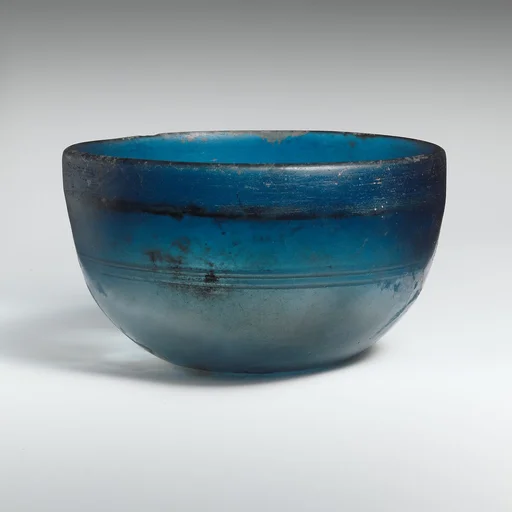
Glass handkerchief bowl
Unknown
3rd–4th century CE · Glass · Greek and Roman Art
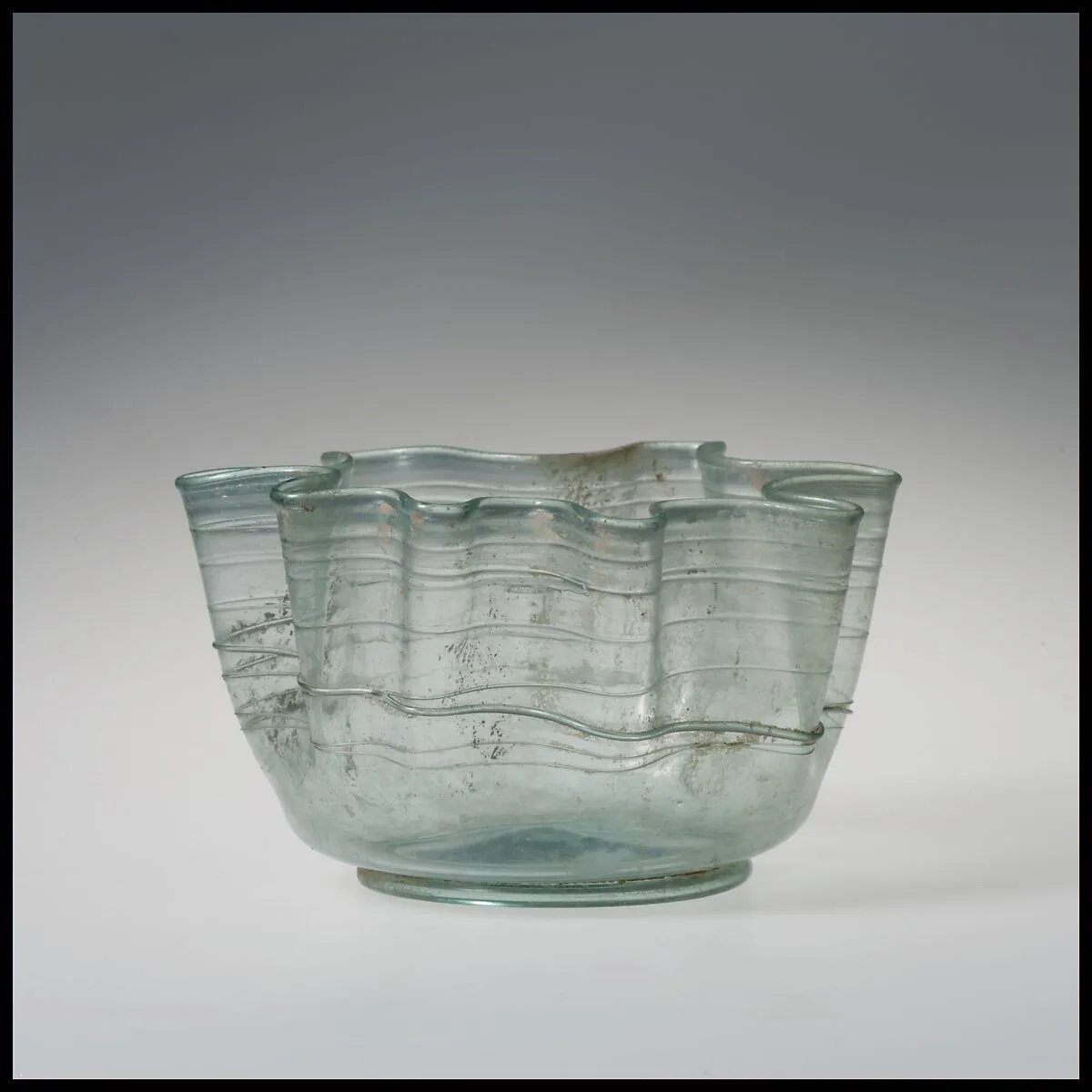
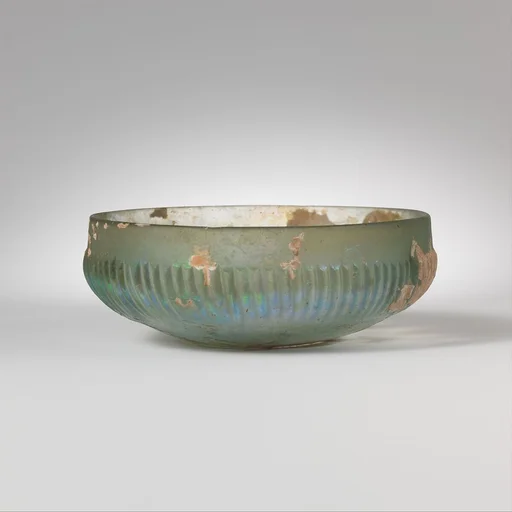
Translucent blue green; trail in same color. Vertical, rounded, thickened rim; deep body with almost vertical side, then curving in sharply at bottom; low, tubular base ring, made by folding; flat bottom but with low internal kick at center and circular pontil mark. On body, single trail applied two-thirds down side and wound round and upwards in an irregular spiral six times to rim and then wound down again in a spiral twice, ending near where it began, reduced to faint rib by reheating on upper body; rim crumpled, with eight uneven projecting folds. Intact; a few large bubbles; small patches of soil encrustation, weathering, and iridescence. Vessels that have been deliberately worked to create a wavy rim and sides are extremely rare in Roman glassware. This bowl is perhaps the best example known to have survived.
- Artist
- Unknown
- Date
- 3rd–4th century CE
- Medium
- Glass
- Culture
- Roman
- Department
- Greek and Roman Art
- Credit line
- Gift of J. Pierpont Morgan, 1917